
In heavy machinery, off-road vehicles, and industrial equipment, engine vibration is constant. If a wire harness is allowed to rub against a metal frame, the continuous friction will act like sandpaper. This process, known as chafing, quickly wears away the plastic insulation and exposes the bare copper wire underneath, creating a severe fire hazard. In fact, chafing is one of the most common causes of wire harness failure.
Knowing how to prevent wire harness chafing in high-vibration environments is essential for ensuring long-term reliability and safety.
The Mechanics of Abrasion
Wire insulation, whether PVC or silicone, is relatively soft. When a harness is routed loosely, the normal vibrations of the machine cause the wire to bounce against its surroundings. Over hundreds of hours of operation, even smooth plastic surfaces can wear through the wire’s jacket. When the exposed copper touches a grounded metal chassis, a dead short occurs, immediately blowing fuses or, worse, melting the wire completely.
How-To: Protect Your Harness from Chafing
Implementing proper routing and bundling methods is the first line of defense. Follow these steps to secure your harness:
-
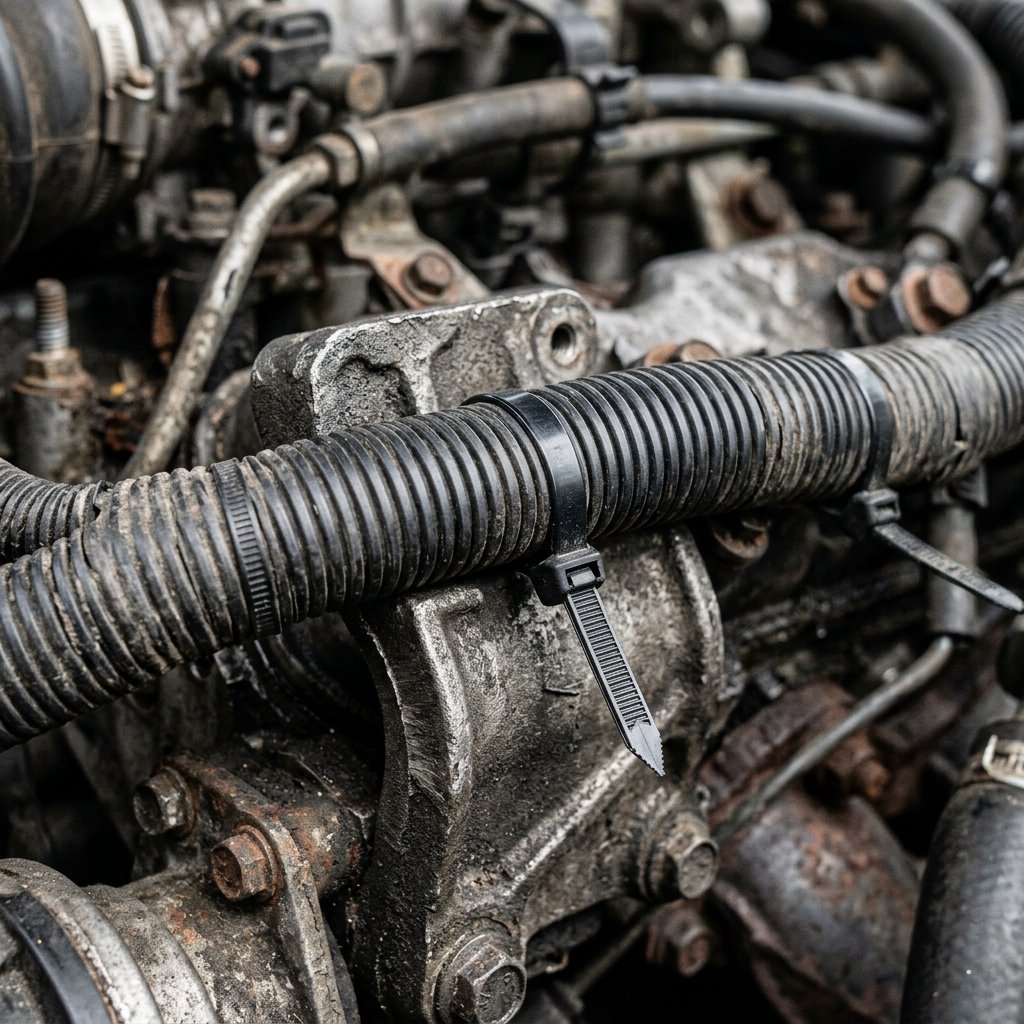
Use Corrugated Loom
Wrap the entire wire bundle in corrugated split loom tubing. This thick plastic acts as a sacrificial barrier. If rubbing occurs, the loom wears down, not the wire. For extreme environments, use braided sleeving which offers superior abrasion resistance.
-
Secure with Zip Ties
A loose wire is a vibrating wire. Anchor the harness to the chassis using heavy-duty zip ties or P-clamps every 6 to 8 inches. The harness should feel completely rigid against the frame.
-
Install Rubber Grommets
Whenever a wire harness must pass through a hole drilled in sheet metal, you must install a rubber grommet first. The sharp edges of a drilled hole will slice through wire insulation in seconds without a soft rubber cushion.
-
Maintain Slack at Pivot Points
While the harness should be tightly anchored to static points, you must leave a small, controlled loop of slack (a “service loop”) whenever the wire crosses a hinge or a pivot point (like a car door) to prevent stretching.
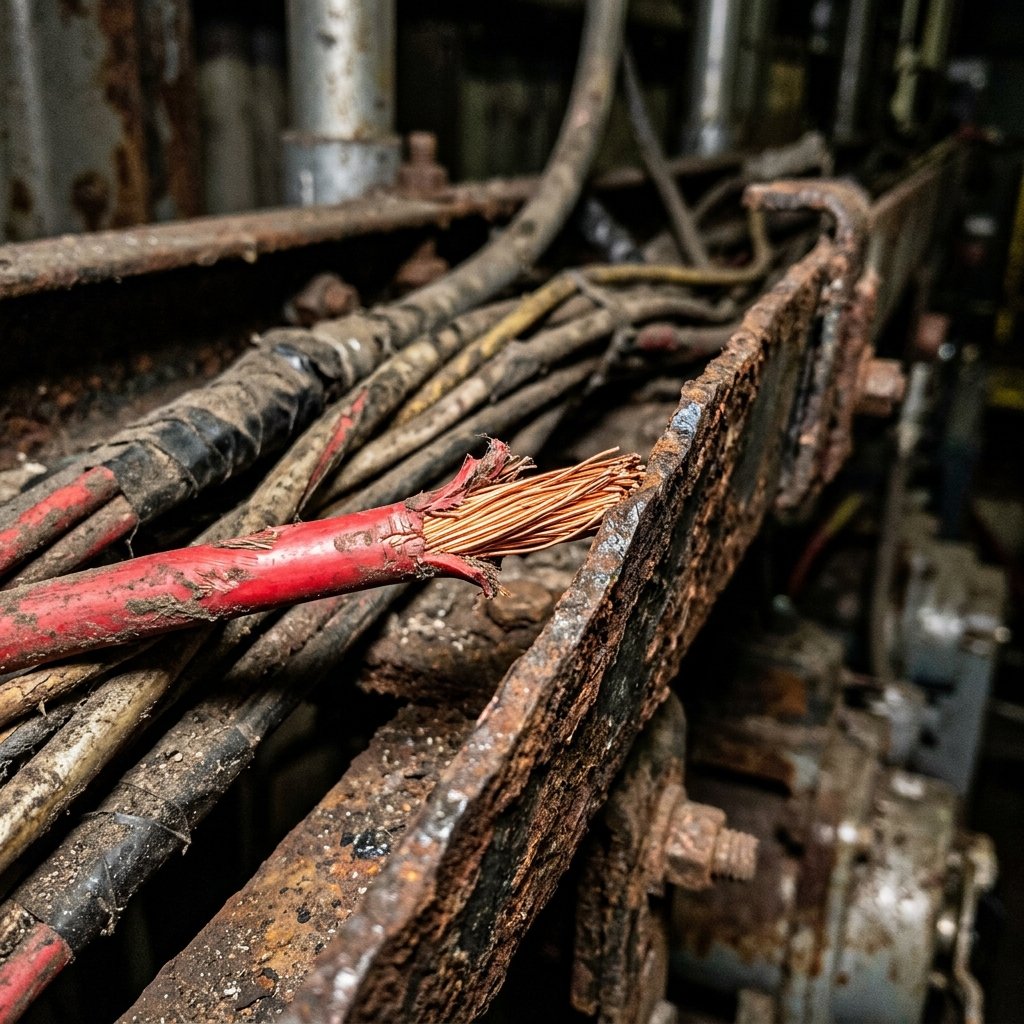
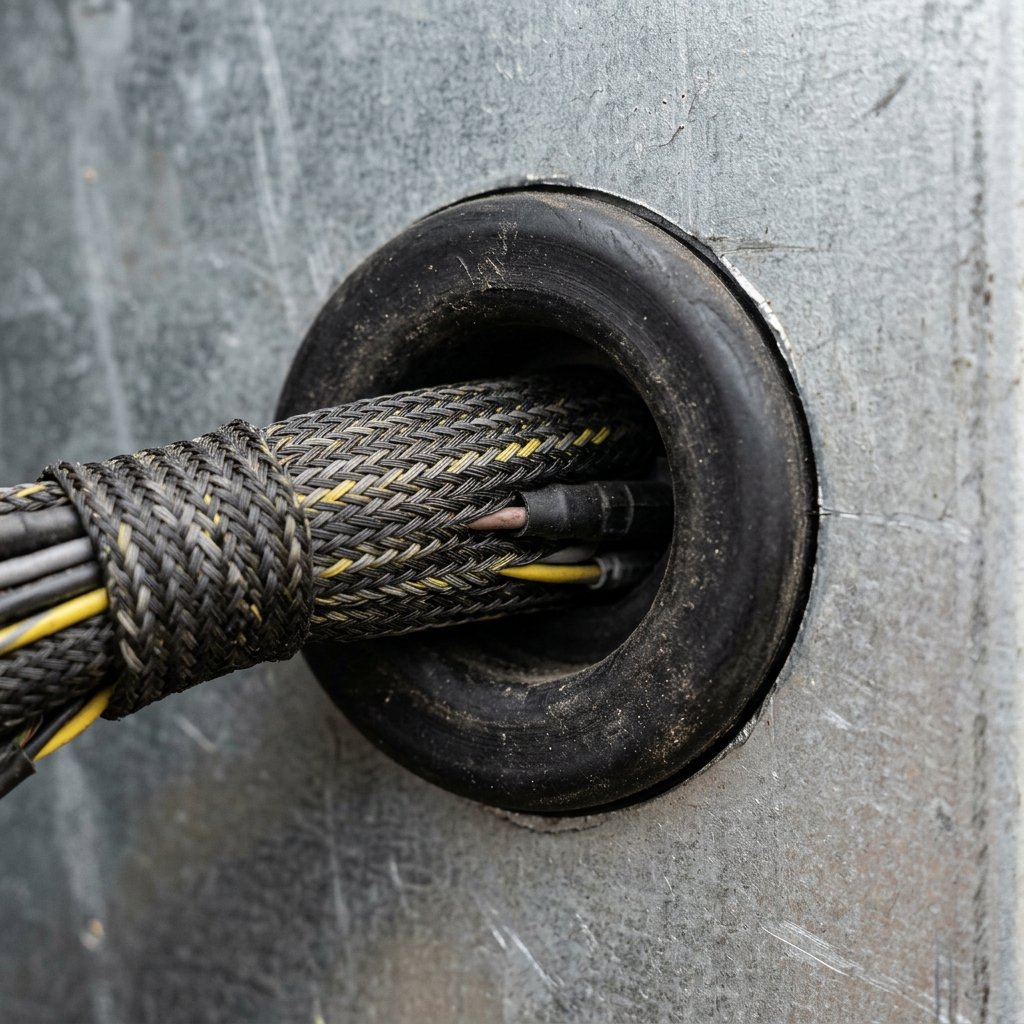
Chafing damage often starts in places that aren’t obvious during a visual inspection, such as where a harness passes through a bulkhead, over a sharp metal edge, or against a moving component. Grommets, split loom conduit, and abrasion-resistant braided sleeving all help, but the choice of routing path matters just as much as the protective material used. Whenever possible, harnesses should be routed away from moving parts and secured at regular intervals with cushioned clamps, since even a well-protected wire will eventually wear through if it’s allowed to rub against a fixed point continuously.
For related reading, see our article on why ultrasonically welded splices are superior to solder. You can also learn more about our manufacturing capabilities. These practices are consistent with standards such as ISO 9001.
Frequently Asked Questions
Standard PVC electrical tape is very thin and offers almost no abrasion resistance. It will quickly rub away. However, specialized cloth friction tape or TESA tape is often used in automotive interiors to prevent chafing and rattling.
Zip ties should be tight enough to prevent the wire from sliding back and forth, but not so tight that they crush or deform the internal copper wires. Use flush-cut pliers to remove the zip tie tail so it doesn’t leave a sharp edge.
If a pre-molded circular grommet doesn’t fit the hole, you can buy “edge trim” or “grommet edging” on a roll. This is a flexible, U-shaped rubber strip that you cut to length and press over the sharp edge of any irregularly shaped hole.