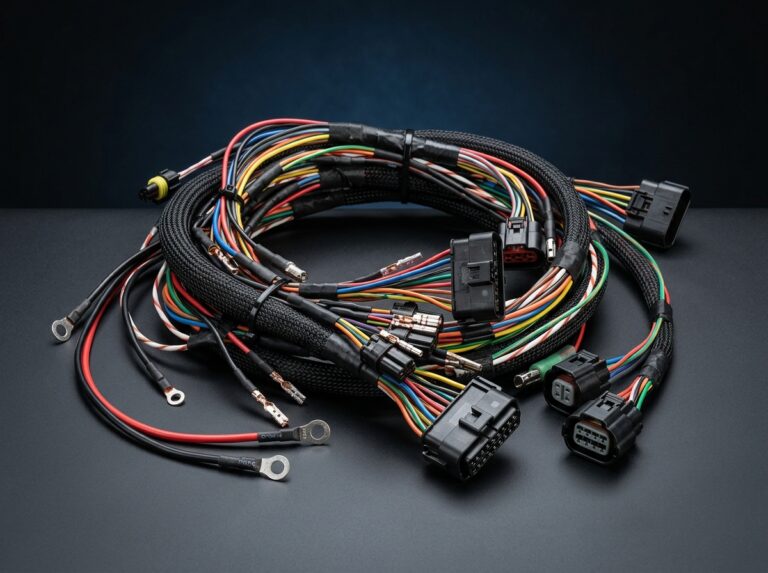
When designing or installing an electrical system, much of the focus goes into selecting the right gauge of wire, the proper terminals, and the role of shielding. However, one of the smallest and cheapest components is often the most vital for long-term safety: the rubber grommet. Here is a detailed look at the crucial role of grommets in protecting wire harnesses.
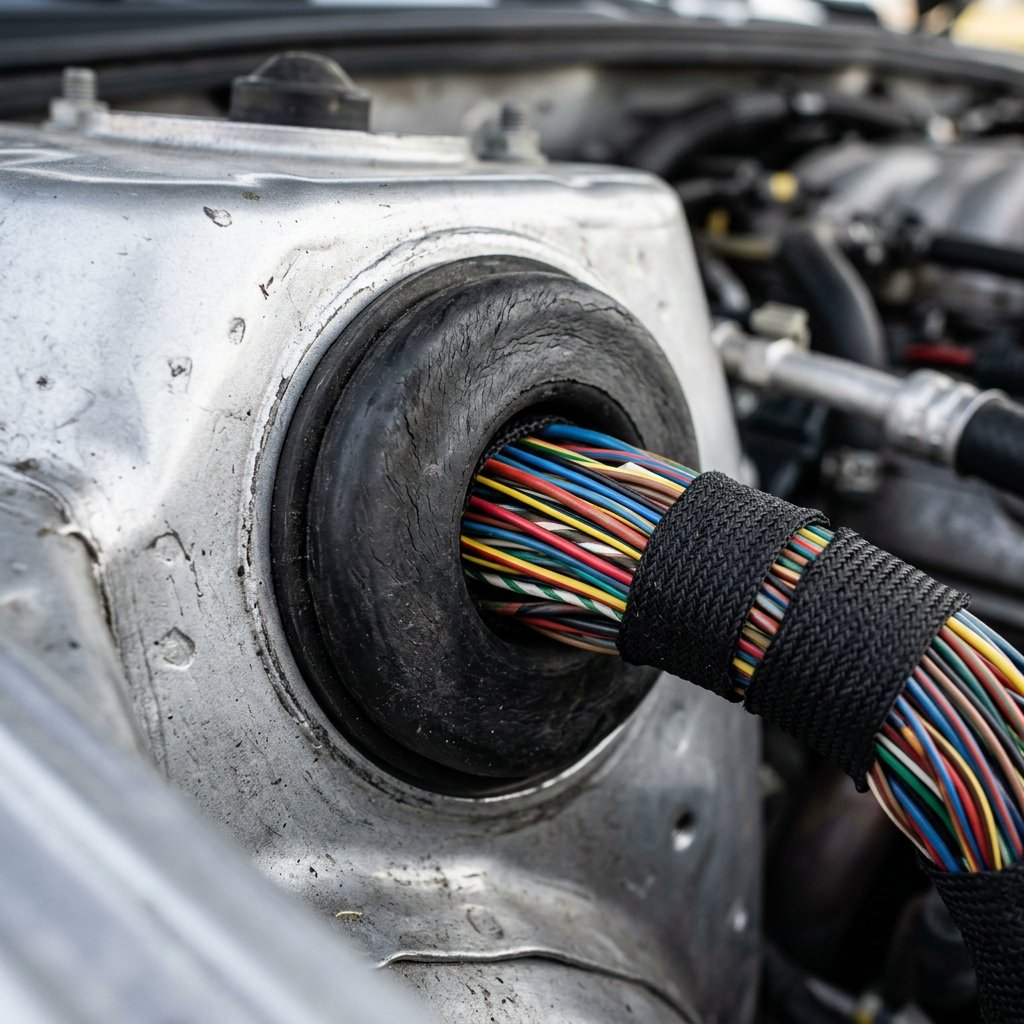
The Danger of Pass-Throughs
Wiring harnesses rarely stay in one compartment. In an automobile, wires must pass from the battery in the engine bay, through the steel firewall, and into the passenger cabin. In industrial machinery, wires pass through drilled holes in aluminum enclosures.
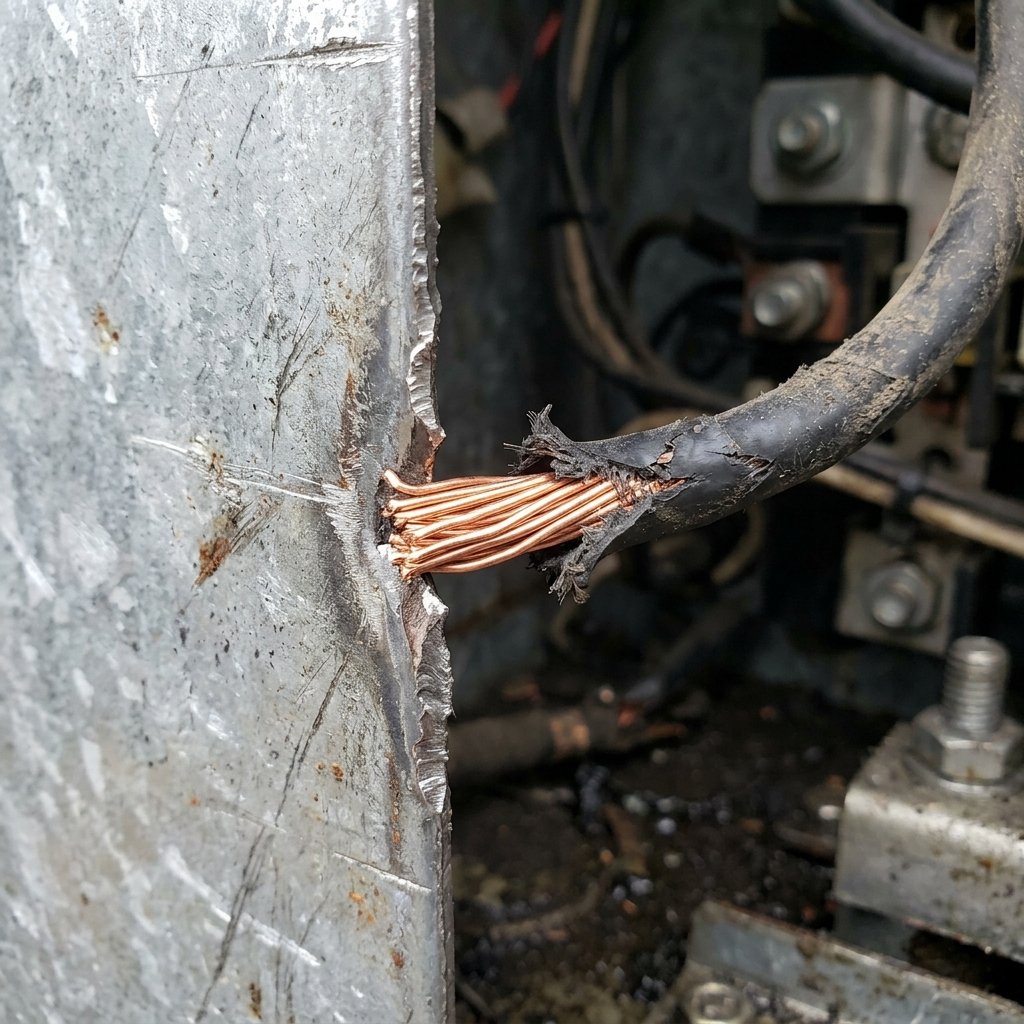
Whenever a wire passes through a metal hole, it is in extreme danger. Even if a hole is deburred at the factory, the edge of a stamped or drilled metal plate acts like a dull knife. As the machine vibrates during normal operation, the wire harness rubs against this edge. Without protection, it is only a matter of time before the metal slices through the PVC insulation.
How Grommets Provide Protection
A grommet is a flared ring, usually made of rubber, silicone, or synthetic elastomers like EPDM, designed to line the inner edge of a hole. It serves several critical functions:
- Abrasion Resistance: The grommet creates a soft, yielding barrier between the sharp metal edge and the wire jacket, serving as a primary way to prevent wire harness chafing in high-vibration environments.
- Strain Relief: By gripping the wire bundle tightly, a properly sized grommet prevents the harness from being yanked or pulled, relieving tension on the fragile terminals downstream.
- Environmental Sealing: Solid rubber grommets (or those with a tight inner diameter) prevent water, dust, engine fumes, and acoustic noise from passing through the bulkhead along with the wires.
Types of Grommets
Not all grommets are the same. Selecting the right one depends on the specific application.
- Standard Rubber Grommets: The most common type, shaped like a donut with a groove around the outside edge to lock into the sheet metal.
- Blind / Blanking Grommets: These have a solid membrane across the center. You pierce a small hole in them to pass a single wire through, creating a watertight seal.
- Split Grommets: These are cut on one side, allowing them to be installed over a wire harness that is already in place and has bulky connectors on both ends.
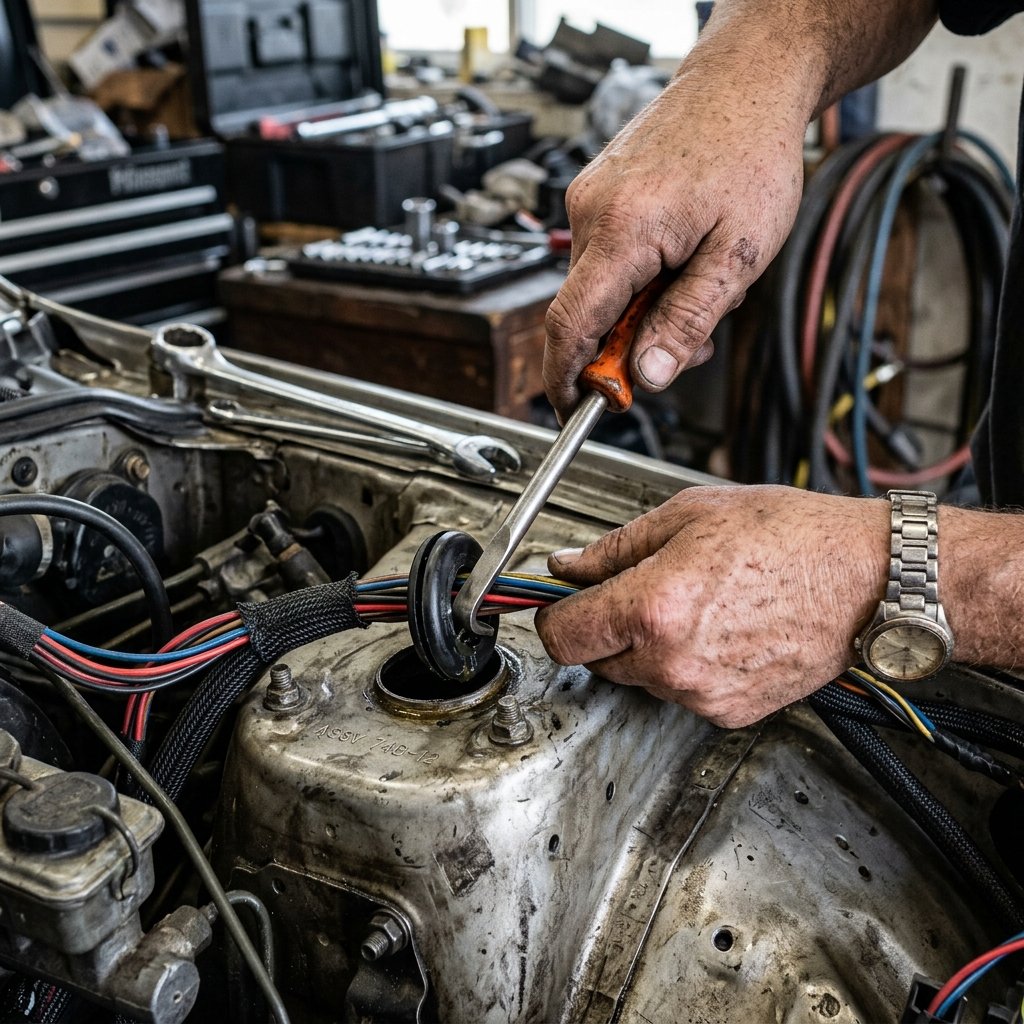
Grommets do more than just protect wire insulation from a sharp panel edge; a properly sized grommet also creates a seal against dust and moisture at bulkhead pass-through points, which is critical for harnesses that cross between a vehicle’s cabin and engine bay or between sealed enclosures. Selecting a grommet requires matching both the panel hole diameter and the harness bundle diameter, since an oversized grommet won’t seal properly and an undersized one can pinch the wires inside, potentially damaging insulation over time from constant compression.
For related reading, see our article on how to properly splice wires in an automotive harness. You can also learn more about our quality control process. These practices are consistent with standards such as ISO 9001.
Frequently Asked Questions
Silicone sealant or RTV can provide waterproofing, but it lacks the structural integrity to prevent a sharp metal edge from cutting through the wire under heavy vibration. Always use a mechanical grommet, and add silicone only if extra waterproofing is required.
You need to measure two things: the diameter of the drilled hole in the panel (Panel Hole Diameter), and the thickness of the metal panel itself (Panel Thickness). The inner diameter of the grommet should match the outer diameter of your wire bundle.
A grommet is designed for a specific circular hole. Edge trim is a continuous length of U-shaped rubber that can be cut and pushed onto any shape of raw metal edge, such as a large rectangular cutout or an irregular opening.