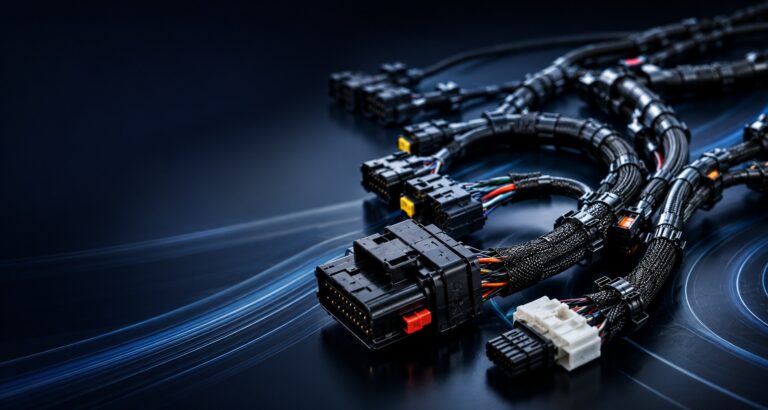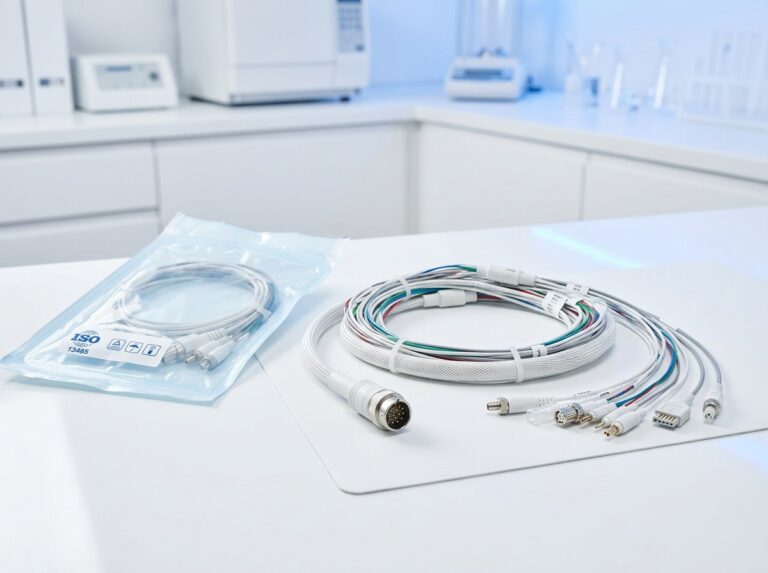
When designing a wire harness for a harsh industrial, automotive, or aerospace environment, simply bundling the wires together is not enough. They require an outer layer of armor. This is why braided sleeving is crucial for wire harness durability.
Unlike rigid plastic conduits or sticky electrical tape, braided sleeving offers a unique combination of extreme mechanical protection, continuous flexibility, and heat dissipation that no other material can match.
The Mechanics of Expandable Braided Sleeving
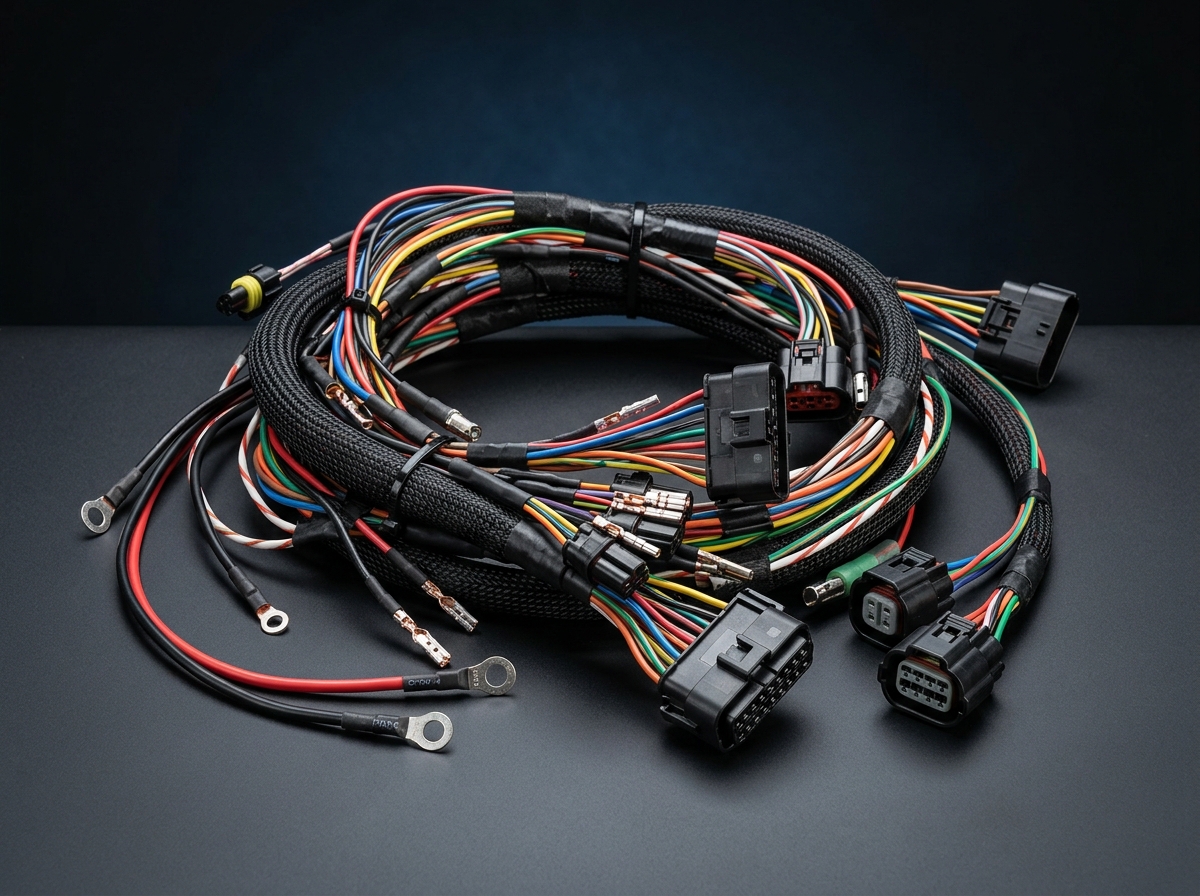
Most standard braided sleeving is made from monofilament PET (Polyethylene Terephthalate) plastic yarns woven into a tubular mesh. This “finger-trap” woven design gives it two distinct mechanical advantages:
- Extreme Expandability: The woven mesh can expand up to 150% of its resting diameter. This allows a technician to easily slide the sleeving over large, bulky connectors and then pull it tight so it perfectly conforms to the shape of the wire bundle.
- Unmatched Flexibility: Because it is a loose weave rather than a solid tube, braided sleeving does not restrict the bending radius of the wires inside. It moves naturally with the harness, making it ideal for robotic arms and moving machinery.
Advanced Sleeving for Extreme Environments
While PET is the standard for abrasion resistance, specialized applications require specialized fibers. The braided design allows manufacturers to use highly advanced materials:
- Fiberglass Sleeving: Coated in silicone, woven fiberglass sleeving acts as a thermal barrier. It can protect underlying wires from direct radiant heat up to 1,200°F (650°C), making it essential for engine bays and foundries.
- Kevlar (Aramid) Sleeving: Bulletproof vest material is also used for wire harnesses. Kevlar braided sleeving offers ultimate cut-through resistance for military applications where the harness might be dragged across jagged metal.
- Tinned Copper Braiding: Instead of plastic, this sleeving is woven from metal. It acts as a Faraday cage, shielding the internal data wires from severe Electromagnetic Interference (EMI) while still remaining flexible.
How-To: Cut and Install Braided Sleeving
Working with braided sleeving requires one specific tool to prevent the weave from instantly unraveling like a cheap sweater.
- Measure the Length: Remember that expanding the diameter of the sleeving will cause its overall length to shorten. Always cut the sleeving 10-15% longer than the wire bundle you are covering.
- Use a Hot Knife: Never cut synthetic braided sleeving with scissors. You must use a specialized electric hot knife. The glowing hot blade melts the plastic monofilaments as it cuts, fusing the ends together into a solid ring that cannot fray.
- Slide and Secure: Push the sleeving over the wire bundle. To secure the ends and cover the melted cut mark, apply a piece of adhesive-lined heat shrink tubing over the last inch of the sleeving.
- Related reading: Learn more about wire gauge
- Related reading: Learn more about extreme temperature
- Related reading: Learn more about connectors
For related reading, see our article on the critical importance of proper wire stripping techniques. You can also learn more about our manufacturing capabilities. These practices are consistent with standards such as ISO 9001.
Braided sleeving earns its keep in harsh, abrasive environments like our Marine Deck Equipment & Winch Control Cable Assemblies.
Frequently Asked Questions
No. One of the biggest advantages of the open-weave design is breathability. If water gets inside the harness, it easily evaporates through the mesh. Solid corrugated tubing, by contrast, can trap water inside and accelerate wire corrosion.
Standard PET sleeving will burn if exposed to a direct flame. However, manufacturers offer “Flame Retardant” (FR) versions of PET sleeving that contain chemical additives causing the material to self-extinguish as soon as the flame source is removed.
Split braided sleeving (often called F6) has a lateral slit down its entire length, but the weave naturally curls in on itself with a 25% overlap. This allows you to install the sleeving over an existing wire harness without having to unplug any connectors.