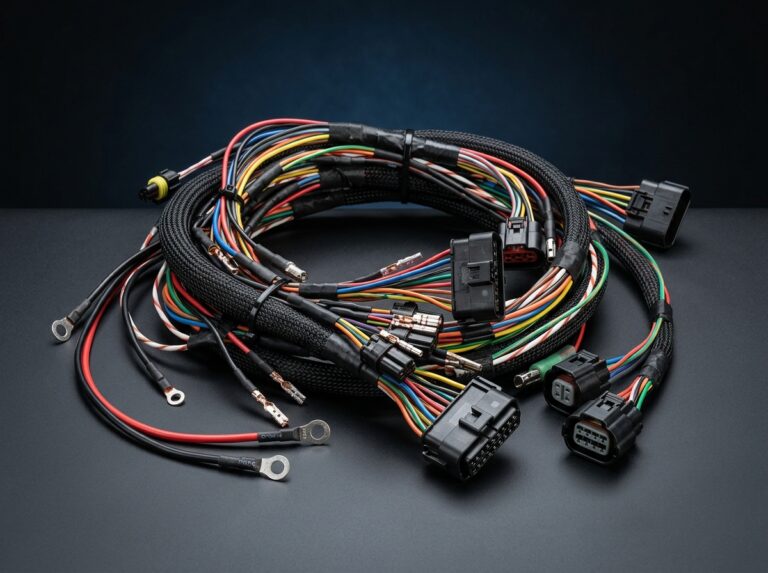
When selecting connectors for a waterproof application, the marketing term “waterproof” is dangerously vague. A connector that survives a rain shower might instantly fail if submerged in a puddle. To solve this ambiguity, engineers rely on the Ingress Protection (IP) rating system. Understanding IP ratings for waterproof wire harness connectors is the only way to guarantee your electrical system will survive its environment.
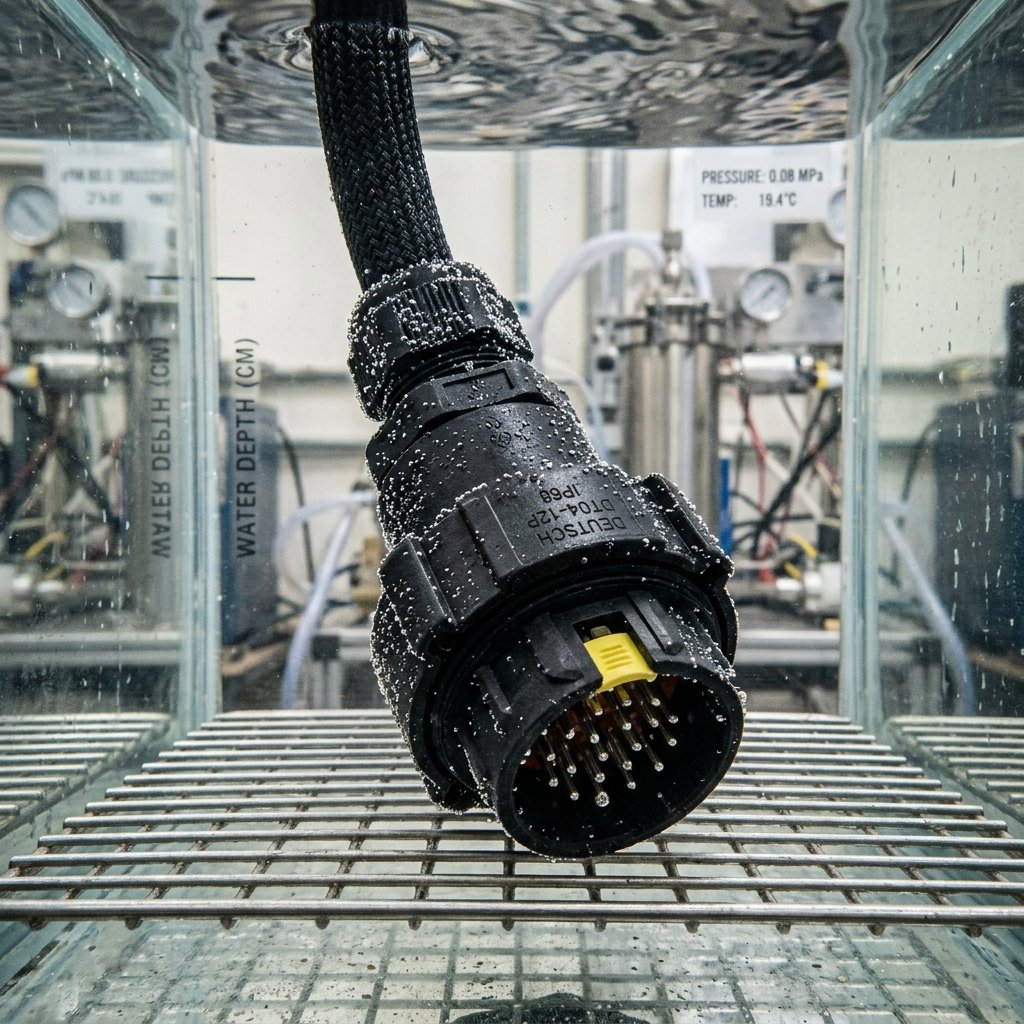
Decoding the IP Number
An IP rating almost always consists of two numbers (e.g., IP67). They are not a single combined score; each digit means something specific.
- The First Digit (Solid Ingress): This ranges from 0 to 6 and measures protection against dust and dirt. A ‘6’ is the highest rating, meaning the connector is completely “dust-tight.” No microscopic particles can enter the mating face.
- The Second Digit (Liquid Ingress): This ranges from 0 to 9 and measures water resistance. This is the crucial number for harsh environments.
- 4: Protection from splashing water from any direction.
- 6: Protection from powerful water jets (like a pressure washer).
- 7: Protection from temporary immersion in water (up to 1 meter deep for 30 minutes).
- 8: Protection from continuous, prolonged submersion under pressure (often specified by the manufacturer, e.g., 3 meters indefinitely).
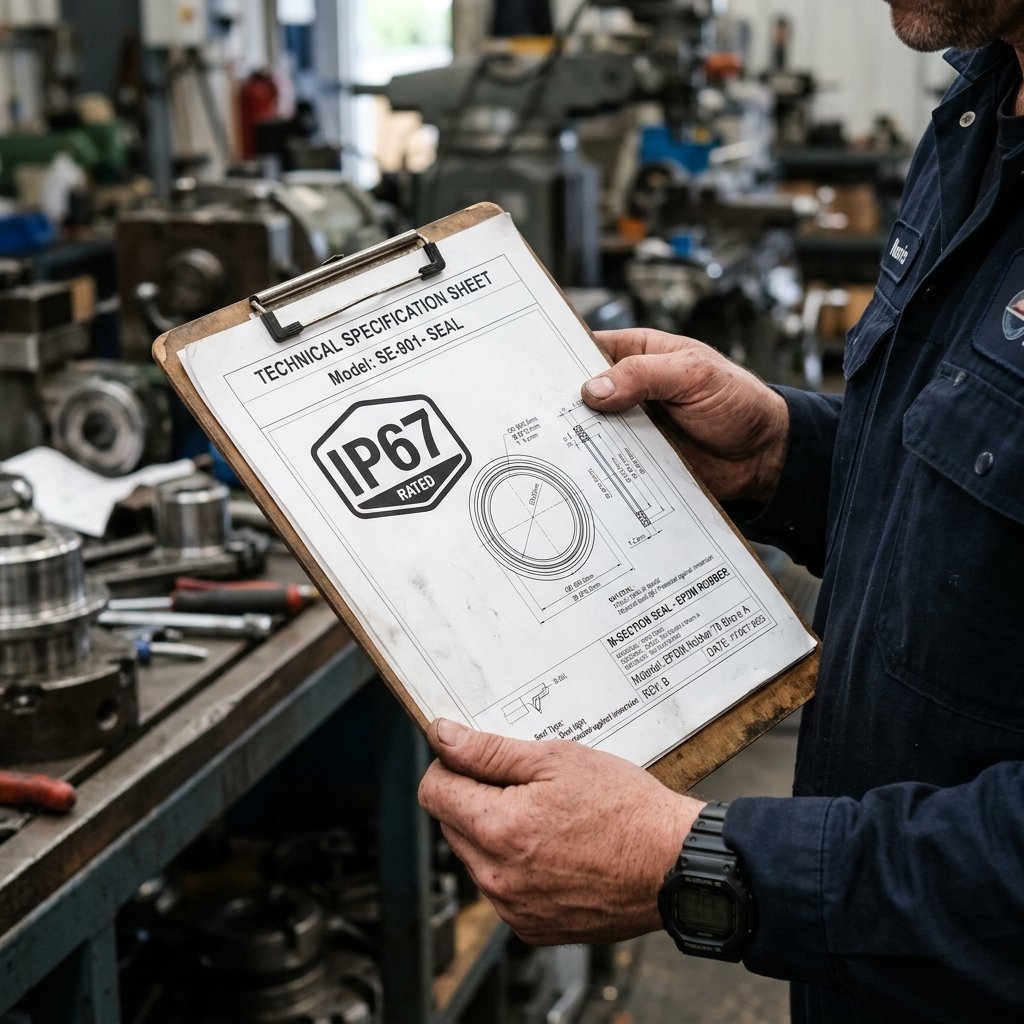
How Connectors Achieve IP Ratings
An open metal terminal has an IP rating of IP00. To achieve an IP67 or IP68 rating, connector manufacturers use several engineering tricks:
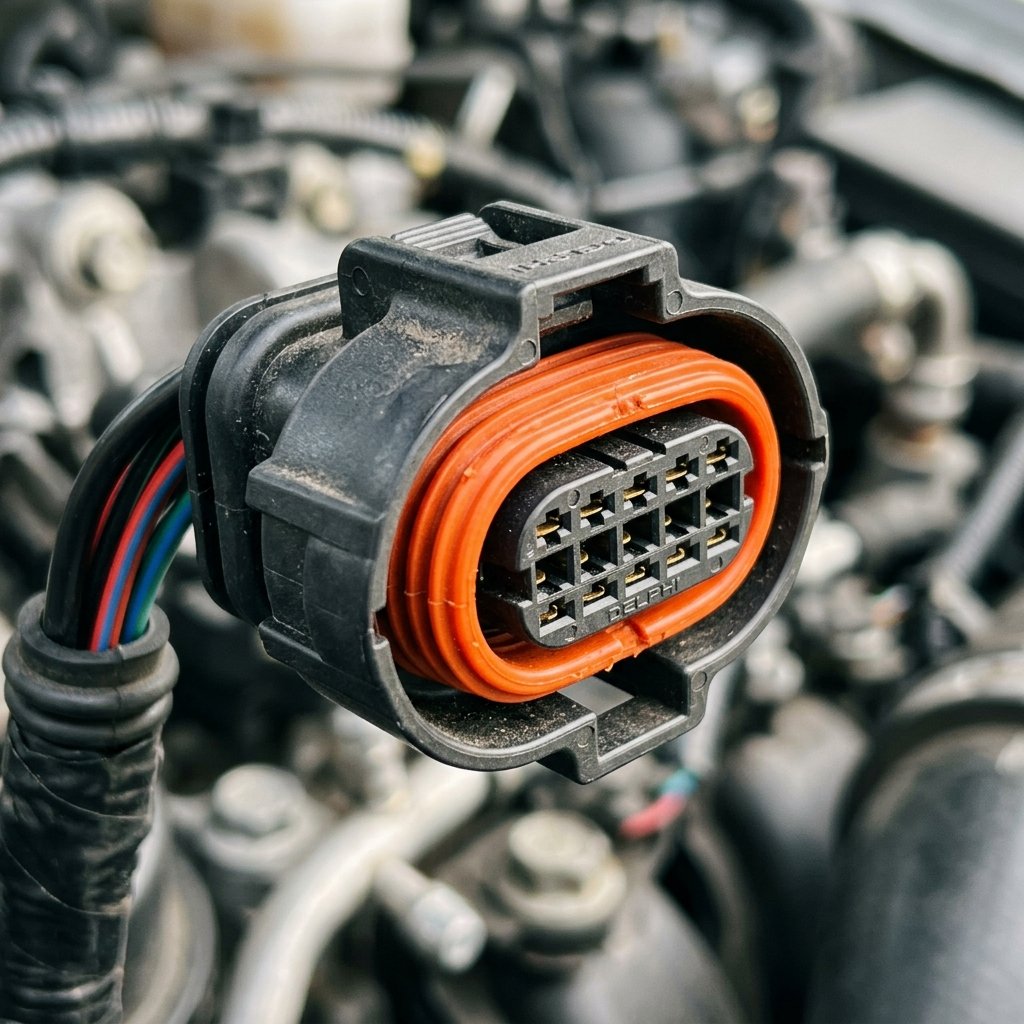
- The Perimeter Seal: When you plug the male and female halves together, a thick, ribbed silicone gasket (often brightly colored) compresses between the plastic housings, blocking water from entering the mating face.
- Wire Seals: Water can also sneak into the connector from the back, traveling along the wire insulation. Individual silicone wire seals are crimped onto each wire to plug the cavities at the rear of the connector.
- Blind Plugs: If a connector has 12 holes but you are only using 10 wires, the two empty holes must be plugged with tiny plastic “dummy plugs” to maintain the IP rating.
If you need extreme protection beyond standard silicone seals, potting the entire connector with epoxy is the ultimate solution.
It’s worth remembering that IP ratings describe two separate things: the first digit rates protection against solid objects and dust, and the second rates protection against liquids. A connector rated IP67 is fully dust-tight and can withstand temporary submersion up to one meter, while an IP69K rating adds protection against high-pressure, high-temperature washdown, which matters for equipment that gets pressure-washed regularly, such as agricultural or food-processing machinery. Choosing a rating higher than the application actually requires adds unnecessary cost, so it pays to match the rating to the real-world exposure the harness will see.
For related reading, see our article on a step-by-step look at the wire harness manufacturing process. You can also learn more about our manufacturing capabilities. These practices are consistent with standards such as ISO 9001.
Frequently Asked Questions
Not necessarily. IP68 means it survives continuous submersion, but it doesn’t guarantee it will survive a high-pressure water jet (which is rated as IP66 or IP69K). Some advanced connectors hold a dual rating of IP67/IP69K.
Yes, but you must inspect the seals. If the silicone perimeter seal is torn, brittle, or deformed, the IP rating is compromised. The connector will leak. Also, ensure you have proper strain relief , as pulling the wires sideways can distort the rear wire seals and let water in.
An ‘X’ means the manufacturer did not formally test for that specific category. IPX7 means it is rated for temporary water immersion (the ‘7’), but they didn’t officially test it for dust resistance (though a ‘7’ usually implies a high level of dust protection by default).