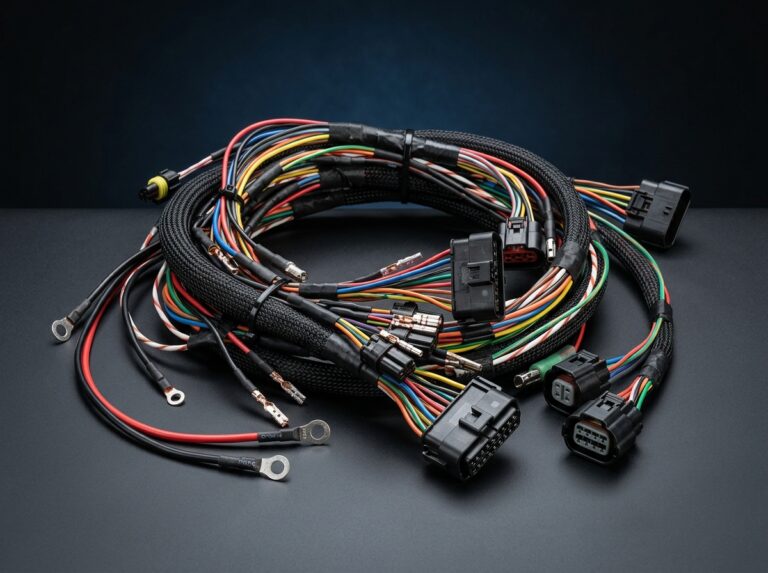
Finding a melted, blackened wire under your hood is stressful. It usually means a severe short circuit has occurred. While the first priority is finding the root cause of the short, the next step is repairing the damaged section of the harness. Simply wrapping electrical tape over a burnt wire is a recipe for a catastrophic vehicle fire. Here is how to safely repair a burnt wire in an automotive harness.
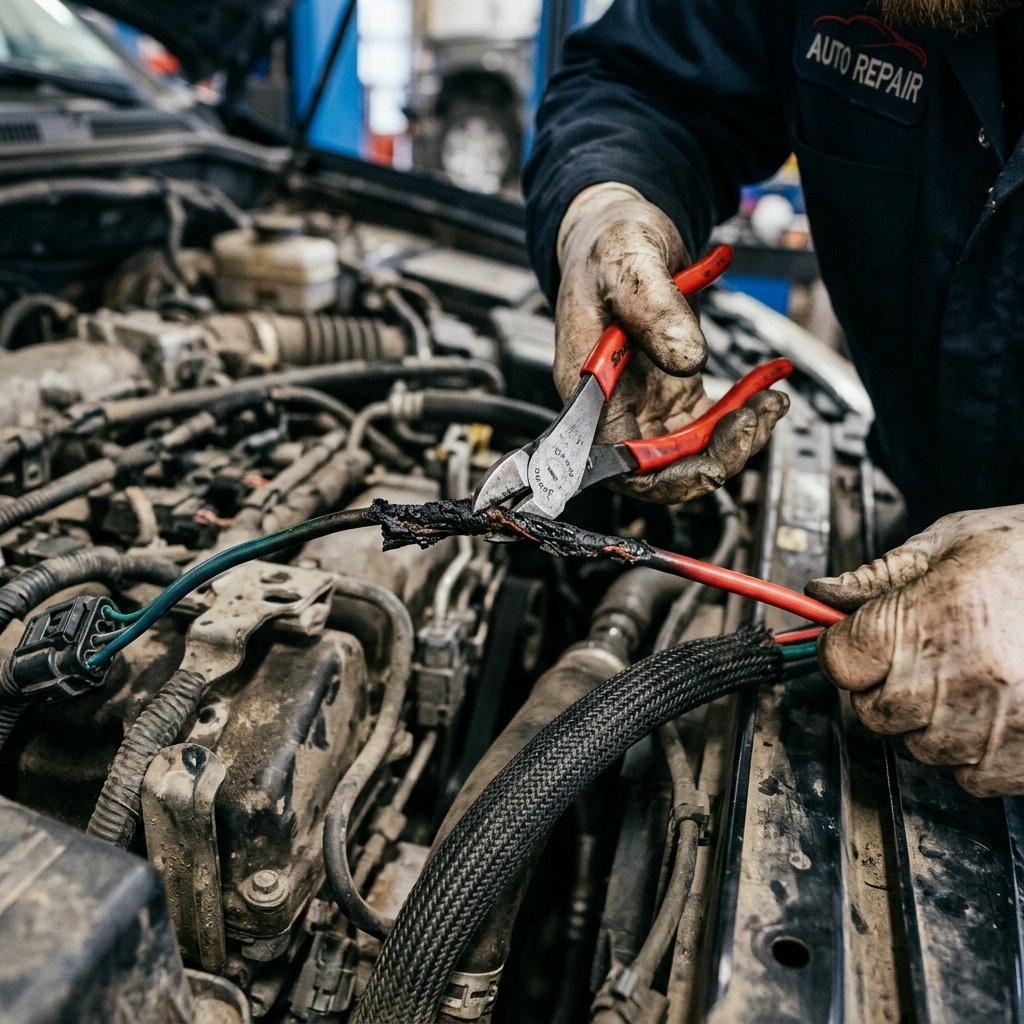
Step 1: Excise the Damage
Burnt copper becomes brittle, heavily oxidized, and loses its conductivity. You cannot solder or crimp onto burnt copper.
- Disconnect the vehicle’s battery.
- Use sharp wire cutters to cut away the entire damaged section. You must keep cutting back until you find clean, bright, shiny copper wire on both sides.
- If you had to remove a large section, you will need to splice in a new piece of wire (a “jumper”). Always use the exact same wire gauge (AWG) and ideally match the color coding standards to avoid future confusion.
Step 2: The Mechanical Crimp
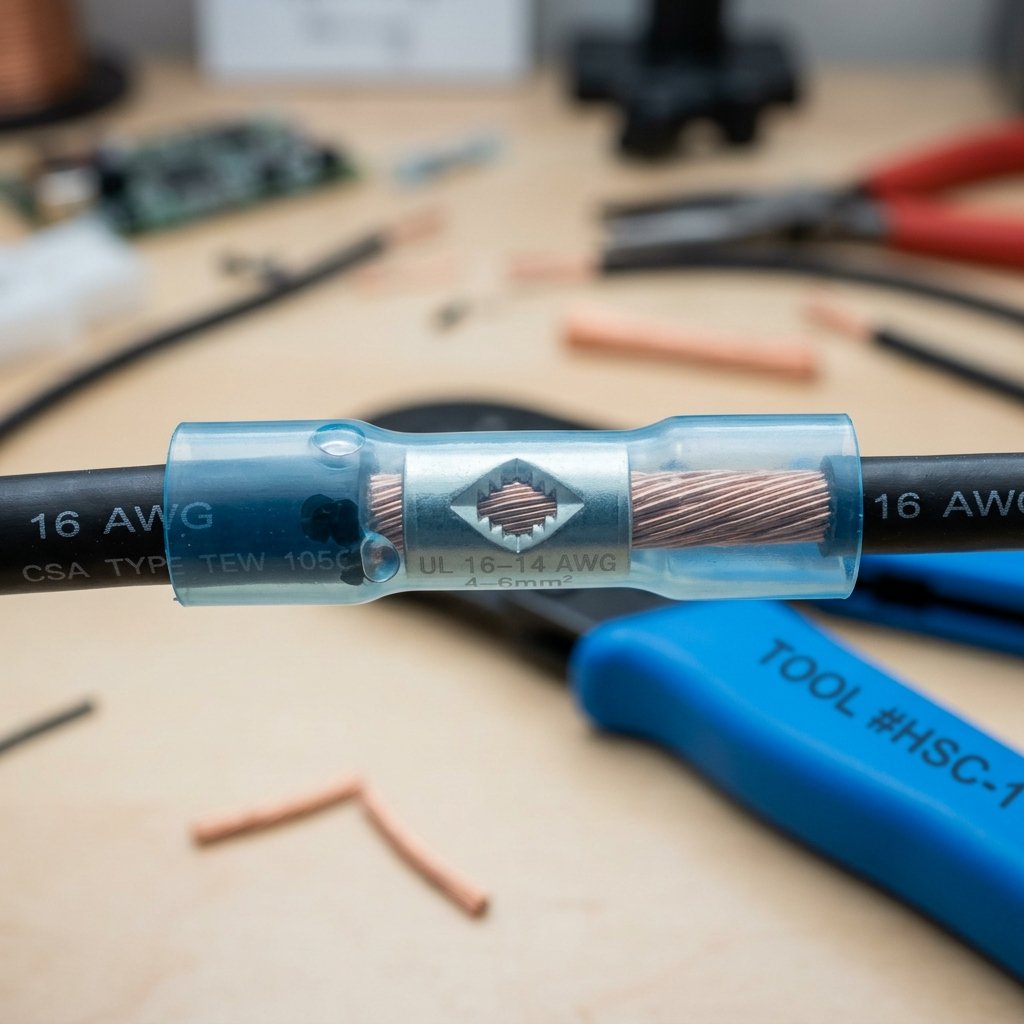
The safest way to join the clean ends in an automotive environment is using an adhesive-lined heat-shrink butt connector. Avoid wire nuts (which vibrate loose) and standard solder (which can crack under vibration).
- Strip exactly 1/4 inch of insulation off the clean wire ends.
- Insert the bare copper into the metal barrel inside the butt connector.
- Use a specialized ratcheting crimp tool to compress the metal barrel. Proper wire crimping techniques ensure a cold weld between the copper and the connector that will never pull apart.
Step 3: The Environmental Seal
An exposed crimp in an engine bay will quickly corrode from moisture and road salt. You must seal the repair.
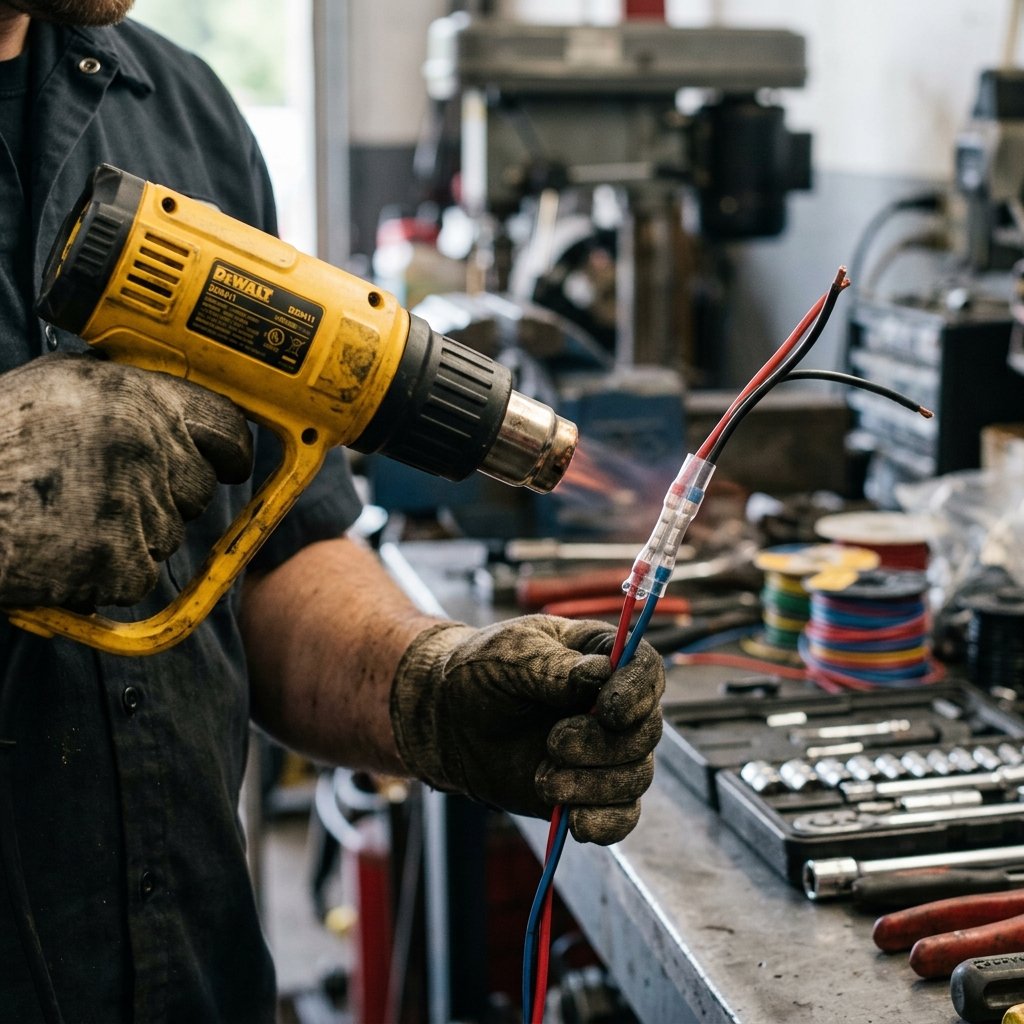
- Using a heat gun (not an open flame lighter, which can melt the plastic too quickly and cause soot), gently apply heat to the translucent plastic tubing of the butt connector.
- Watch as the tubing shrinks tightly around the wire insulation.
- Keep heating until you see a tiny ring of clear, waterproof adhesive ooze out of both ends of the connector. This confirms a perfect, watertight seal.
Once a burnt section of wire has been repaired, it’s worth investigating why the wire overheated in the first place, since simply replacing the damaged segment doesn’t address the root cause. Common culprits include an undersized wire gauge for the circuit’s current draw, a loose or corroded connection creating resistance and localized heat, or a fault elsewhere in the circuit causing excess current draw. Skipping this diagnostic step means the same failure is likely to recur, potentially at a less accessible point in the harness.
Quick Step Guide
-
Excise the Damage
Burnt copper becomes brittle, heavily oxidized, and loses its conductivity. You cannot solder or crimp onto burnt copper.
-
The Mechanical Crimp
The safest way to join the clean ends in an automotive environment is using an adhesive-lined heat-shrink butt connector. Avoid wire nuts (which vibrate loose) and standard solder (which can crack under vibration).
-
The Environmental Seal
An exposed crimp in an engine bay will quickly corrode from moisture and road salt. You must seal the repair.
For related reading, see our article on how heat shrink tubing protects your wiring harness connections. You can also learn more about automotive wire harness solutions. These practices are consistent with standards such as IATF 16949.
Frequently Asked Questions
Wires burn when they carry more current (amperage) than their physical size (gauge) can handle. This is usually caused by a short circuit to the vehicle’s ground (chassis), or because a fuse was bypassed or oversized.
No. Standard vinyl electrical tape will eventually unravel in the high-heat, oily environment of an engine bay. Adhesive-lined heat shrink is the only permanent solution for environmental sealing.
No. You should either crimp OR solder, never both on the same joint. Soldering a wire makes it stiff, and the mechanical pressure of a subsequent crimp will often crack the solder joint, leading to a weak connection.