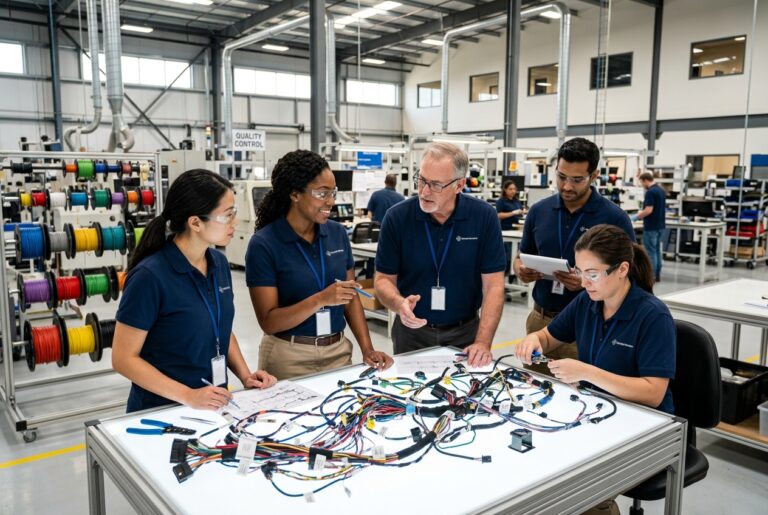
When a piece of machinery or an electronic device stops working, the diagnostic process usually points to a blown fuse, a dead battery, or a fried circuit board. However, what caused that circuit board to fry in the first place? Very often, the root cause is a catastrophic failure within the electrical wiring itself.
Understanding the common causes of wire harness failure is critical for engineers and maintenance teams. Let’s explore the top three reasons harnesses fail and the preventative measures you can take.

1. Abrasion and Chafing
This is arguably the most common cause of failure in dynamic environments like vehicles, aircraft, and robotics. If a wire harness is routed too tightly over a sharp metal edge, or if it is left loose to vibrate against a rough surface, the protective plastic insulation will eventually wear away.
Once the bare copper wire is exposed, it can touch the metal chassis, creating a dead short to ground. This can instantly blow fuses, melt surrounding wires, or even start an electrical fire.
Prevention: Engineers must utilize 3D CAD modeling to plan routing paths that avoid sharp edges. During manufacturing, high-risk areas of the harness should be protected with split loom tubing, Kevlar braiding, or thick rubber grommets where the wires pass through metal bulkheads.
2. Moisture and Corrosion
Water is the enemy of electricity. If moisture enters a connector housing, it begins to oxidize the metal terminals inside (especially if they are cheap, unplated brass or copper). This corrosion creates a layer of resistance.
As resistance builds, the electrical current struggles to pass through the connector. This causes intermittent signal drops (like a sensor giving false readings) and generates excess heat, which can eventually melt the plastic connector.
Prevention: If a harness is going to be used outdoors, in an engine bay, or in a marine environment, the manufacturer must specify IP67 (or higher) rated sealed connectors. These connectors feature internal silicone ribs that create a watertight seal when mated. Additionally, using gold-plated or tin-plated terminals drastically reduces the risk of oxidation.
3. Extreme Heat Degradation
Standard PVC wire insulation is only rated for about 80°C to 105°C (176°F to 221°F). If a standard wire harness is routed too close to a vehicle’s exhaust manifold or a powerful industrial heater, the plastic insulation will literally melt off the wires.
Even if it doesn’t melt immediately, prolonged exposure to high heat causes standard insulation to become brittle and crack, eventually leading to short circuits.
Prevention: The operating environment temperature must be defined during the initial design phase. If high heat is expected, the manufacturer must use high-temperature insulation like Teflon (PTFE) or Silicone, and wrap the harness in heat-reflective foil or fiberglass sleeving.
How-To: Perform a Basic Harness Inspection
Routine maintenance can catch a failing harness before it destroys expensive equipment. Follow these steps:
- Trace the Route: Run your hands along the entire length of the harness. Feel for any hard, brittle spots (heat damage) or fuzzy, worn spots (abrasion).
- Check the Mounts: Ensure all zip ties and P-clamps are secure. A loose harness will vibrate and chafe.
- Inspect the Plugs: Unplug the major connectors. Look for green/white powder (corrosion) or blackened, melted plastic around the pins.
For related reading, see our article on the impact of extreme cold on wire flexibility and durability. You can also learn more about our manufacturing capabilities. These practices are consistent with standards such as ISO 9001.
These failure-prevention practices are built into demanding platforms such as our Commercial Truck & Heavy-Duty Vehicle Wiring Harness.
Frequently Asked Questions
Yes, but it must be done correctly. Simply twisting the wires back together and wrapping them in electrical tape is a temporary fix that will fail again. The wire must be professionally spliced using a sealed, heat-shrink butt connector or soldered and covered with marine-grade heat shrink.
Historically, this wasn’t a major issue, but in an effort to be more environmentally friendly, many modern wire manufacturers have started using soy-based bioplastics for wire insulation. Unfortunately, rodents find this material delicious. If this is a known issue in your area, you can wrap the harness in rodent-deterrent tape (which contains capsaicin/pepper spray extract).
A properly engineered and protected custom wire harness should last the entire lifetime of the product it is installed in. If a harness is failing after only a few years, it was either designed with the wrong materials or routed incorrectly.