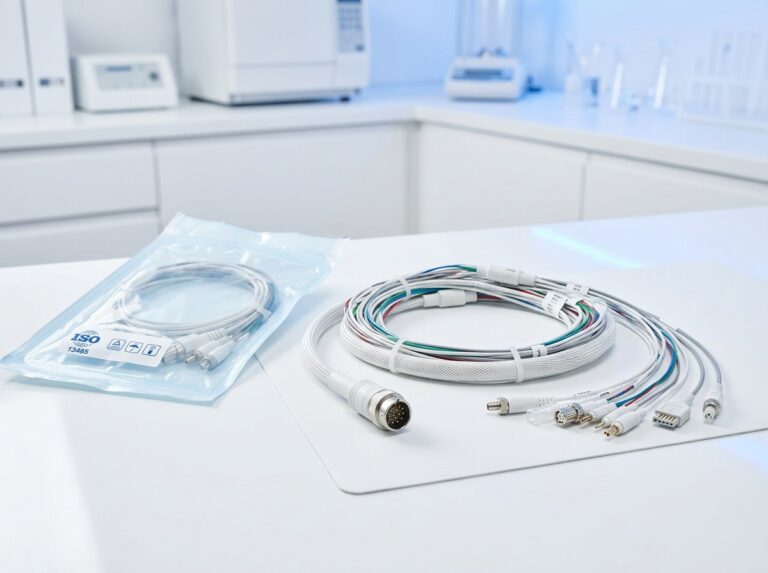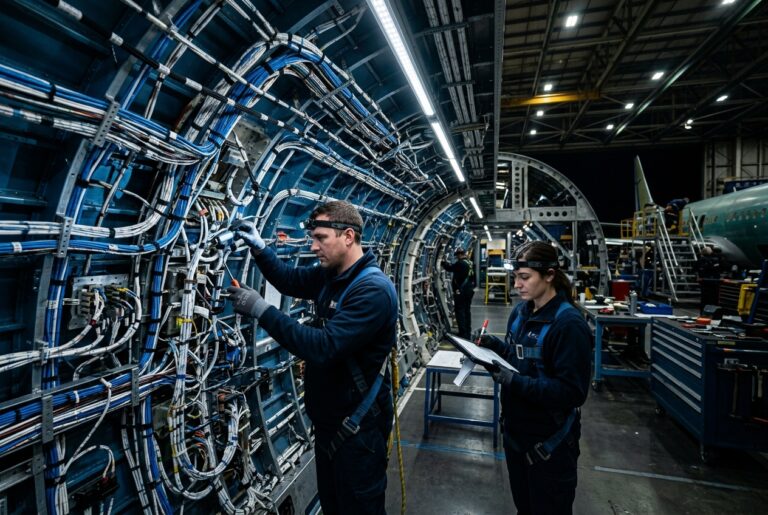
A modern custom wire harness does much more than just connect Point A to Point B. It acts as the central nervous system for complex machinery, actively managing power distribution and protecting expensive components from electrical surges. Understanding the role of relays and fuses within a complex wiring harness system is fundamental to electrical engineering.
While wires act as the veins carrying the electrical current, relays act as the muscles that control the flow, and fuses act as the immune system protecting against catastrophic failure.
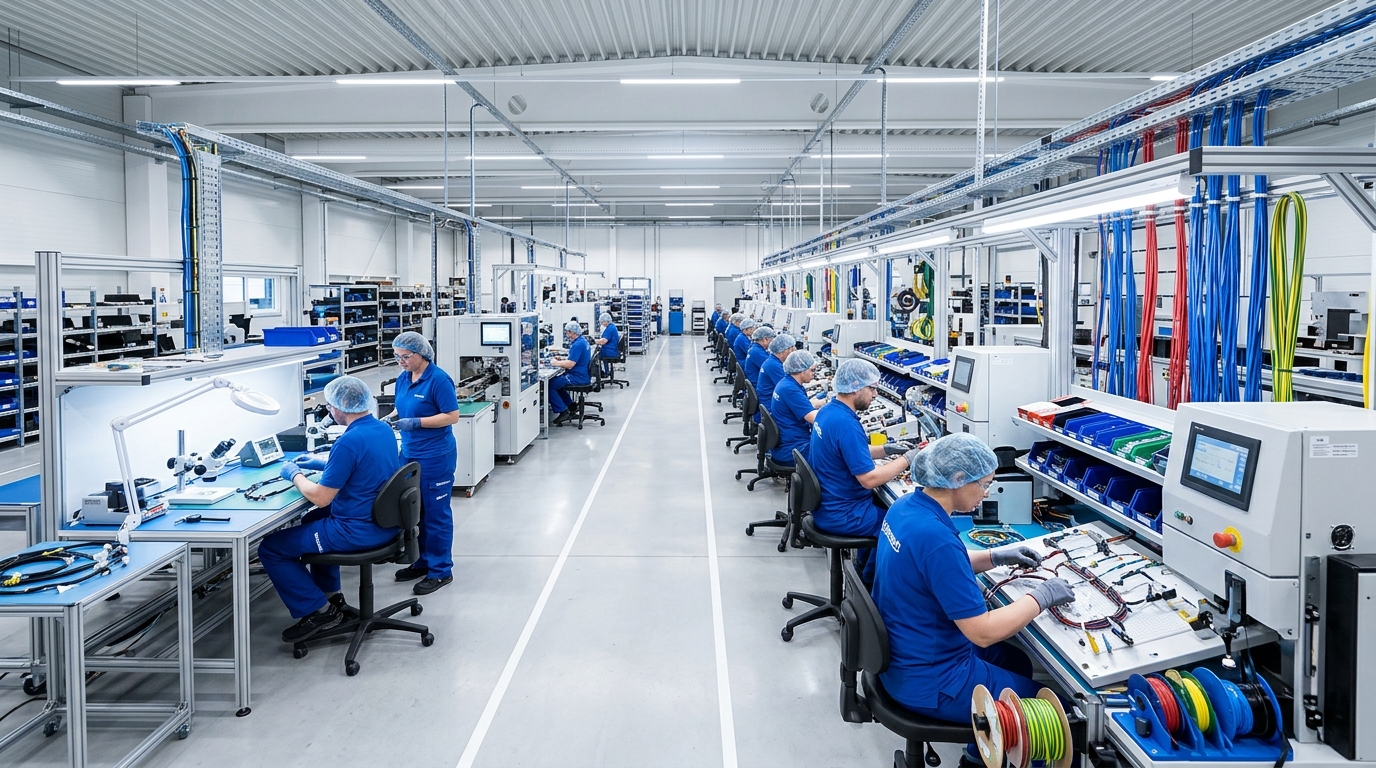
How Relays Control High-Amperage Devices
Many devices in a vehicle or machine (like starter motors, cooling fans, or high-intensity headlights) require massive amounts of electrical current – sometimes 30 to 50 amps. However, the delicate switches on your dashboard cannot handle that much power; they would melt instantly.
This is where the relay comes in. A relay is essentially a heavy-duty, electromagnetically operated switch.
- The Control Circuit: A tiny, safe amount of current flows from your dashboard switch to an electromagnetic coil inside the relay.
- The Load Circuit: The electromagnet pulls down a heavy metal contact plate. This plate closes a separate, heavy-duty circuit, allowing battery power to flow directly to the high-draw device.
By using relays in a wire harness, engineers can route thick, heavy power cables directly from the battery to the device, while only routing thin, lightweight control wires to the cabin switches. This saves immense weight and cost.
How Fuses Protect the Wire Harness
If a wire rubs against a metal chassis and its insulation wears through, a “short circuit” occurs. The electrical current spikes uncontrollably, generating massive heat that will instantly melt the harness and cause a devastating fire.
To prevent this, engineers integrate fuses into the wire harness. A fuse is an intentional weak point in the circuit. It contains a thin metal filament designed to melt (or “blow”) at a very specific temperature (e.g., when current exceeds 15 amps).
If a short circuit occurs, the fuse blows in milliseconds, severing the connection and instantly stopping the flow of electricity before any damage can occur to the expensive harness or the connected devices.
The Power Distribution Block (PDB)
In complex systems, having fuses and relays scattered randomly throughout the harness is a diagnostic nightmare. Instead, manufacturers consolidate them into a central hub.
The Power Distribution Block (PDB), often called a fuse box, is a rigid plastic enclosure integrated directly into the wire harness. It houses all the relays and fuses in a single, easily accessible location. The main battery cable inputs power into the PDB, and the wire harness branches out from it to supply safely fused, relayed power to the rest of the machine.
- Related reading: Learn more about wire gauge
For related reading, see our article on how to properly test a wire harness for continuity and shorts. You can also learn more about our custom wire harness products. These practices are consistent with standards such as ISO 9001.
Relay and fuse coordination is central to panel-level builds such as our Power Distribution Harness for Industrial Enclosures.
Frequently Asked Questions
That clicking sound is the physical metal contact plate slamming shut inside the relay casing, pulled by the electromagnet. It is the sound of the high-power circuit closing.
Never. The engineers selected a 10A fuse because the wires in that specific circuit are only thick enough to safely handle 10 amps. Inserting a 20A fuse removes that protection; the wire will melt and catch fire before the fuse blows.
Both serve the same protective function. However, a traditional blade fuse is destroyed when it blows and must be physically replaced. A circuit breaker automatically “trips” when overloaded and can be manually reset (or auto-reset) once it cools down.