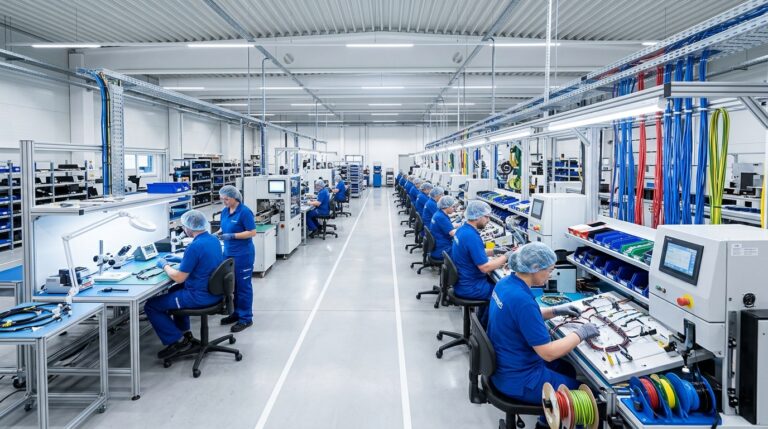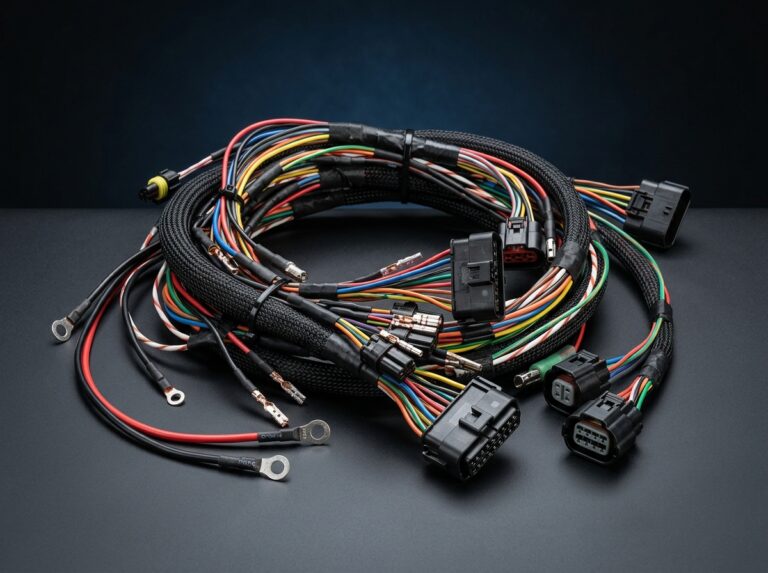
A custom wire harness might look like a complicated web of plastic and copper, but it is actually a highly organized system built from a few essential building blocks. Whether it is used in a simple household appliance or a complex aerospace vehicle, the fundamental components that make up a basic wire harness remain largely the same.
By understanding these core elements, engineers and buyers can make more informed decisions when designing or procuring electrical systems.
1. Wires and Cables: The Core Conductors
The most obvious component of any wire harness is the wire itself. Wires are the conductive pathways that carry electrical current, data, or signals from one point to another. In wire harness manufacturing, we typically use stranded copper wire because it offers superior flexibility and durability compared to solid wire.
- Conductor: The internal metal (usually copper, sometimes aluminum) that carries the current.
- Insulation: The colored plastic or rubber coating (like PVC, Teflon, or Silicone) that surrounds the conductor. It prevents short circuits and protects the wire from environmental damage.
- Wire Gauge (AWG): The thickness of the wire. Thicker wires carry more current safely, while thinner wires are used for low-voltage signal transmission.
2. Terminals: The Essential Connection Points
Wires cannot simply be shoved into a socket. To create a secure, reliable electrical connection, the ends of the wires must be fitted with terminals. Terminals are precision-engineered metal components (often made of brass, copper, or phosphor bronze) that are mechanically crimped or soldered onto the exposed strands of the wire.
There are many types of terminals, including ring terminals, spade terminals, and pin terminals. The crimping process is arguably the most critical step in wire harness manufacturing; a poor crimp can lead to excessive electrical resistance, overheating, and eventual system failure.
3. Connectors and Housings
Once a terminal is crimped onto a wire, it is usually inserted into a connector housing. Connectors are the plastic (or sometimes metal) “plugs” and “sockets” that allow the wire harness to be easily connected to and disconnected from other devices, circuit boards, or other harnesses.
Connectors ensure that the terminals mate securely and in the correct orientation. They often feature locking mechanisms to prevent accidental disconnection caused by vibration.
4. Protective Materials and Bundling
The defining feature of a wire harness is that the individual wires are grouped together. This is where protective materials come in.
- Zip Ties and Cable Lacing: The simplest method of keeping wires bundled tightly together.
- Heat Shrink Tubing: A plastic tube that shrinks tightly around wires when heated. It is used to insulate exposed terminals, provide strain relief, and bundle small groups of wires.
- Braided Sleeving and Split Loom: These materials provide an outer layer of protection for the entire wire bundle. They protect the delicate internal wires from abrasion (rubbing against sharp metal edges), extreme heat, and chemical exposure.
How-To: Identify Quality Components in a Harness
When evaluating a wire harness for your project, look for these signs of quality:
- Inspect the Crimps: The metal terminal should grip the copper strands tightly without cutting them, and the insulation “grip” should securely hold the plastic wire coating.
- Check the Connectors: Give the connector a gentle tug. High-quality harnesses have terminals that “click” securely into the housing and won’t pull out easily.
- Examine the Routing: The protective sleeving should cover the wires completely, especially near the connectors, to provide adequate strain relief.
For related reading, see our article on a step-by-step look at the wire harness manufacturing process. You can also learn more about our custom wire harness products. These practices are consistent with standards such as ISO 9001.
These core components come together in production harnesses such as our Automotive Body Control & Lighting Harness.
Frequently Asked Questions
No. Terminals and connectors are usually proprietary to specific manufacturers (like TE Connectivity, Molex, or Delphi). You must use matching pins, sockets, and housings designed specifically for each other.
Color-coding is essential for troubleshooting and installation. In a complex harness with 50+ wires, assigning specific colors (or color stripes) allows technicians to easily trace a circuit from end to end.
If you are confused about when to use a bundled harness versus a heavily jacketed cable, we highly recommend reading our guide on understanding the key differences between a wire harness and a cable assembly .