
When you sit in a modern car and turn on the ignition, you trigger a massive, invisible network of electrical signals. The radio plays, the dashboard lights up, sensors check the engine, and the climate control kicks in. All of this simultaneous activity is made possible by the vehicle’s central nervous system: automotive wiring harnesses.
In this introductory guide, we will break down what an automotive wiring harness is, why it is so critical to vehicle performance, and how it differs from standard wiring solutions.
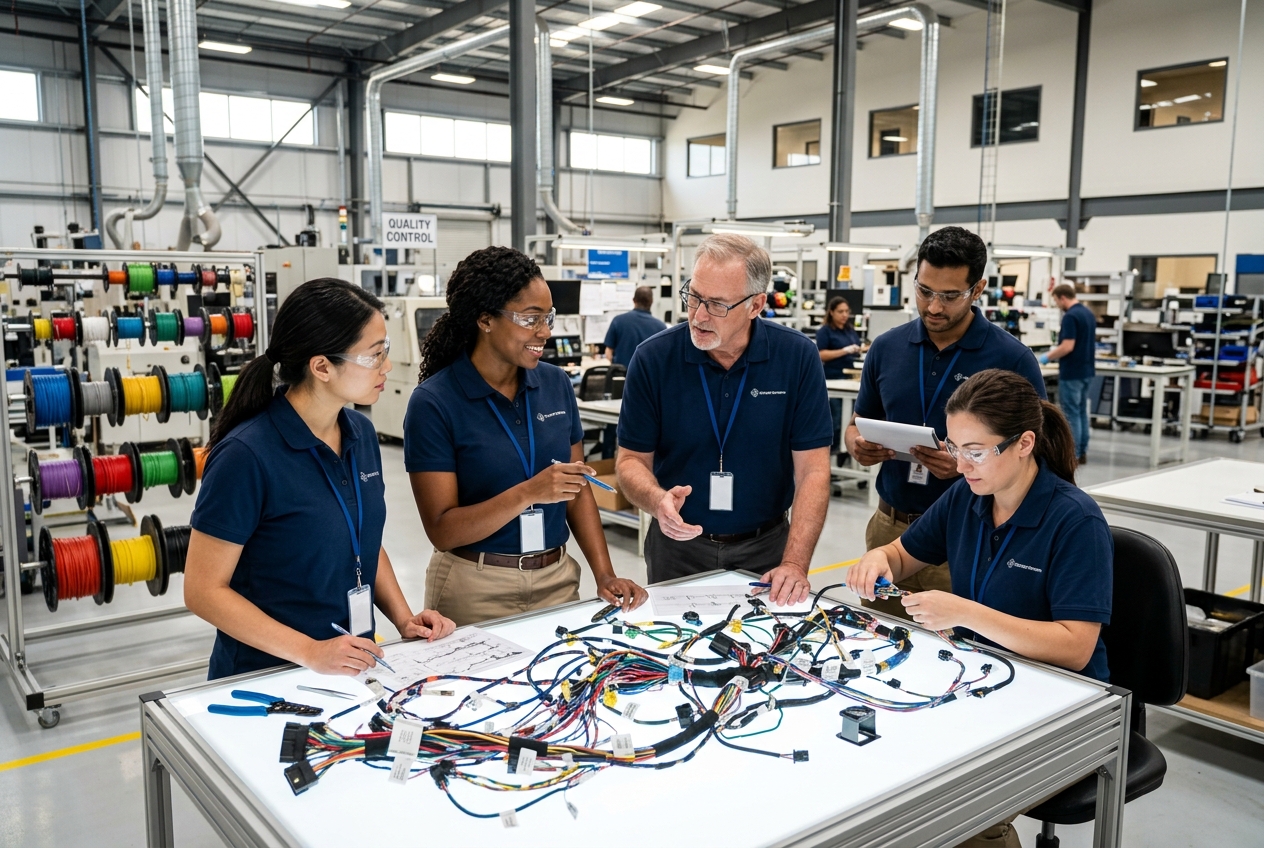
What is an Automotive Wiring Harness?
An automotive wiring harness is a specifically engineered bundle of wires, cables, connectors, and terminals designed to transmit electrical power and electronic signals throughout a vehicle. Rather than installing thousands of individual wires one by one on the assembly line, engineers group these wires together into a single, highly organized “harness.”
This harness snakes through the entire car – from the headlights through the engine bay, under the floorboards, and into the trunk – connecting every single electrical component to the battery and the Engine Control Unit (ECU).
The Hidden Complexity of Car Electronics
Fifty years ago, a car’s wiring was relatively simple: power went to the spark plugs, the starter, the headlights, and the radio. Today, a modern standard vehicle contains upwards of 1,500 to 2,000 individual wires, totaling over a mile in length.
Electric Vehicles (EVs) and cars equipped with Advanced Driver Assistance Systems (ADAS) push this complexity even further. They require harnesses capable of handling high-voltage power for propulsion, alongside highly shielded cables for rapid data transmission from cameras and LiDAR sensors.
Why Custom Harnesses are Vital for Vehicles
Automotive environments are incredibly harsh. For a car to remain reliable for decades, its wiring must survive extreme conditions. This is why automotive wiring harnesses are heavily customized.
- Engine Bay Heat: Wires near the engine block must be wrapped in high-temperature fiberglass or silicone sleeving to prevent the insulation from melting.
- Moisture and Chemicals: Harnesses exposed to the undercarriage use heavy-duty, waterproof connectors (often with rubber gaskets) to seal out road salt, water, and engine oil.
- Vibration Resistance: Constant road vibration can shake loose standard electrical connections. Automotive harnesses use specialized locking terminals and are zip-tied tightly to the chassis to prevent chafing and disconnects.
How-To: Basic Troubleshooting of Automotive Wiring
If you suspect an electrical issue in your vehicle, here is a basic approach to troubleshooting before replacing major components:
- Check the Fuses: Always start here. A blown fuse is the most common cause of a sudden electrical failure.
- Inspect Connectors: Locate the wiring harness connector for the malfunctioning part (e.g., the headlight). Unplug it and check for green or white corrosion on the metal pins.
- Look for Chafing: Trace the visible parts of the harness. Look for spots where the black protective tape has worn away and bare copper is touching the metal frame of the car (this causes a short circuit).
- Test Continuity: Use a digital multimeter to test if power is successfully flowing from one end of the harness wire to the other.
- Related reading: Learn more about wire gauge
- Related reading: Learn more about extreme temperature
For related reading, see our article on how heat shrink tubing protects your wiring harness connections. You can also learn more about automotive wire harness solutions. These practices are consistent with standards such as IATF 16949.
Ready to see this applied to a real vehicle platform? Explore our Custom Automotive Wiring Harness Assemblies.
Frequently Asked Questions
Absolutely not. Even within the same car model, the harness will differ depending on the trim level (e.g., a car with a premium sound system requires a different harness than the base model). They are highly specific to the vehicle’s exact feature set.
The tape (often a specialized friction tape like TESA tape) bundles the wires tightly to save space, provides a layer of abrasion resistance against the metal car frame, and helps reduce annoying rattling noises inside the dashboard.
Yes, minor damage (like a single broken wire or a melted connector) can often be repaired by a skilled technician by splicing in a new wire or crimping a new terminal. However, extensive damage (like from a flood or major engine fire) usually requires replacing the entire harness section.