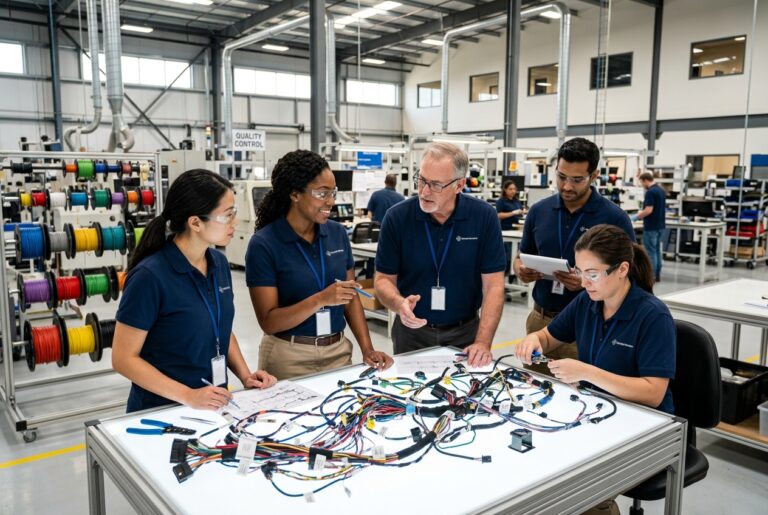
When we look at consumer electronics, medical equipment, or industrial computers, we usually marvel at the microchips and high-resolution displays. However, none of those components can function without a reliable method of communicating with one another. This is the primary role of a wire harness.
In this article, we will explore the main functions of a wiring harness in electronic devices, and why they are engineered with such incredible precision.
1. Reliable Power Distribution
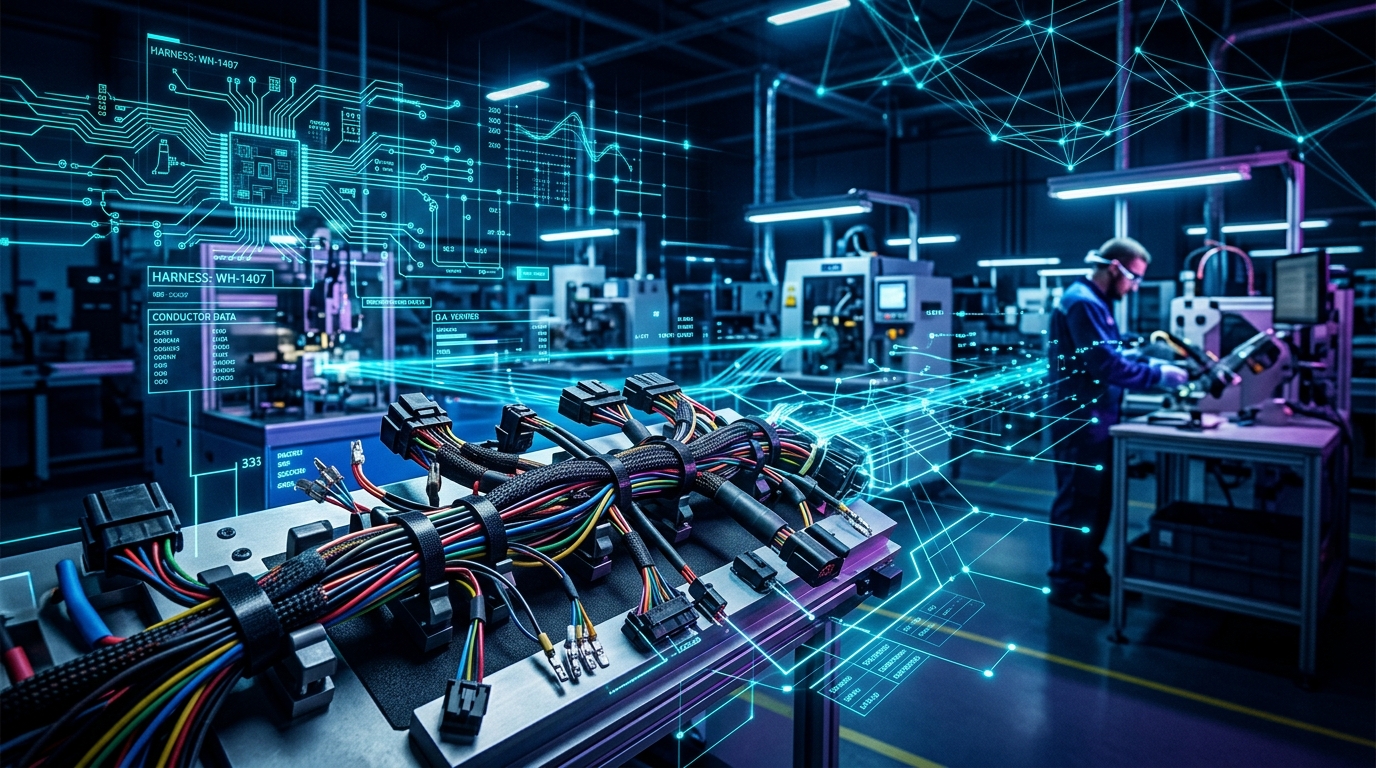
The most fundamental function of a wiring harness is to distribute electrical power from a central source (like a battery or a power supply unit) to the various components within the device. A custom harness ensures that the correct voltage and current reach the correct destination safely.
By using varying wire gauges within the same harness, engineers can send high-current power to a motor while simultaneously sending low-current power to an LED screen, all within a single, organized bundle.
2. High-Speed Data and Signal Transmission
In modern electronics, moving power is only half the battle. Devices must also transmit massive amounts of data instantly. Sensors, processors, and memory modules constantly “talk” to each other. A primary function of the harness is to act as the data highway.
In these applications, signal integrity is critical. If a data wire is placed too close to a high-power wire, electromagnetic interference (EMI) can corrupt the data. Engineers design custom electronic harnesses using shielded cables and twisted pairs to guarantee that data flows without interruption or corruption.
3. Space Optimization in Micro-Electronics
As consumer electronics and medical devices become smaller and more portable, the internal real estate for wiring shrinks dramatically. Standard, off-the-shelf cables are simply too thick and rigid to fit inside a modern laptop or a wearable medical monitor.
Micro-wire harnesses are specifically designed to snake around tiny microchips and cooling fans. By bundling ultra-thin wires (sometimes as small as 32 AWG) and using miniature connectors, manufacturers can optimize the internal space, allowing for larger batteries or additional sensors without increasing the device’s overall size.
How-To: Designing for Electronic Enclosures
If you are an engineer designing a harness for a compact electronic device, keep these three rules in mind:
- Measure Twice, Route Once: Use 3D CAD modeling to plan the exact route the harness will take to avoid pinch points when the device enclosure is snapped shut.
- Prioritize Shielding: In tight spaces, EMI is a major risk. Always shield data cables if they must run parallel to power lines.
- Specify Micro-Connectors: Work with manufacturers like Molex or JST who specialize in high-density, low-profile connectors designed specifically for printed circuit boards (PCBs).
- Related reading: Learn more about wire gauge
- Related reading: Learn more about extreme temperature
In consumer and industrial electronics, the wiring harness often does more than just carry power and signals between components; it also plays a role in managing electromagnetic interference and ensuring components can be serviced or replaced without redesigning the entire assembly. Compact devices in particular benefit from harnesses with fine-pitch connectors and flexible flat cable (FFC) or flexible printed circuit (FPC) construction, which take up far less internal space than traditional round-wire bundles while still providing reliable, repeatable connections during assembly and any future repairs.
For related reading, see our article on how to select the best wire harness tape for high temperature environments. You can also learn more about our custom wire harness products. These practices are consistent with standards such as ISO 9001.
For an example of a harness engineered specifically around these functions, see our RoHS 3 Consumer Electronics Cable Assemblies.
Frequently Asked Questions
Incredibly small. In industries like medical device manufacturing, micro-harnesses use wires that are barely thicker than a human hair, terminated with connectors that require a microscope for assembly.
Yes, this is very common and is one of the main benefits of a custom harness. However, careful engineering is required to shield the data lines from the electrical noise generated by the power lines.
Flat flexible cables (FFC) or ribbon cables are often used in electronics because they lay perfectly flat against a surface, taking up almost zero vertical space. They are ideal for routing under keyboards or behind LCD screens.