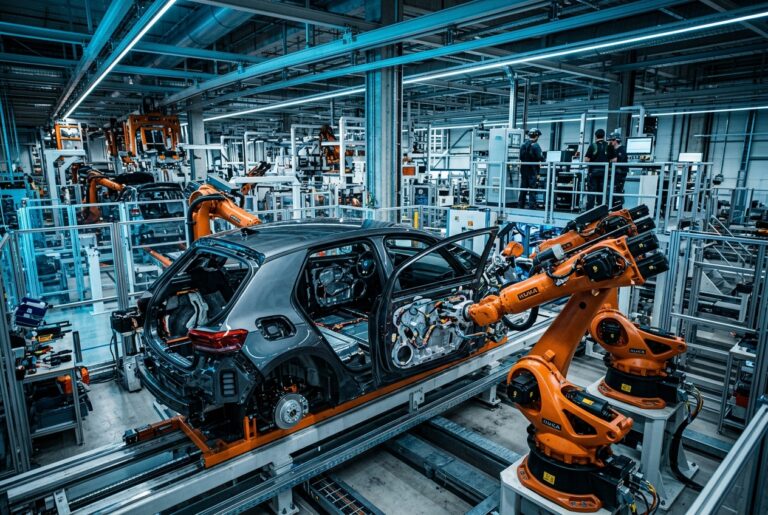
When a vehicle reaches the end of its life, or when an engineer needs to replace a badly damaged harness, what happens to the old wires? A standard modern vehicle contains over a mile of copper wiring wrapped in thick plastic insulation. Multiplying that by millions of scrapped cars reveals a massive ecological challenge. The environmental impact of wire harness recycling and disposal is a growing concern that the scrap metal industry is rushing to solve.
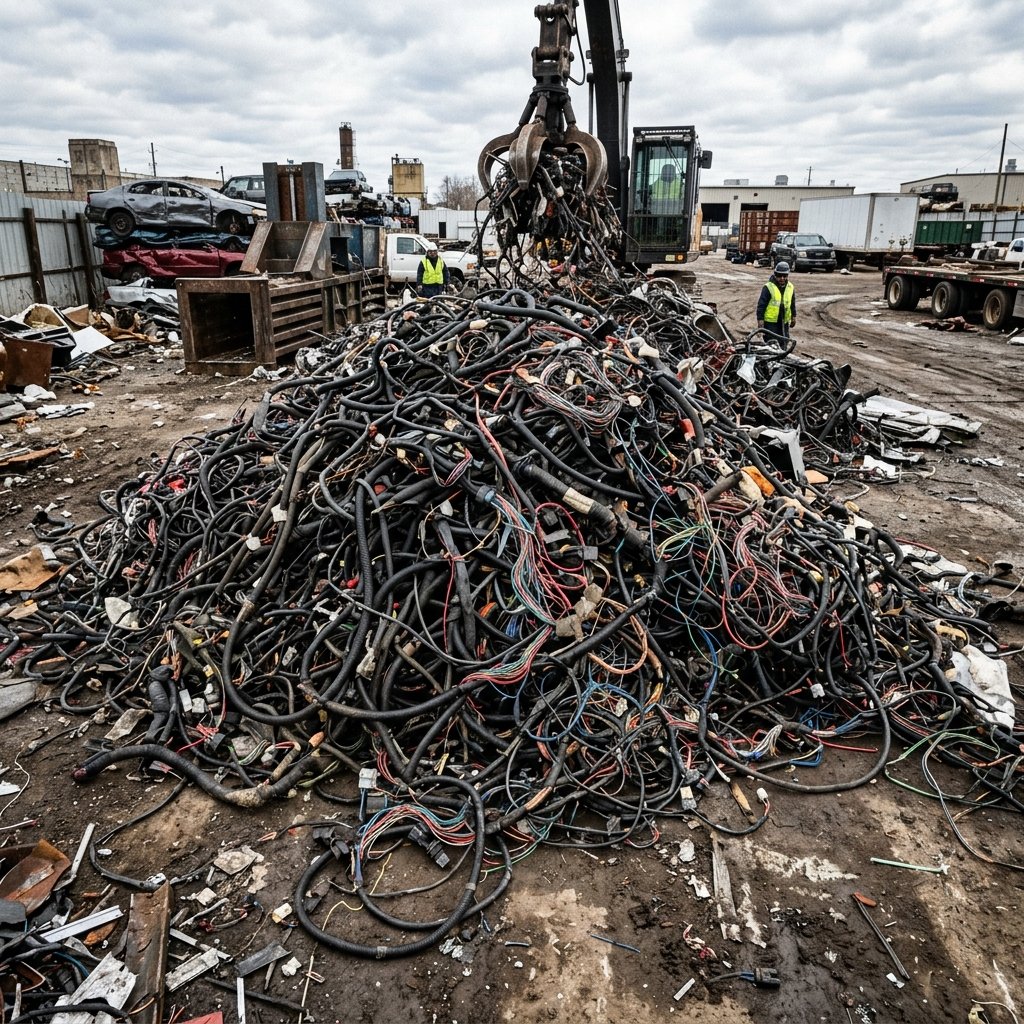
The Problem with E-Waste
Historically, the disposal of electrical wire was an environmental disaster. Scrappers would simply pile up the wire harnesses and set them on fire to burn off the plastic insulation, leaving behind the valuable copper. This practice released highly toxic dioxins and heavy metals into the air and soil. Today, open burning of wire is strictly illegal in most developed nations.
Modern Mechanical Recycling
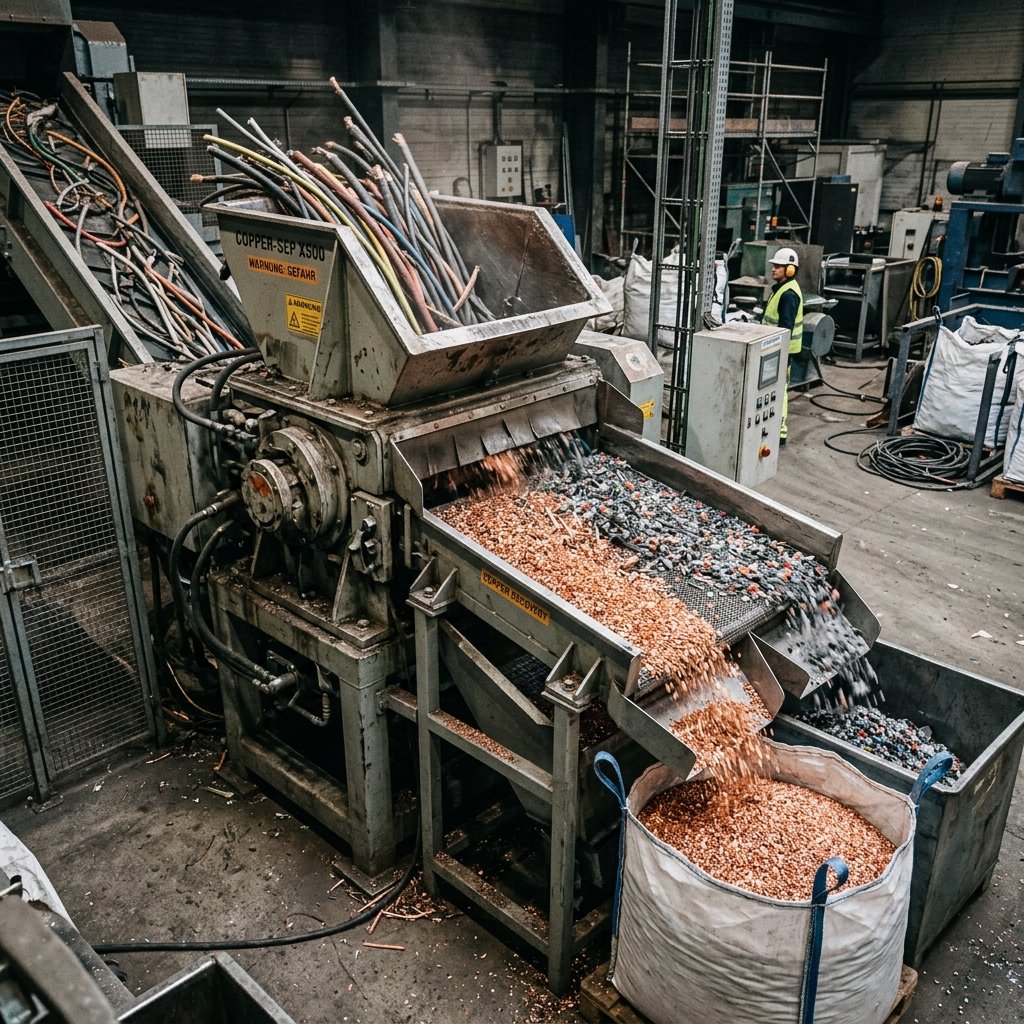
To safely recover the copper without pollution, specialized recycling facilities now use massive mechanical “granulators” (often called choppers).
The manufacturing process works in reverse. Entire wire bundles are fed into industrial shredders. The machines chop the wire into tiny pieces, roughly the size of grains of rice. Next, these pieces fall onto a vibrating table equipped with an air blower (a density separator). Because copper is much heavier than plastic, the air blows the light plastic “fluff” to one side, while the heavy, clean copper “chops” fall to the other.
How-To: Prepare Wiring for the Scrap Yard
If you have a pile of leftover wiring from a project and want to recycle it, follow these steps to get the best price:
- Remove the Plugs: Large plastic connectors and heavy metal brackets reduce the overall copper percentage. Cut them off.
- Strip Heavy Wires: If you have thick battery cables (4 AWG or larger), it is worth your time to manually strip the insulation materials off using a utility knife. Scrap yards pay a premium (often double) for “Bare Bright” copper versus insulated “Number 2” wire.
- Don’t Strip Thin Wires: Do not waste hours stripping thin 18 AWG wires. The copper yield is too low to justify the labor. Leave them insulated; the recycling yard’s granulator will handle it.
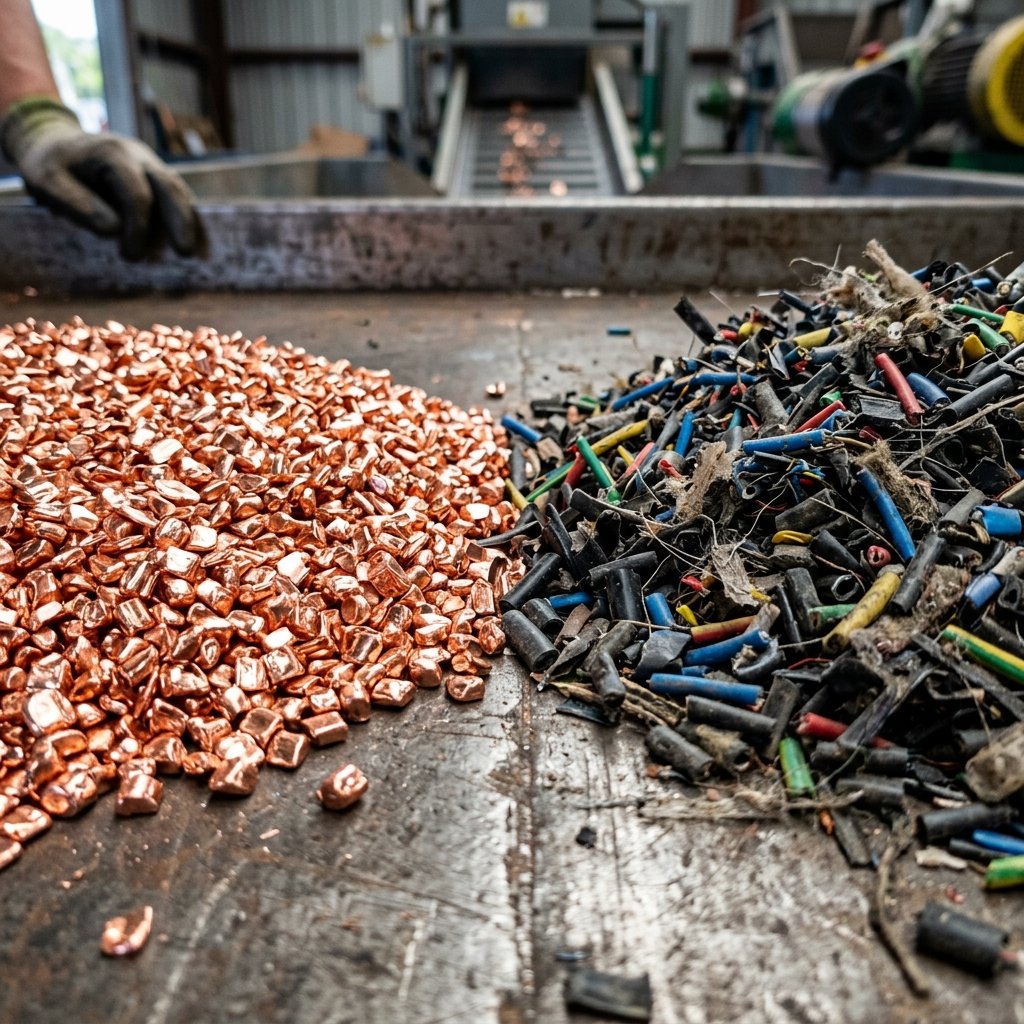
Recycling a wire harness is more involved than recycling a single copper wire because harnesses combine several materials that need to be separated before they can be processed. Copper conductors, PVC or thermoplastic insulation, connector housings (often nylon or other engineering plastics), and metal terminals all have different recycling pathways and value. Facilities that specialize in harness recycling typically shred the assembly and use a combination of mechanical separation and density-based sorting to recover copper at high purity, since even small amounts of contamination can significantly reduce the resale value of reclaimed copper.
For related reading, see our article on a guide to selecting the right wire gauge (awg) for your project. You can also learn more about our custom wire harness products. These practices are consistent with standards such as ISO 9001.
Frequently Asked Questions
Unfortunately, mixed automotive wire insulation (which contains PVC, XLPE, nylon, and rubber) is very difficult to recycle into new products. In many cases, this “plastic fluff” is currently sent to landfills, though research is ongoing to turn it into composite building materials.
Most reputable scrap yards will actively reject burnt wire, or pay severely degraded prices for it, because it is evidence of illegal open burning and the copper itself is often degraded by the heat.
Fiber optic cables are extremely difficult to recycle because they are made of glass strands (silica) and Kevlar, rather than valuable copper. They are generally considered trash, not scrap metal.