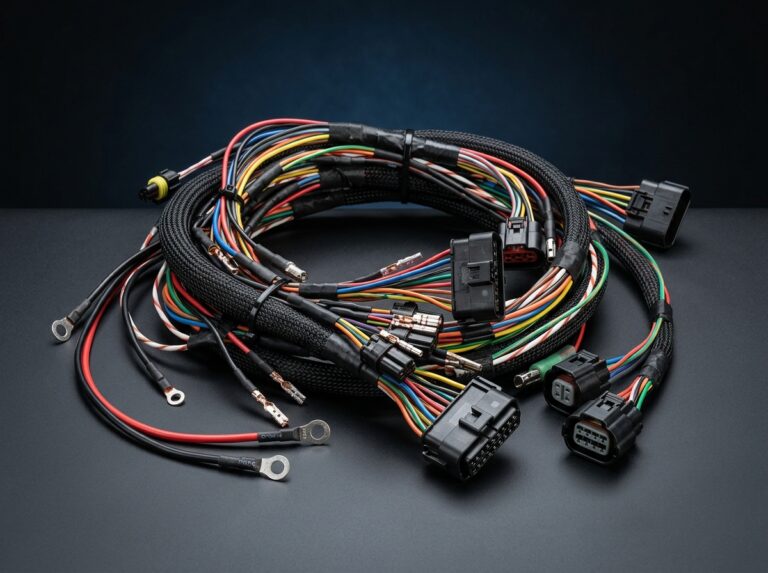
Imagine opening a complex machine to find a massive bundle of 50 completely identical black wires. Diagnosing an electrical fault would be nearly impossible. To solve this, the engineering world relies heavily on wire harness color coding standards. Whether you are using stranded or solid wires, color is the universal language of electrical troubleshooting.
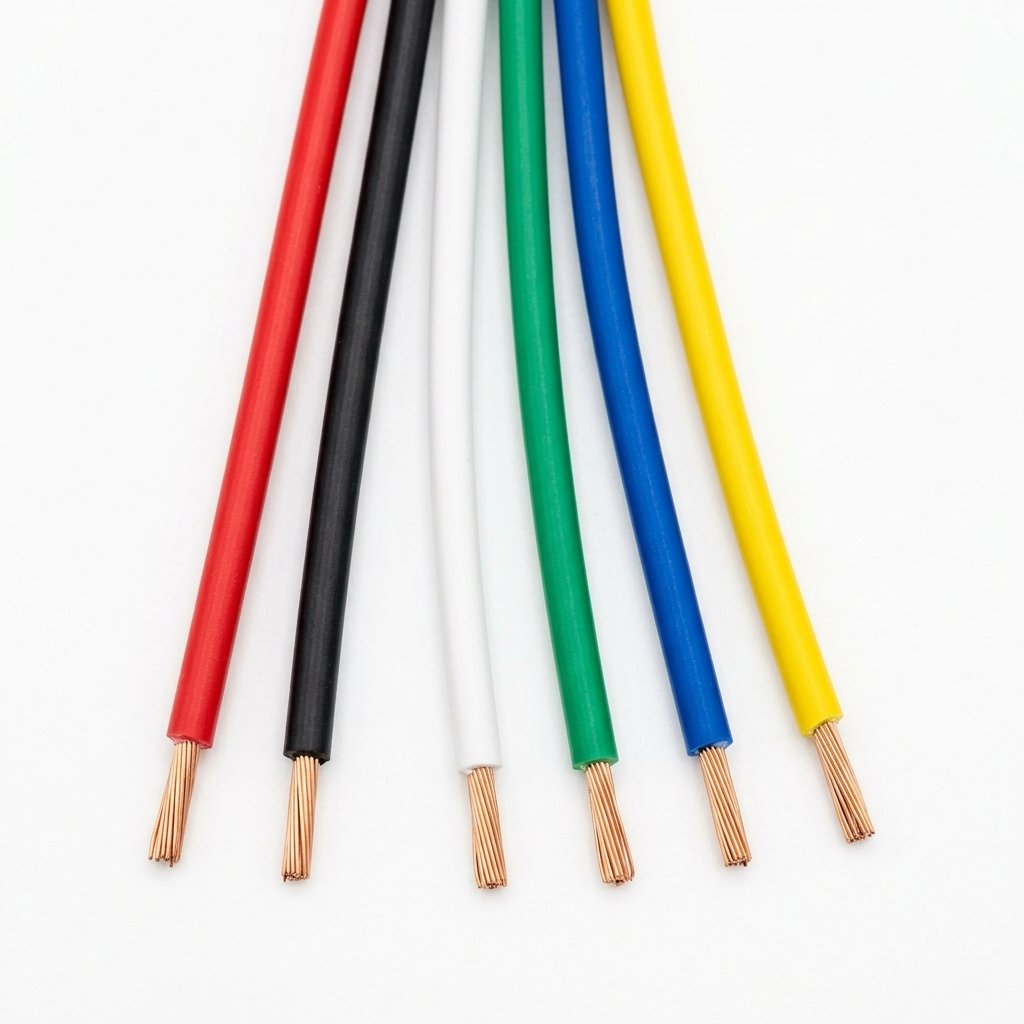
Common Color Standards (Automotive & DC)
While specific manufacturers (like Ford or Toyota) often have their own proprietary color codes, the general 12V/24V DC industry standard generally follows these rules:
- Red: Unswitched, constant 12V battery power. (Always hot).
- Black: Chassis Ground. (The return path to the negative battery terminal).
- Yellow: Switched ignition power. (Only hot when the key is turned on).
- Blue: Often used for antenna power, remote turn-on signals, or specific sensor feeds.
- Green & White: Frequently used for data lines, such as a twisted pair for a CAN bus network.
The Power of Striped Wires (Tracers)
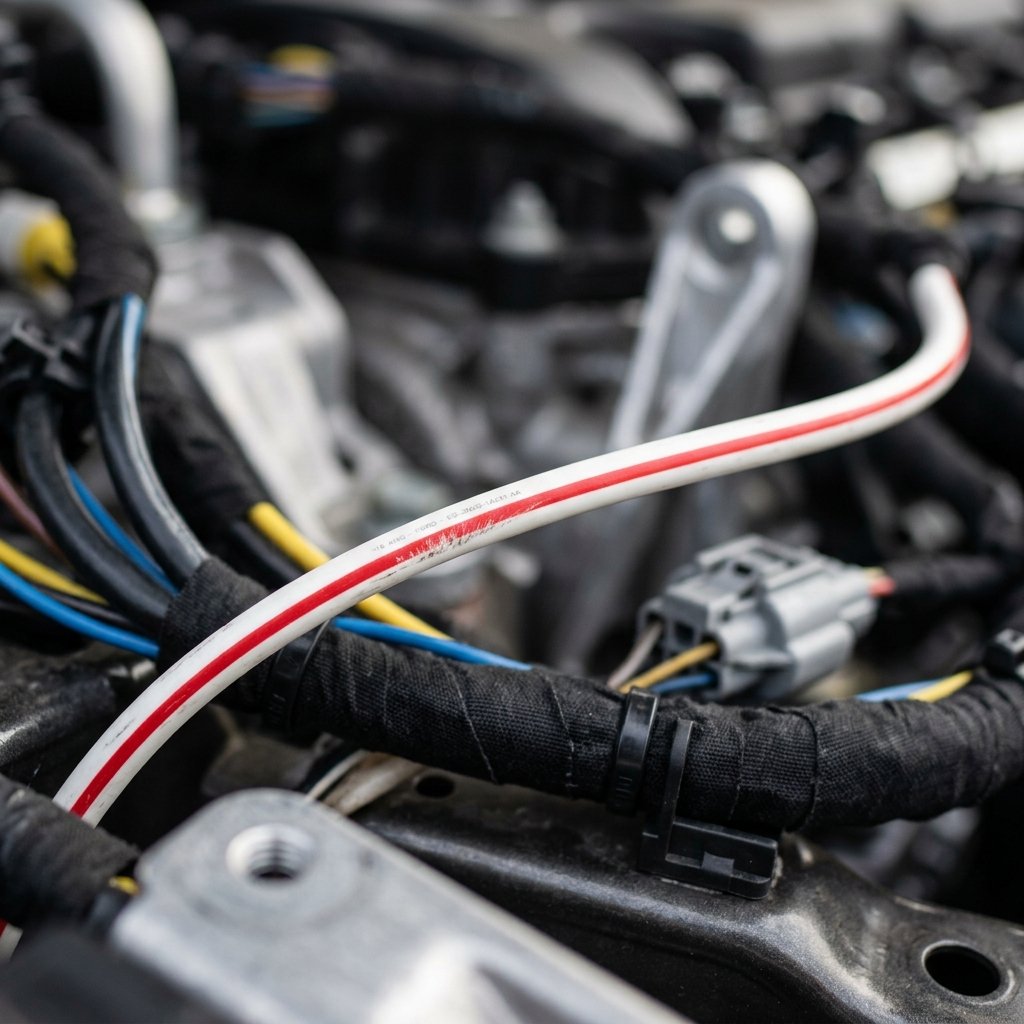
There are only so many solid colors available. To identify hundreds of distinct circuits in a single vehicle, manufacturers use “tracers.” A tracer is a thin stripe of a secondary color running longitudinally down the main insulation. When reading a wiring schematic, a wire labeled “WHT/RED” means the primary color is White, and the thin stripe is Red.
How-To: Identify a Wire During Troubleshooting
If you are trying to locate a specific circuit, follow these steps to verify the color code:
- Consult the Schematic: Always start with the official engineering diagram. Locate the pin number on the connector and read the color abbreviation (e.g., GRN/BLK).
- Clean the Wire: Wires in an engine bay get covered in grease and dust. A white wire can easily look black. Wipe the insulation clean with a rag.
- Check for Fading: UV light and extreme heat can bleach colors. Red often fades to pink or white over time. Inspect the wire deep inside the harness wrapping, or immediately after stripping the wire where it has been protected from light.
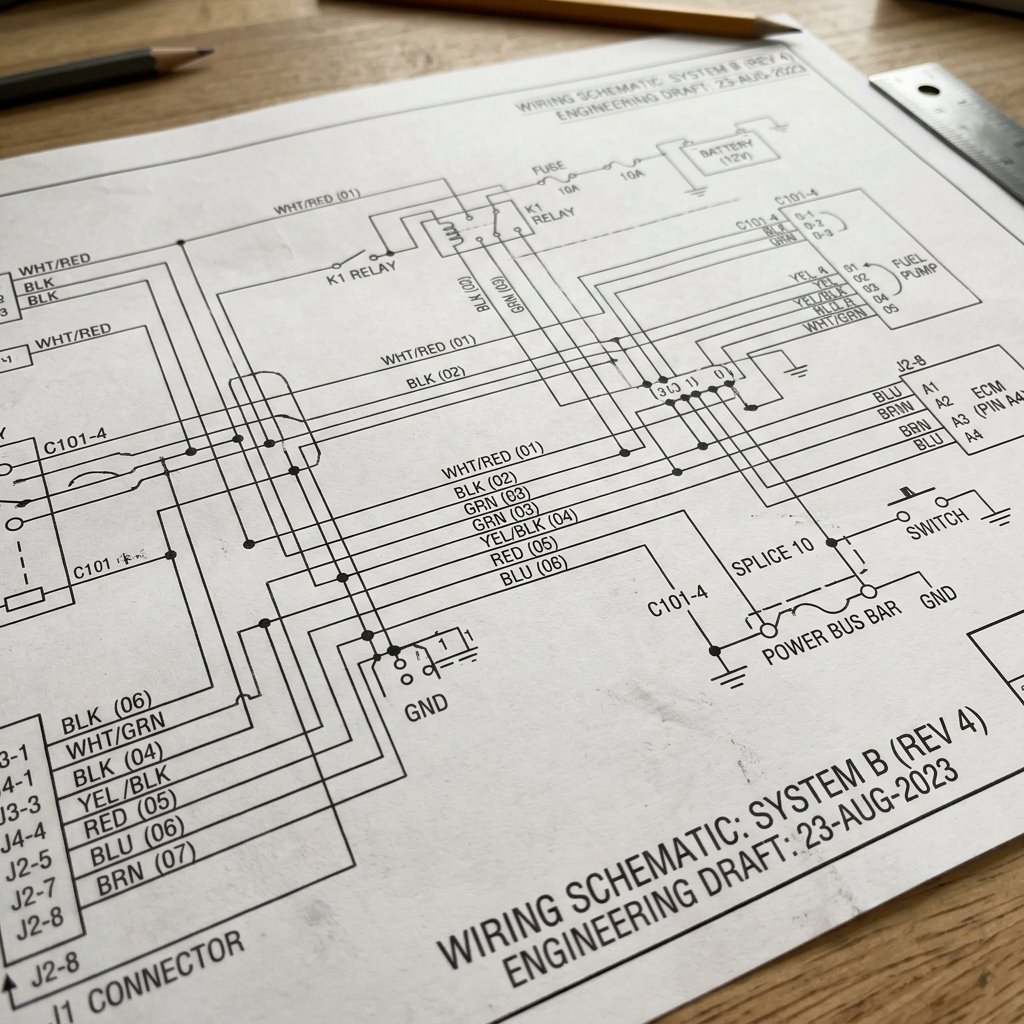
Consistent color coding becomes even more important on multi-branch harnesses where dozens of wires run in parallel through the same bundle. Without a documented color and stripe standard, technicians tracing a fault have to rely on continuity testing wire-by-wire, which slows down repairs considerably. Most manufacturers align their internal color coding with SAE J1128 or a customer-specified print spec, and it’s good practice to keep a color legend attached to the harness drawing so field technicians can reference it years after the original design work was done.
For related reading, see our article on how to calculate voltage drop for long wire harness runs. You can also learn more about our custom wire harness products. These practices are consistent with standards such as ISO 9001.
Frequently Asked Questions
No, absolutely not. In US residential AC wiring (120V), Black is the dangerous “Hot” wire, White is Neutral, and Green or bare copper is Ground. Mixing AC and DC standards is extremely dangerous.
Some European manufacturers use “hash” marks (short, broken stripes wrapping around the wire diagonally) instead of a continuous longitudinal tracer stripe. It serves the exact same purpose for identification.
For a personal DIY project, yes. However, for any professional manufacturing or ISO-certified assembly, strict color coding is required to ensure field technicians can safely service the harness years later without needing to trace every wire manually.