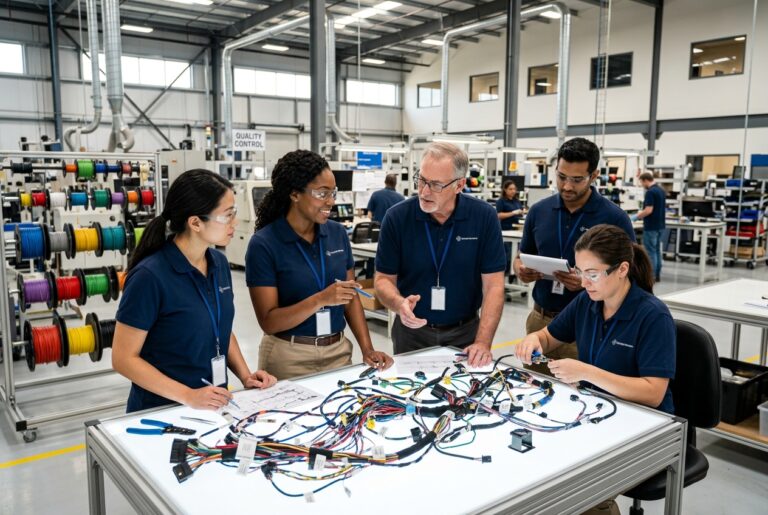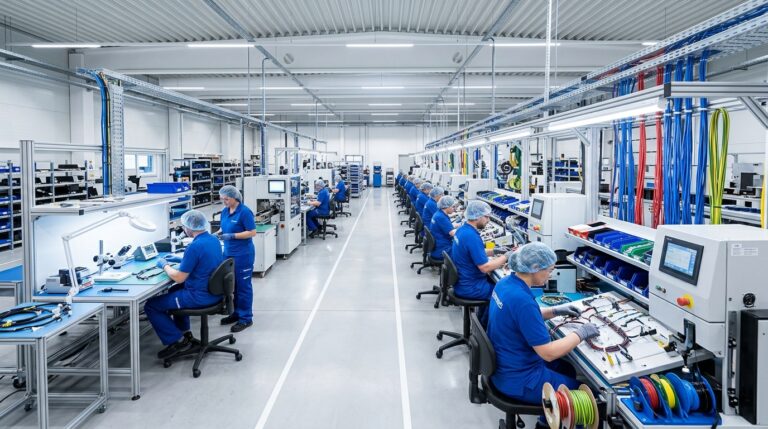
For decades, wire harness manufacturing has been the stubborn holdout of the industrial revolution. While car chassis were being welded by robots and engines assembled by automated lines, the complex, intricate, and floppy nature of electrical wires meant that wire harnesses still had to be painstakingly built by hand on massive wooden nail boards.
However, that era is rapidly coming to an end. Driven by the explosive demand for electric vehicles (EVs) and complex aerospace avionics, the industry is undergoing a massive technological renaissance. Here is a look at the advanced future of wire harness manufacturing, powered by advanced automation and Artificial Intelligence.
1. Fully Automated Cut, Strip, and Terminate (CST)
The days of a technician sitting at a bench with hand strippers are long gone for high-volume production. Modern factories now utilize massive, multi-million-dollar automated CST machines.
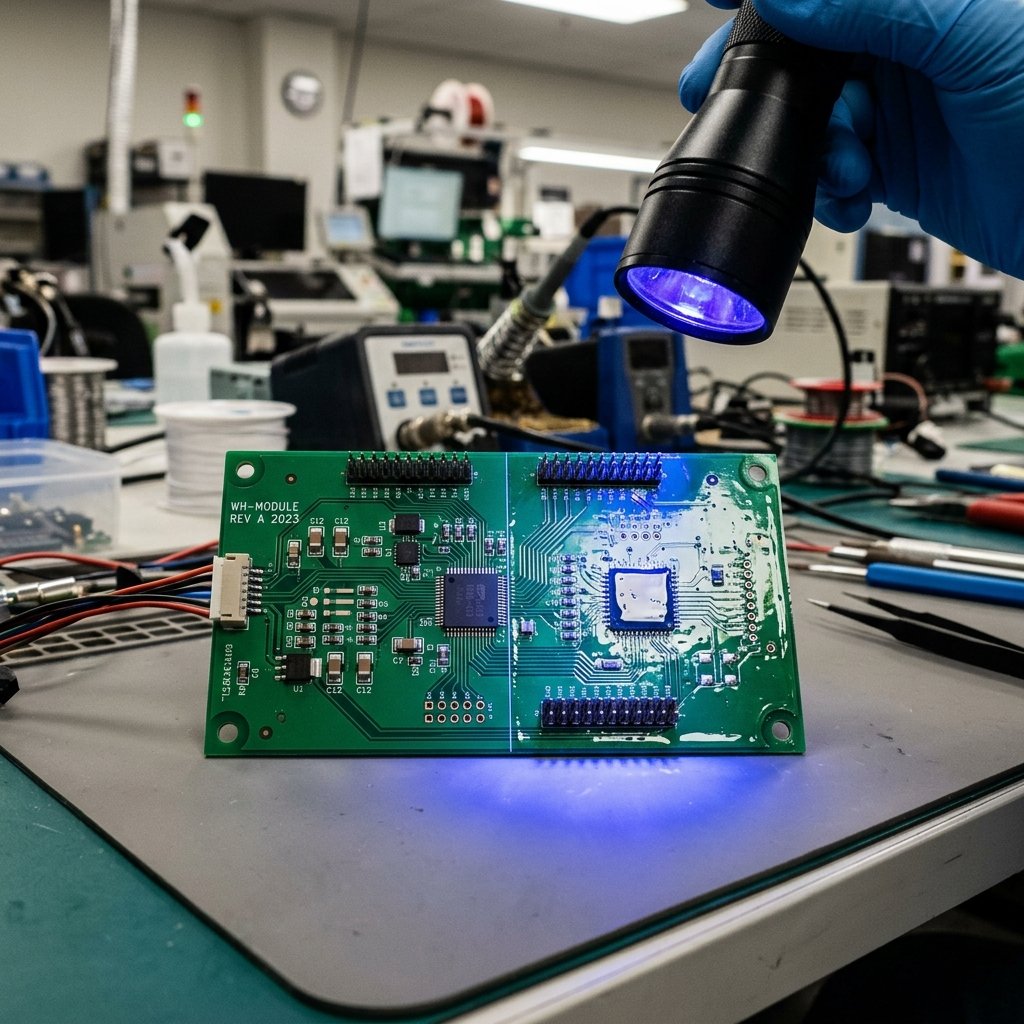
These machines pull wire directly from massive bulk spools at blistering speeds. They use high-precision lasers or microscopic blades to cut the wire to the exact millimeter, strip the insulation without nicking a single microscopic copper strand, slide on a waterproof silicone seal, and hydraulically crimp a terminal onto both ends. All of this happens in less than a second per wire, with zero human intervention and 100% mathematical precision.
2. AI-Powered Quality Control and Vision Systems
The most terrifying aspect of wire harness manufacturing is that a single bad crimp – one loose copper strand out of fifty – can cause an airplane to crash or an EV to catch fire. Historically, quality control relied on human visual inspection, which is prone to fatigue.
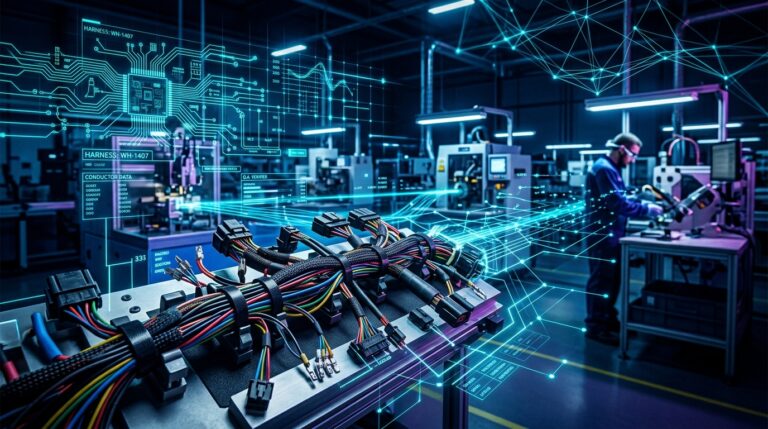
Today, Artificial Intelligence is revolutionizing quality assurance. Every automated crimping press is now equipped with high-speed macro cameras. As the press stamps the metal terminal, the AI instantly analyzes a microscopic photograph of the joint. By comparing the exact deformation of the metal and the geometry of the strands against a database of millions of perfect crimps, the AI can detect a micro-fracture or a missing strand instantly, automatically rejecting the defective wire before it ever reaches the assembly board.
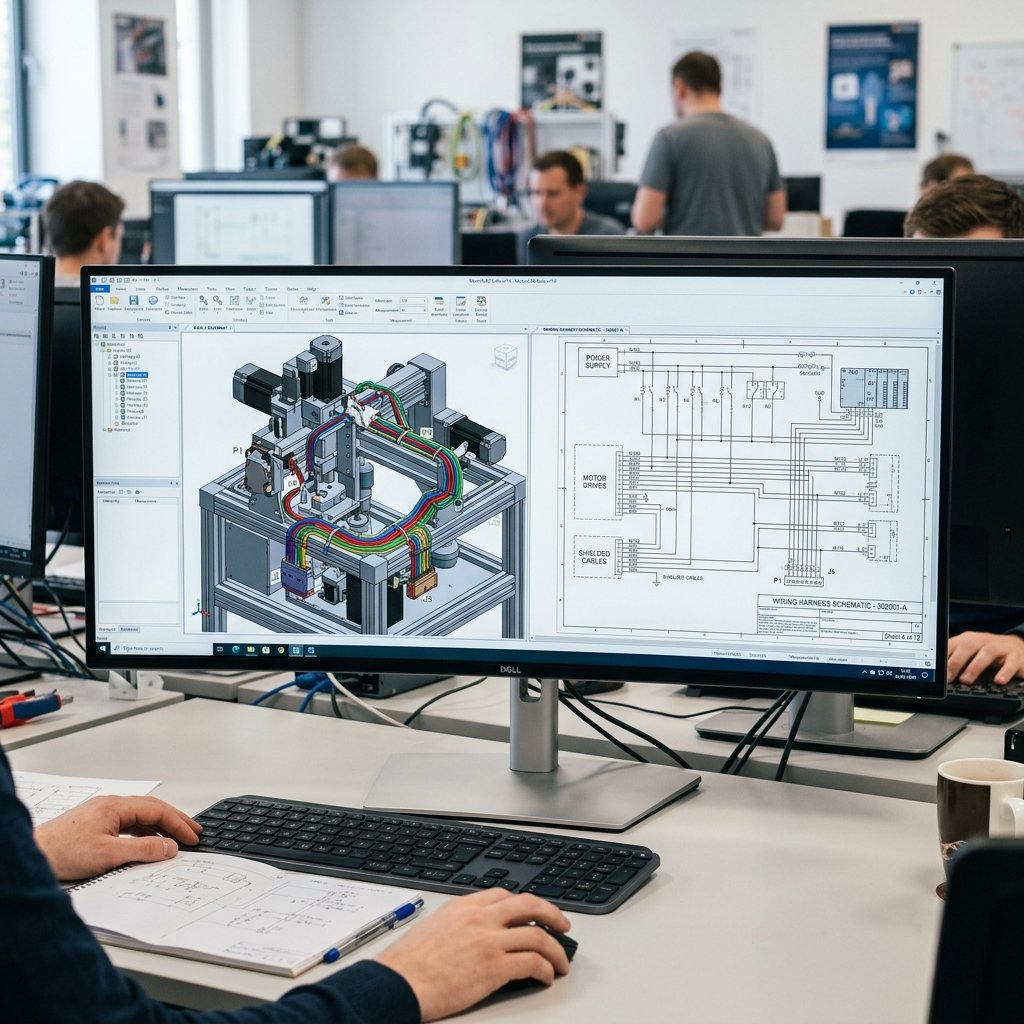
3. Robotic Routing and Assembly
The “holy grail” of wire harness automation has always been the actual routing – picking up a floppy wire and placing it correctly into a plastic connector housing, and then routing it around a 3D board.
Thanks to advancements in tactile robotics and AI pathfinding algorithms, we are finally seeing robots capable of grasping delicate, flexible wires without crushing them. Dual-arm collaborative robots (cobots) are now working alongside humans. While human workers handle the most complex, intricate wrapping tasks, the robots perform the repetitive insertion of pins into massive 80-pin ECU connectors, verifying the “click” engagement of every single pin via force-feedback sensors.
For related reading, see our article on how to properly splice wires in an automotive harness. You can also learn more about our quality control process. These practices are consistent with standards such as ISO 9001.
Frequently Asked Questions
Not anytime soon. While simple, straight-line harnesses are fully automated, the complex, 3D nature of massive automotive and aerospace looms still requires human dexterity for taping, routing, and installing complex branch junctions. The future is “collaborative” robotics, not full replacement.
3D printing is massively accelerating the prototyping phase. Instead of waiting weeks for a custom plastic connector housing or a specific routing clip to be injection-molded, engineers can 3D print fully functional prototypes in hours, test the harness fitment on a physical chassis, and iterate designs overnight.
A digital twin is a perfect, 1:1 virtual simulation of the wire harness inside a virtual CAD model of the vehicle. By running simulations on the digital twin, AI can predict exactly where the harness will chafe against the metal chassis during a simulated 10-year lifespan, allowing engineers to add extra protective sleeving before the first physical prototype is ever built.