When looking at a heavy-duty cable or a complex wire harness assembly, you are actually looking at multiple layers of engineered protection. in wire harness manufacturing, understanding the critical difference between primary and secondary wire insulation is not just a matter of semantics – it is essential for choosing the right materials, ensuring electrical safety, and guaranteeing the long-term reliability of your product.
Whether you are designing an electrical system for an aerospace application, an automotive engine bay, or an industrial control panel, selecting the incorrect insulation can lead to catastrophic failures, short circuits, and safety hazards. Let’s dive deep into the distinct roles, materials, and engineering requirements of primary versus secondary wire insulation.
1. Primary Insulation: The First Line of Defense
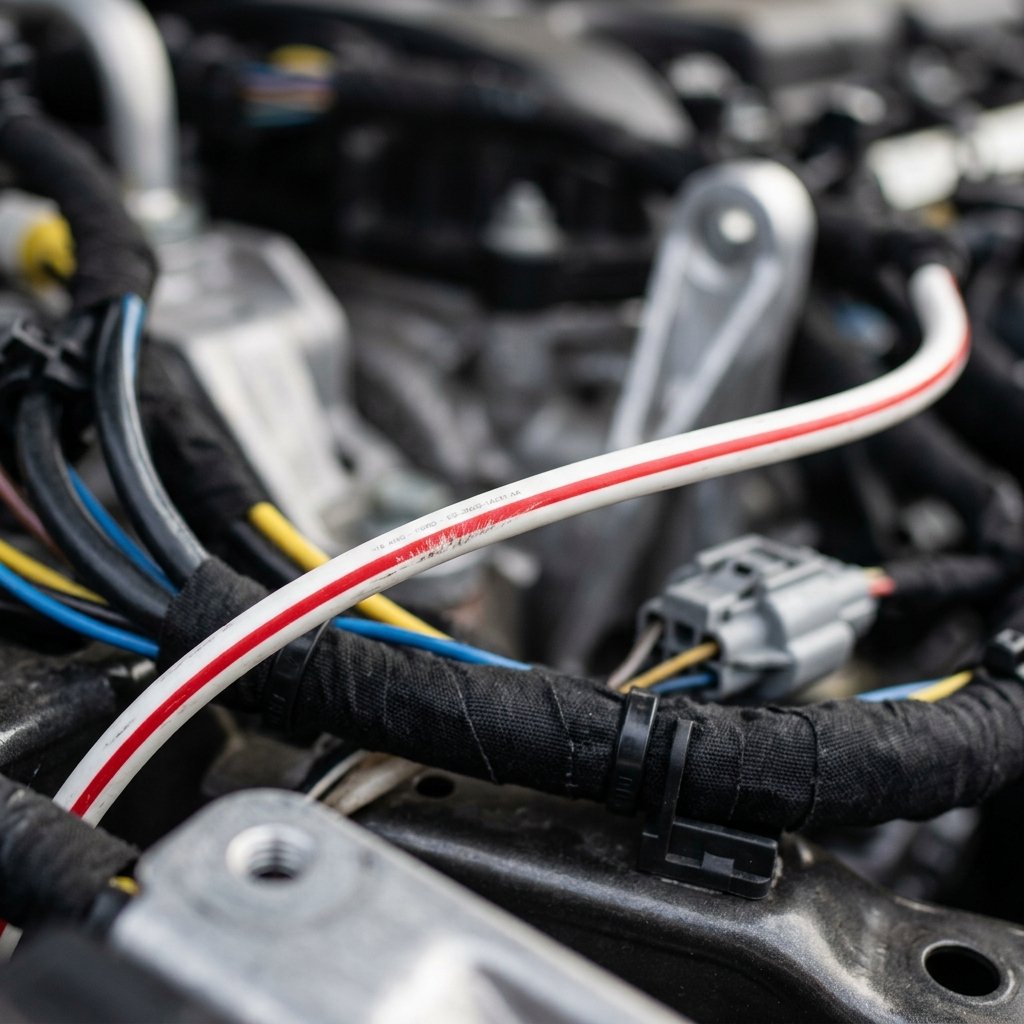
Primary insulation refers to the thin layer of dielectric (non-conducting) material that directly coats and encapsulates the bare copper or aluminum conductor strands. It is the core insulation that makes a “wire” a wire.
The Role of Primary Insulation
- Electrical Isolation: Its absolute primary job is to contain the voltage and prevent short circuits between adjacent wires in a tight bundle, or between the wire and a grounded metal chassis.
- Color Coding: Primary insulation is almost always color-coded or striped to allow technicians to identify individual circuits within a massive bundle.
- Voltage Rating: The thickness and dielectric strength of the primary insulation directly determine the maximum voltage rating of the wire (e.g., 300V, 600V, or 1000V).
Common Primary Materials
Because it must be thin enough to keep the overall wire diameter small, yet strong enough to contain high voltages, primary insulation is typically made from highly refined polymers:
- PVC (Polyvinyl Chloride): The most common and cost-effective material, used in consumer electronics and standard automotive wiring (e.g., TXL, GXL wire).
- PTFE (Teflon): Used in aerospace and high-temperature environments. It is extremely thin, highly resistant to heat (up to 200°C), and chemically inert.
- XLPE (Cross-Linked Polyethylene): Offers excellent thermal stability and moisture resistance, making it ideal for marine and heavy-duty automotive applications.
2. Secondary Insulation (The Outer Jacket): Environmental Armor
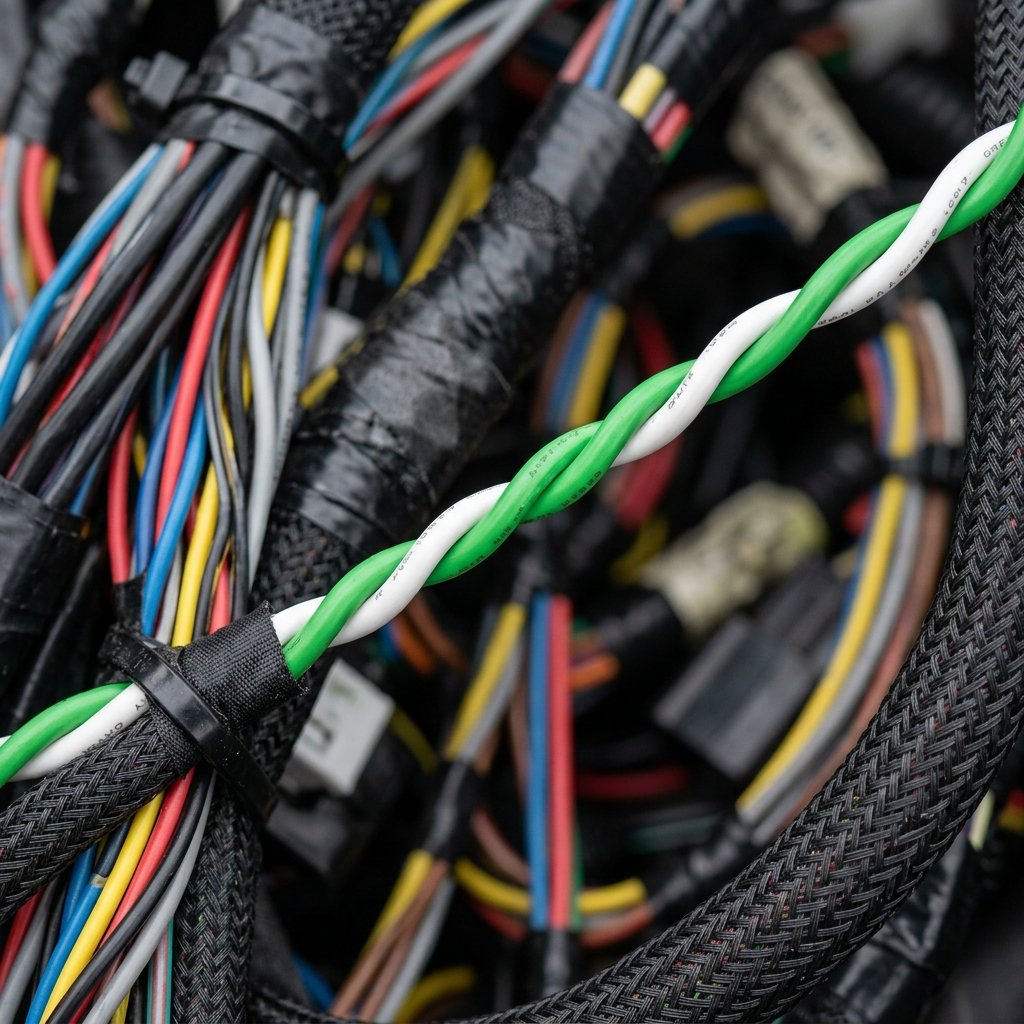
Secondary insulation, commonly referred to as the “outer jacket” or “sheath,” is the thick outer layer that surrounds a bundle of individually insulated primary wires, or encloses a single heavily insulated power cable. Crucially, secondary insulation is not primarily designed to stop voltage; its job is purely mechanical and environmental protection.
The Role of Secondary Insulation
- Mechanical Defense: It acts as an armor against physical abrasion, crushing, and cutting forces. Without a tough secondary jacket, the thin primary insulation would easily tear when dragged across rough concrete or metal edges.
- Environmental Sealing: The jacket provides a waterproof and chemical-proof barrier against harsh elements, including engine oil, brake fluid, saltwater, and UV radiation from the sun.
- Bundling: It elegantly groups multiple scattered primary wires into a single, manageable, and aesthetically pleasing cable assembly.
Common Secondary Materials
Because it must absorb physical abuse, secondary jackets are typically thicker and made from tougher, more flexible elastomers:
- Polyurethane (PUR): Exceptionally tough, highly resistant to tearing, and remains flexible even in freezing temperatures. Ideal for robotics and automation cables.
- TPR/TPE (Thermoplastic Rubber/Elastomer): A rubber-like material that offers excellent flexibility and chemical resistance, commonly used in industrial power cords.
- Neoprene: Known for its outstanding resistance to oil and weather, often used in military and heavy machinery applications.
3. When Do You Need Both?
Not every electrical system uses secondary insulation. In a protected, dry environment like the inside of a server chassis or a sealed electronics box, bundles of wires often only have primary insulation. These wires are usually managed using zip ties or simple plastic loom.
However, whenever a wire harness exits a protected enclosure and is exposed to the elements, moving parts, or human interaction, secondary insulation becomes absolutely mandatory. For example, the cable connecting a sensor on a car’s axle to the main ECU requires a robust, thick polyurethane secondary jacket to survive the constant flexing, flying rocks, and road salt.
For related reading, see our article on the benefits of using braided expandable sleeving. You can also learn more about our manufacturing capabilities. These practices are consistent with standards such as ISO 9001.
Frequently Asked Questions
Sometimes, but you should never rely on it. If the primary insulation melts or tears, adjacent wires inside the secondary jacket will touch each other and short out, even if the outer jacket is perfectly intact.
Yes. When you slide a piece of thick, adhesive-lined heat shrink tubing over a bundle of primary wires, you are essentially creating a custom secondary jacket that provides mechanical and environmental protection.
If every individual wire had a jacket as thick as a secondary sheath, a bundle of 50 wires would be massive, inflexible, and incredibly heavy. Separating the roles into thin primary layers and one thick secondary outer layer keeps cables compact, lightweight, and flexible.