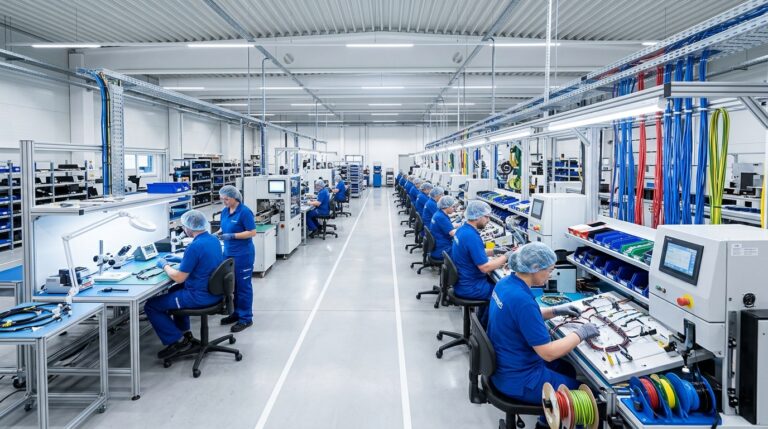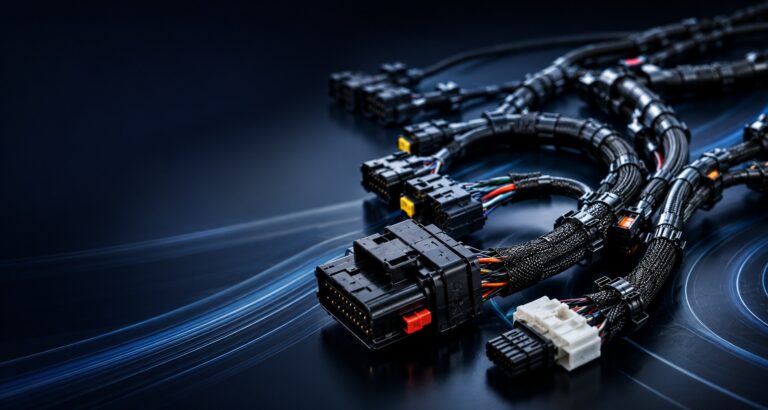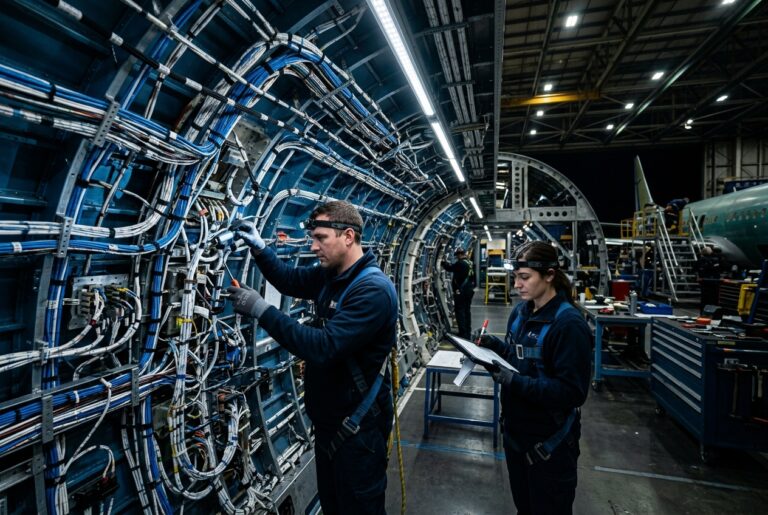
For decades, assembling a complex electrical system was a stubbornly manual process. Engineers laid out massive pegboards, and human operators spent hours routing wires by hand. Today, however, innovations in automated wire harness manufacturing technology are fundamentally transforming the factory floor, driving unprecedented levels of quality and speed in the wire harness manufacturing process.
The Rise of High-Speed Processing
The most significant leap forward has been in the initial stages of production: cutting, stripping, and crimping. Modern cut-and-strip machines can pull wire from massive spools, measure it to the exact millimeter, strip the insulation, and crimp a terminal onto the end at speeds exceeding thousands of pieces per hour. This speed is completely unattainable by human hands, and the mathematical precision ensures that every single wire crimping technique is executed flawlessly.
Robotics and Connector Assembly
While machines have cut wire for years, the tricky part has always been inserting those tiny, fragile metal terminals into complex plastic connector housings. This task requires immense dexterity. However, a new generation of industrial robotic arms equipped with highly sensitive force-feedback grippers can now perform this task. They can “feel” if a terminal is clicking into place correctly or if it is jammed, preventing damage to the expensive connector.
Automated Optical Inspection (AOI)
Even with advanced robots, mistakes can happen. This is where Automated Optical Inspection (AOI) comes in. Rather than relying on human eyes to spot microscopic defects, high-resolution digital cameras instantly scan every single crimp and connection on the line. AI algorithms analyze the geometric shape of the metal to ensure it is perfect. This optical check is often performed right before the harness is sent to the wire harness testing equipment for final electrical validation.
In practice, automation is rarely all-or-nothing. Most modern harness shops run a hybrid model: automated machines handle repetitive, high-precision tasks like wire cutting, stripping, and crimping, while skilled technicians manage final assembly, routing, and inspection steps that still require human judgment. This hybrid approach lets manufacturers hold tighter tolerances on crimp pull-force and wire length while keeping the flexibility to handle low-volume or highly customized harness designs that would be uneconomical to fully automate.
For related reading, see our article on the fundamental components that make up a basic wire harness. You can also learn more about our quality control process. These practices are consistent with standards such as ISO 9001.
Frequently Asked Questions
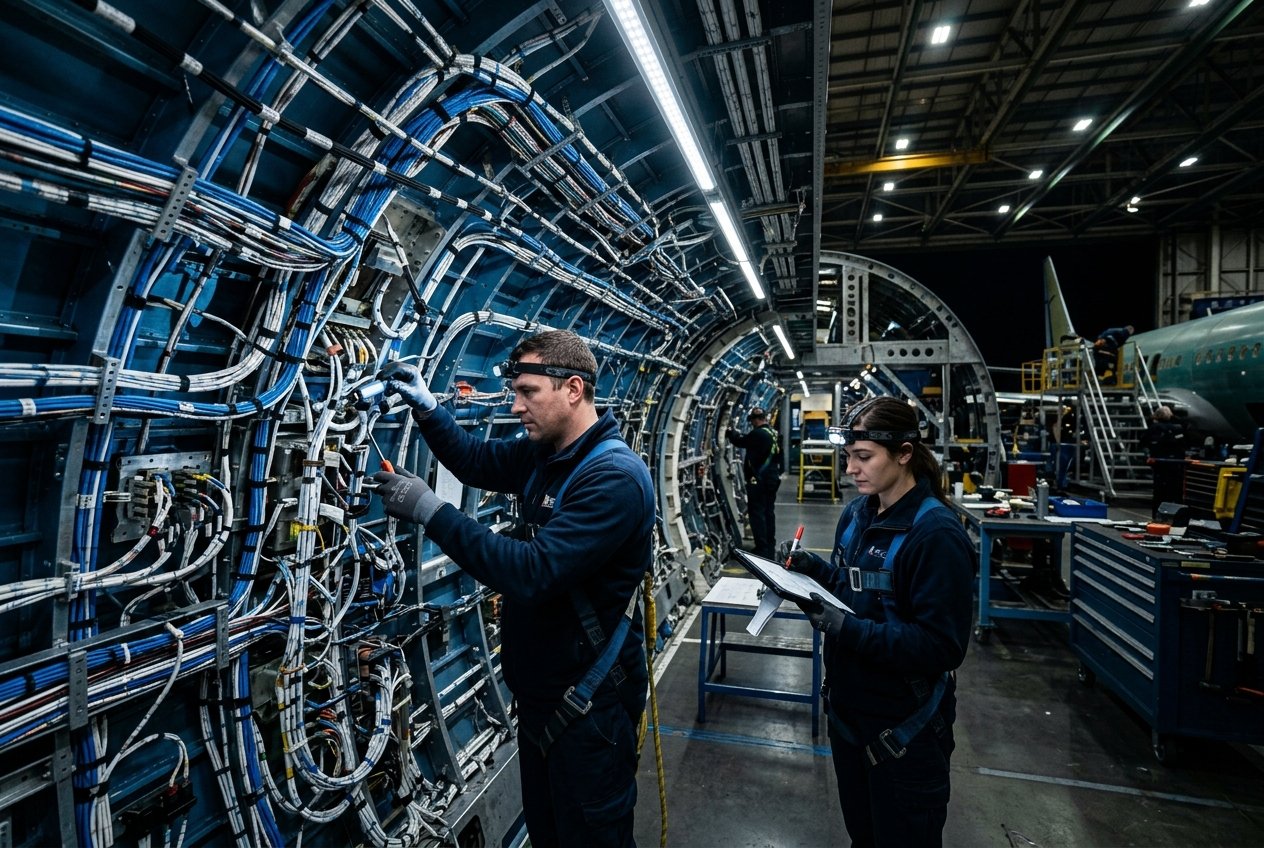
In the near future, no. While machines excel at high-volume, repetitive tasks (like making 10,000 identical sensor cables), human dexterity is still required for the final routing, taping, and looming of massive, highly complex, low-volume harnesses (like those used in custom aerospace or prototyping).
Yes, significantly. While the initial investment in robotic equipment is massive, the reduction in labor costs, scrap material, and field warranty claims (due to improved quality) ultimately lowers the per-unit cost of the harness.
Optical cameras can only see the outside of the wire. To detect an internal break under the insulation, the finished harness must still undergo electrical continuity and high-voltage Hipot testing.