
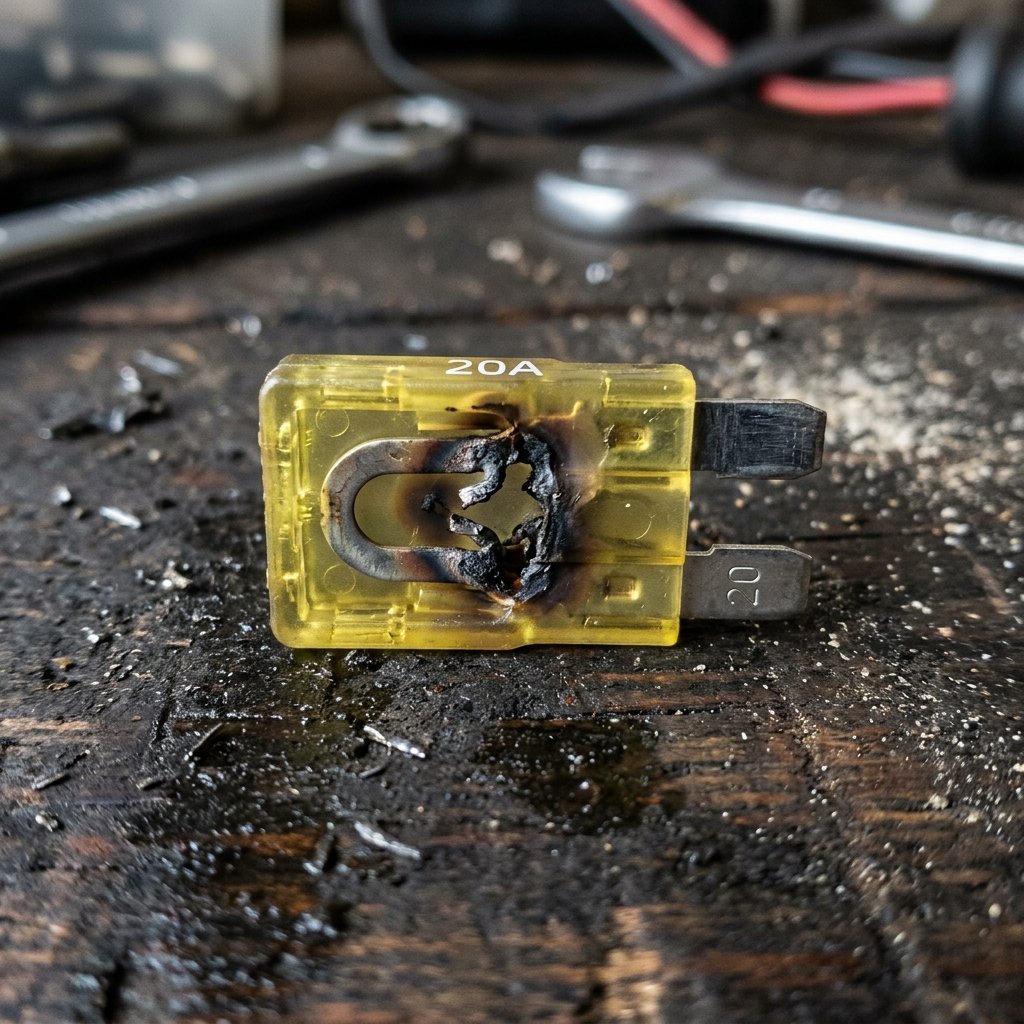
A fuse has only one job: to safely destroy itself before your wire harness catches fire. It is the deliberate weak link in your electrical chain. But if you install a 30-amp fuse on a circuit that was only designed to handle 10 amps, the wire will melt before the fuse ever blows. Knowing how to calculate the proper fuse size for your wire harness circuit is the most critical safety step in designing custom electrical systems.
The Golden Rule of Fusing
The most common misconception in wiring is that the fuse protects the device (the radio, the lightbulb, the motor). This is wrong. The fuse protects the wire.
When an electrical short occurs (like a chafed wire touching a metal frame), the current draw instantly skyrockets toward infinity. Without a fuse, the copper wire rapidly heats up, melts its plastic insulation, and ignites. A properly sized fuse breaks the circuit before the wire’s temperature limit is exceeded. This is why testing for shorts is so critical after assembly.
How-To: Calculate Fuse Amperage
To determine the correct fuse size, you need to know the maximum normal operating current (amperage) of the device you are powering. Follow these steps:
-
Find the Wattage
Look at the device’s specification sticker. If it lists Amps, you are already halfway there. If it only lists Watts (e.g., a 120-Watt light bar), you must calculate the Amps.
-
Apply Ohm’s Law (P = I x V)
Divide the Power (Watts) by the Voltage (Volts). For a 120W light bar on a standard 12V automotive system: 120W / 12V = 10 Amps.
-
Add a Safety Margin
You never want a fuse that perfectly matches the continuous draw, or it will blow during minor, normal voltage fluctuations (like when an engine is revving). The industry standard is to multiply the continuous draw by 125% (or 1.25). 10 Amps x 1.25 = 12.5 Amps.
-
Select the Next Standard Size Up
Fuses come in standard sizes (5, 7.5, 10, 15, 20, 25, 30). Since 12.5 Amps doesn’t exist, round up to the next standard size: 15 Amps.
-
Verify the Wire Gauge
Finally, ensure the wire you selected can handle 15 amps safely. If you used thin 22 AWG wire (which can only handle ~5 amps), the wire will melt before the 15A fuse blows. You must upgrade the wire thickness. Undersized wiring is a common cause of harness failure.
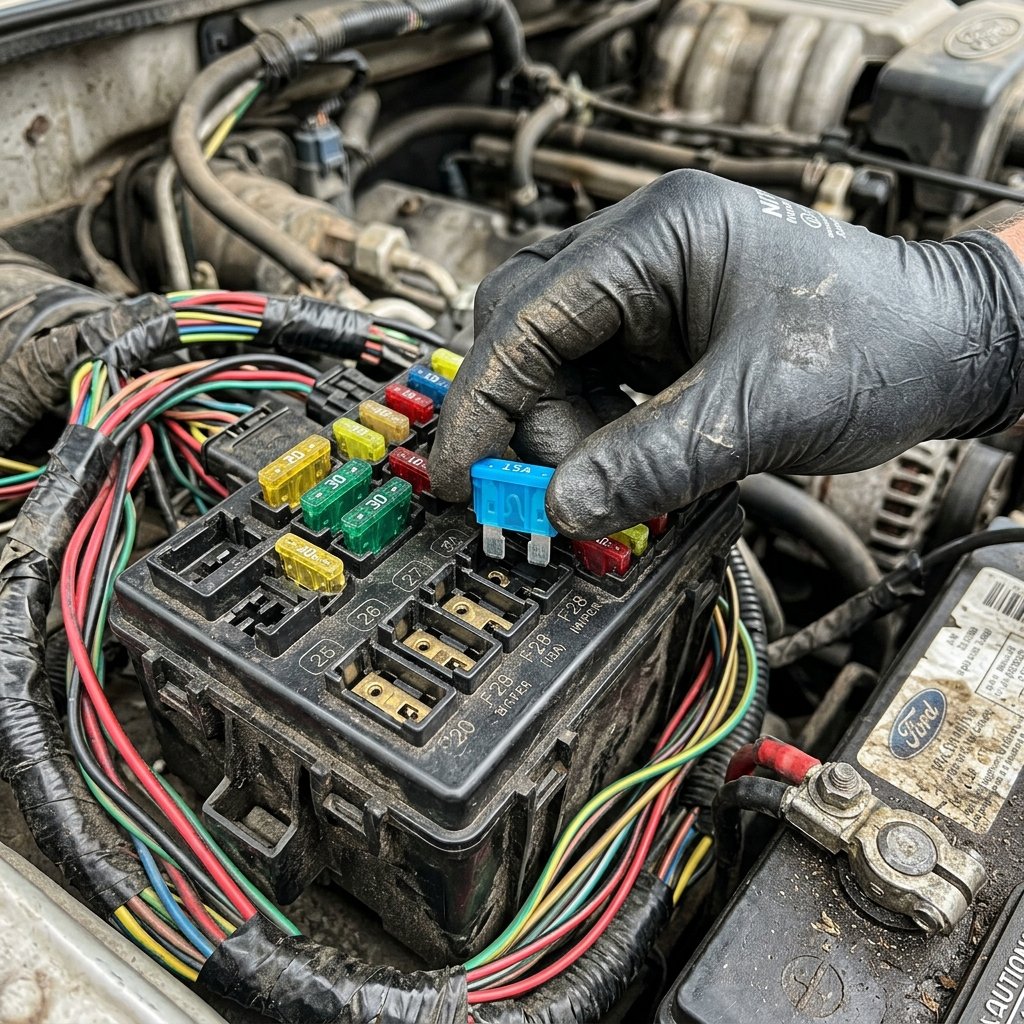

Fuse sizing errors tend to fall into one of two failure modes, and both are worth avoiding. An undersized fuse blows during normal operation, particularly during inrush current spikes when a device first powers on, leading to nuisance failures that get ‘fixed’ by installing an oversized fuse, which defeats the fuse’s protective purpose entirely. An oversized fuse, on the other hand, may allow a wire to overheat well before the fuse ever trips, creating a genuine fire risk. Matching the fuse rating to both the wire gauge and the device’s actual current draw, with an appropriate safety margin, is the only way to get real circuit protection.
For related reading, see our article on exploring the differences between oem and aftermarket wire harnesses. You can also learn more about our manufacturing capabilities. These practices are consistent with standards such as ISO 9001.
Frequently Asked Questions
Some devices, especially electric motors (like fans or power windows), have a massive “inrush” or “startup” current that can be 3 to 5 times their normal operating current for a fraction of a second. You may need a “Slow-Blow” fuse, or you may need to increase the fuse size (while ensuring your wire gauge can still handle it).
No! This is incredibly dangerous. If the 15A fuse blew, it means the circuit pulled more than 15 amps. By putting a 30A fuse in, you are removing the safety net, and the wires in your dashboard could catch fire.
The fuse must be located as physically close to the power source (the battery or main distribution block) as possible. Any length of wire between the battery and the fuse is completely unprotected.