
If you are new to electronics, automotive wiring, or industrial manufacturing, one of the first and most confusing hurdles you will face is understanding wire sizing. In North America, the gold standard for measuring the diameter of electrical wire is the AWG system: American Wire Gauge.
Choosing the correct AWG for your project is not just a matter of preference – it is a critical safety requirement. Using a wire that is too thin for the current it carries is a guaranteed recipe for melted insulation and electrical fires. Here is a simple, comprehensive beginner’s guide to understanding AWG.
1. The Counter-Intuitive Scale
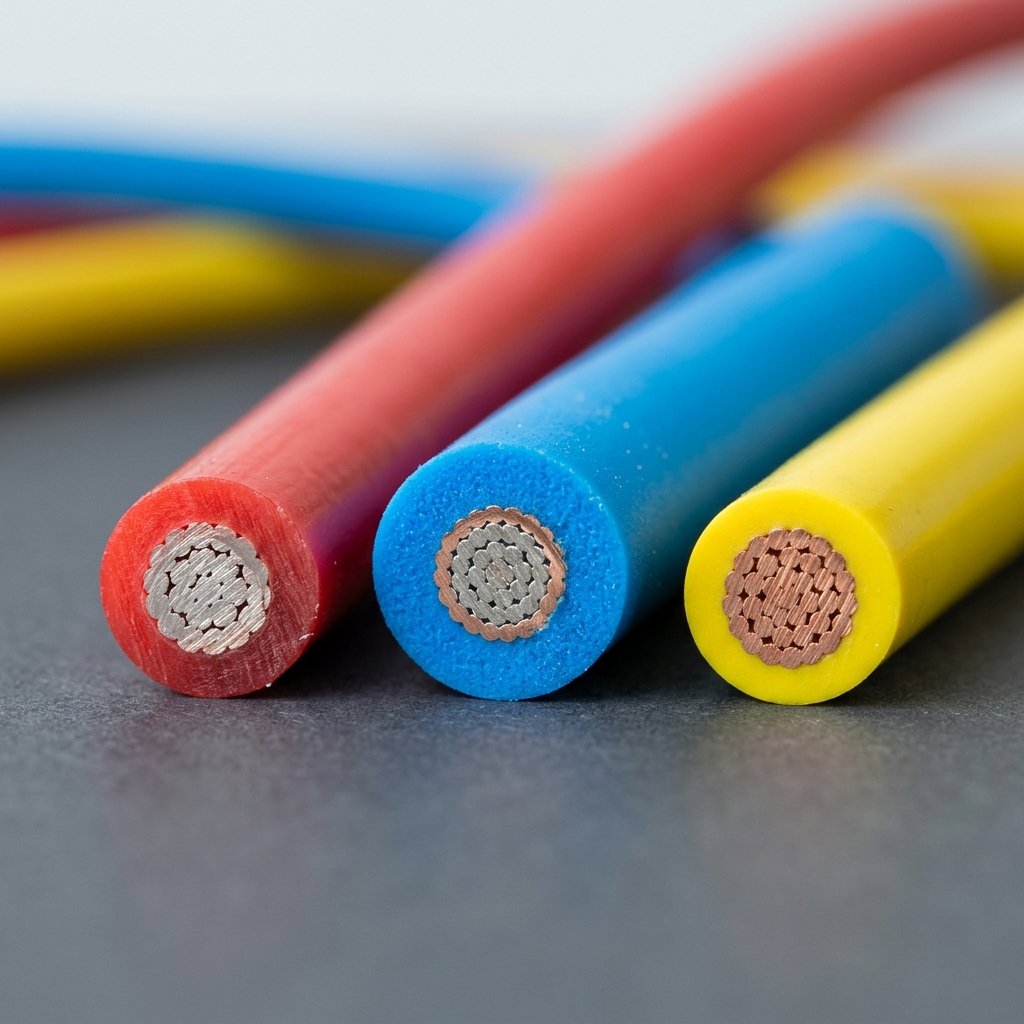
The most important – and often most confusing – thing to understand about the American Wire Gauge system is that it works completely backward compared to logic. The larger the AWG number, the smaller the physical diameter of the wire.
For example:
- 22 AWG: A very thin wire, similar to the thickness of a paperclip wire. Commonly used for low-voltage sensor signals and data transmission.
- 12 AWG: A moderately thick wire, similar to what you find inside the walls of your home for standard power outlets.
- 4 AWG: A very thick, heavy wire, often used to connect a car battery to the starter motor.
Why is it backward? The gauge number historically represents the number of times the raw copper had to be pulled through a drawing die to achieve its final thickness. A wire pulled through 22 progressively smaller dies (22 AWG) is much thinner than one pulled through only 4 dies (4 AWG).
2. Amperage Capacity (Ampacity)
The physical thickness of the copper wire directly dictates how much electrical current (measured in Amps) it can safely carry without overheating. Think of a wire like a water pipe: a thick pipe (low AWG) can carry a massive volume of water (high Amps) effortlessly, while a tiny straw (high AWG) will burst if you try to force the same amount of water through it.
Every wire has an “Ampacity” rating. If you try to push 50 Amps of current through a thin 18 AWG wire, the resistance of the tiny copper strand will convert the electrical energy into massive amounts of heat, melting the insulation instantly.
- 18 AWG: Typically safe for up to 10-14 Amps (good for LED lights).
- 14 AWG: Typically safe for up to 15-20 Amps (good for standard automotive accessories).
- 10 AWG: Typically safe for up to 30-40 Amps (good for high-power electric motors or large amplifiers).
3. Solid vs. Stranded Wire
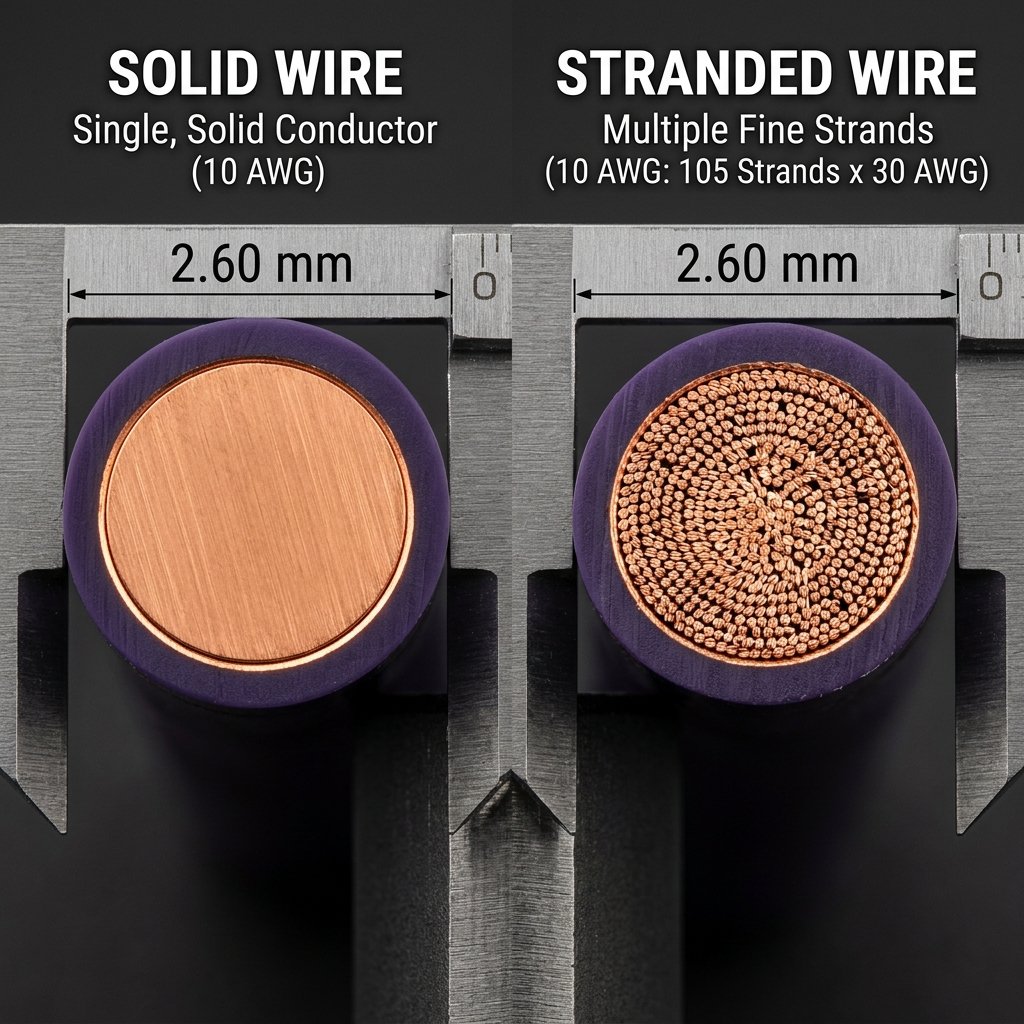
AWG only measures the total cross-sectional area of the copper. It does not tell you if the wire is made of one solid piece of copper, or hundreds of tiny individual hair-like strands twisted together.
A 12 AWG solid wire and a 12 AWG stranded wire have the exact same electrical carrying capacity. However, they are used very differently:
- Solid Wire: Cheaper, but very rigid. Used exclusively in permanent structural installations like residential house wiring where the wire will never move.
- Stranded Wire: More expensive, but highly flexible. Used in everything from automotive harnesses to robotics and extension cords, where the wire must bend and vibrate without snapping.
For related reading, see our article on how to choose the right wire harness tape for high-heat environments. You can also learn more about our manufacturing capabilities. These practices are consistent with standards such as ISO 9001.
Frequently Asked Questions
Length plays a massive role. The longer a wire is, the more electrical resistance it has. If you are running a 20 Amp circuit over a short 5-foot distance, a 14 AWG wire is fine. But if you are running that same 20 Amps over 50 feet, the voltage drop will be severe, and you must step up to a thicker 10 AWG wire to compensate.
Once you get thicker than 1 AWG, the scale changes to zeroes (pronounced “aught”). 1/0 (One-Aught) is thicker than 1 AWG. 2/0 is thicker than 1/0, and 4/0 is massive cable used for heavy industrial machinery and main utility feeds.
Yes. The rest of the world uses the metric system, which measures wire by its exact cross-sectional area in square millimeters (mm²). Unlike AWG, the metric system makes logical sense: a larger number means a larger wire (e.g., 2.5 mm² is thicker than 1.0 mm²).