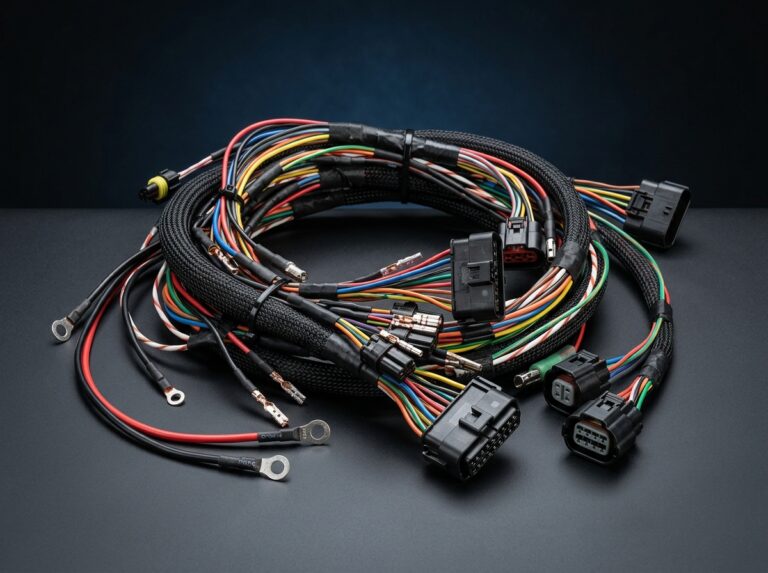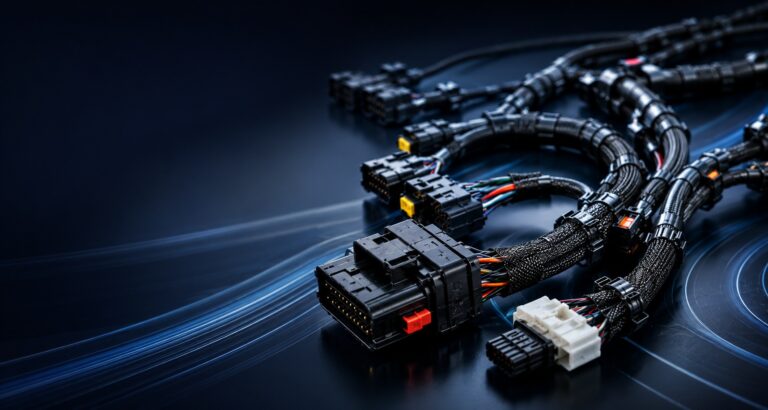
In the past, many manufacturers relied on generic, “off-the-shelf” wire harnesses to power their products. While a universal harness might be sufficient for a simple trailer light setup, the complexity of modern technology has rendered one-size-fits-all wiring solutions obsolete.
Today, whether you are engineering a fleet of electric vehicles, medical imaging devices, or automated industrial robotics, custom wiring harnesses are no longer a luxury – they are a strict engineering necessity. Let’s explore the primary reasons why custom wiring solutions are critical for the reliability, efficiency, and safety of modern electrical systems.
1. Space and Weight Optimization
In industries like aerospace, automotive, and portable electronics, every single gram and millimeter counts. A generic wiring harness often includes extra “just-in-case” wires, unnecessary pigtails, and excess slack so that it can fit multiple different vehicle models or machine variants.
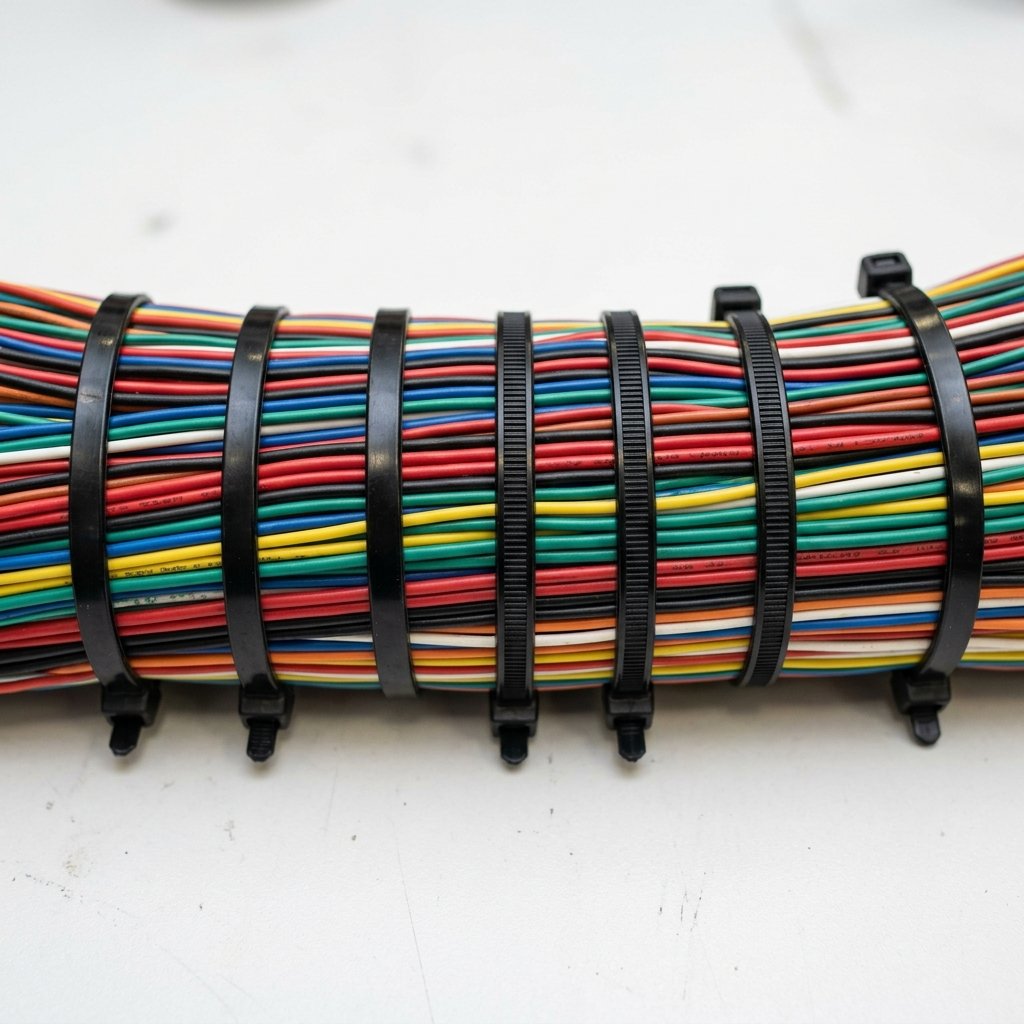
This excess material wastes precious internal volume and adds dead weight. A custom wire harness is engineered using 3D CAD modeling to perfectly match the exact routing paths of the chassis. By eliminating unused circuits and trimming every wire to the perfect millimeter, engineers can significantly reduce the overall weight of the machine, which directly improves fuel efficiency in vehicles and portability in consumer devices.
2. Precise Connector Mating
Modern electrical systems rely on hundreds of specialized sensors, micro-controllers, and high-amperage actuators. Generic harnesses usually come with generic terminals (like simple spade or ring terminals) that force the assembler to use adapters or splice wires mid-run.
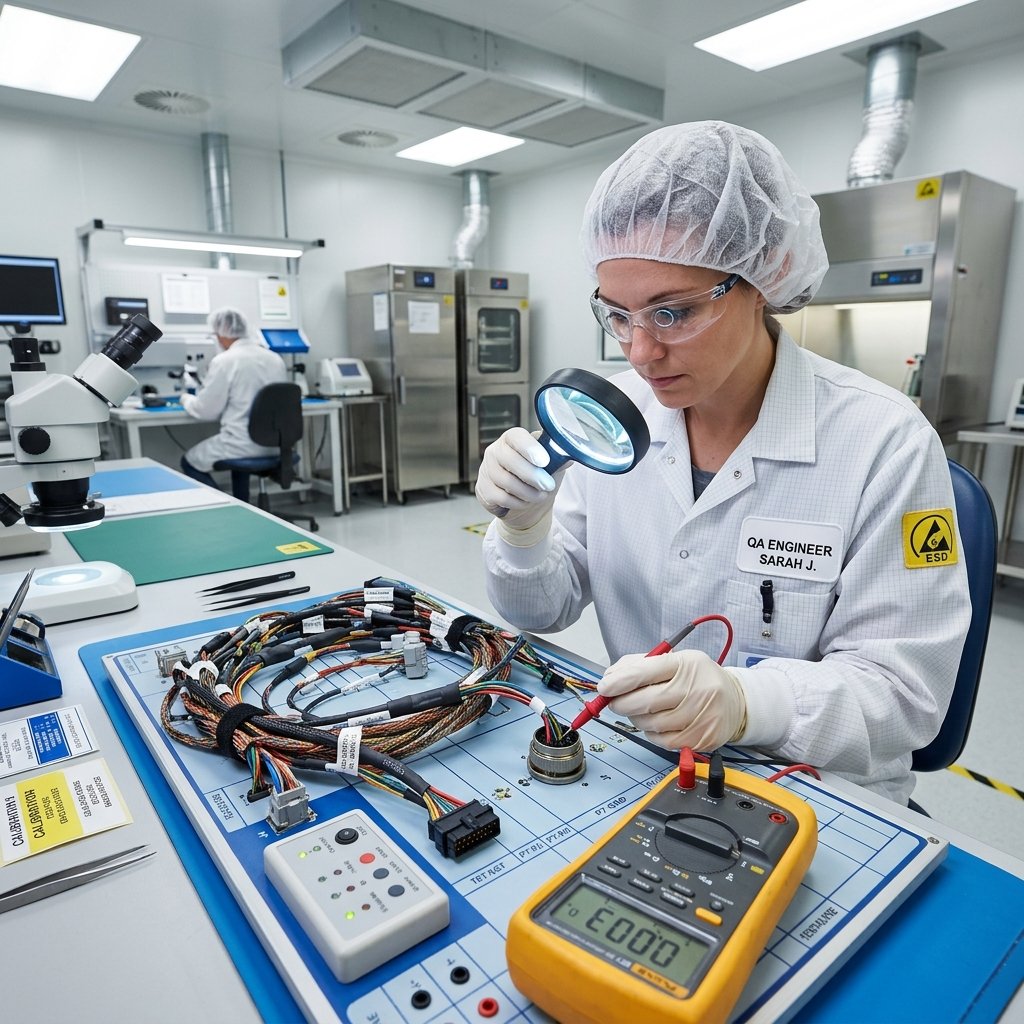
A custom harness is built from the ground up with the exact OEM (Original Equipment Manufacturer) connectors required for your specific components – whether that means a waterproof 12-pin Deutsch connector for an engine sensor or a delicate JST header for a PCB. This guarantees a perfect, weather-tight, vibration-proof connection right out of the box, eliminating the need for unreliable adapters.
3. Environmental Customization
A wire harness operating inside a climate-controlled server room faces very different challenges than one operating in the wheel well of an off-road vehicle. Universal harnesses are built with generic PVC insulation that attempts to be a “jack of all trades” but masters none.
When you design a custom harness, you dictate the exact environmental protections required:
- Heat: Specifying PET fleece tape and Teflon insulation for engine bay routing.
- Chemicals: Specifying polyurethane secondary jackets for areas exposed to hydraulic fluid or battery acid.
- Flexibility: Utilizing high-strand-count silicone wire and braided expandable sleeving for robotic arms that must bend millions of times without fatiguing.
4. Simplified Assembly and Troubleshooting
A custom wire harness dramatically reduces assembly time on the factory floor. Because a custom harness only fits one way and uses keyed connectors, it is practically “plug and play,” preventing costly miswiring errors by assembly line workers.
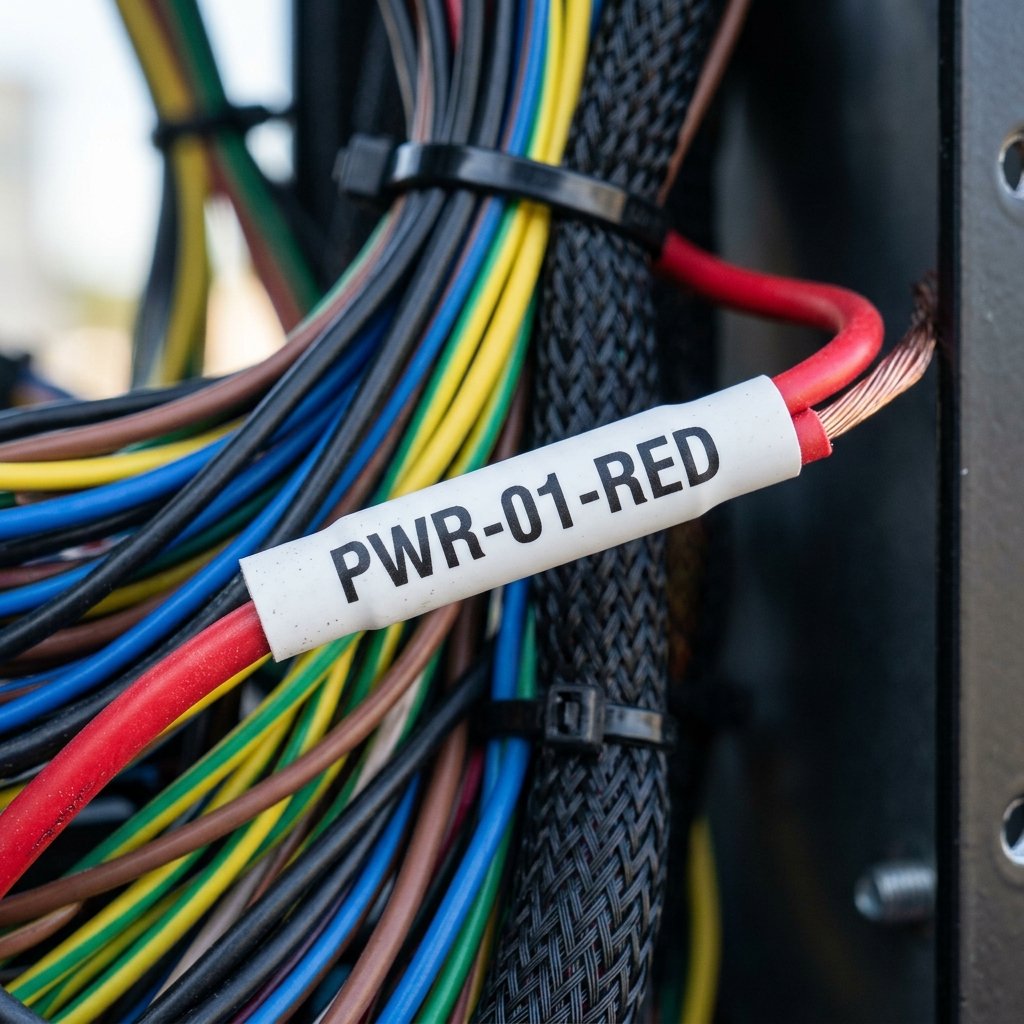
Furthermore, custom harnesses allow for custom color-coding and labeling. If a machine breaks down in the field ten years from now, a generic harness full of all-black wires is a nightmare to diagnose. A custom harness with laser-printed heat-shrink labels on every branch allows a technician to immediately identify the faulty circuit, saving thousands of dollars in downtime.
For related reading, see our article on how to choose the right wire harness tape for high-heat environments. You can also learn more about our manufacturing capabilities. These practices are consistent with standards such as ISO 9001.
Frequently Asked Questions
While the initial engineering and prototyping phase carries a cost, custom harnesses actually save money in mass production. You stop paying for unused wires and excess length, and the massive reduction in assembly time and warranty claims more than offsets the initial design investment.
The first step is creating a detailed electrical schematic. From there, engineers typically use a 3D CAD model of the physical machine to determine the exact routing paths, branch lengths, and required environmental protections. Finally, a “nail board” is created to physically assemble the prototype.
It is difficult. Because custom harnesses are built precisely to specification, adding a new circuit later often requires running a completely separate auxiliary wire or redesigning the harness for the next production run. This is why thorough upfront planning is critical.