
When wiring an electrical system, copper is your highway and electrons are the cars. If you try to force heavy rush-hour traffic down a single-lane dirt road, you’ll get a traffic jam and massive amounts of heat. In wiring, that heat causes fires. Selecting the right wire gauge (AWG) for your project is the foundation of electrical safety, even before you calculate the proper fuse size.
Understanding the AWG System
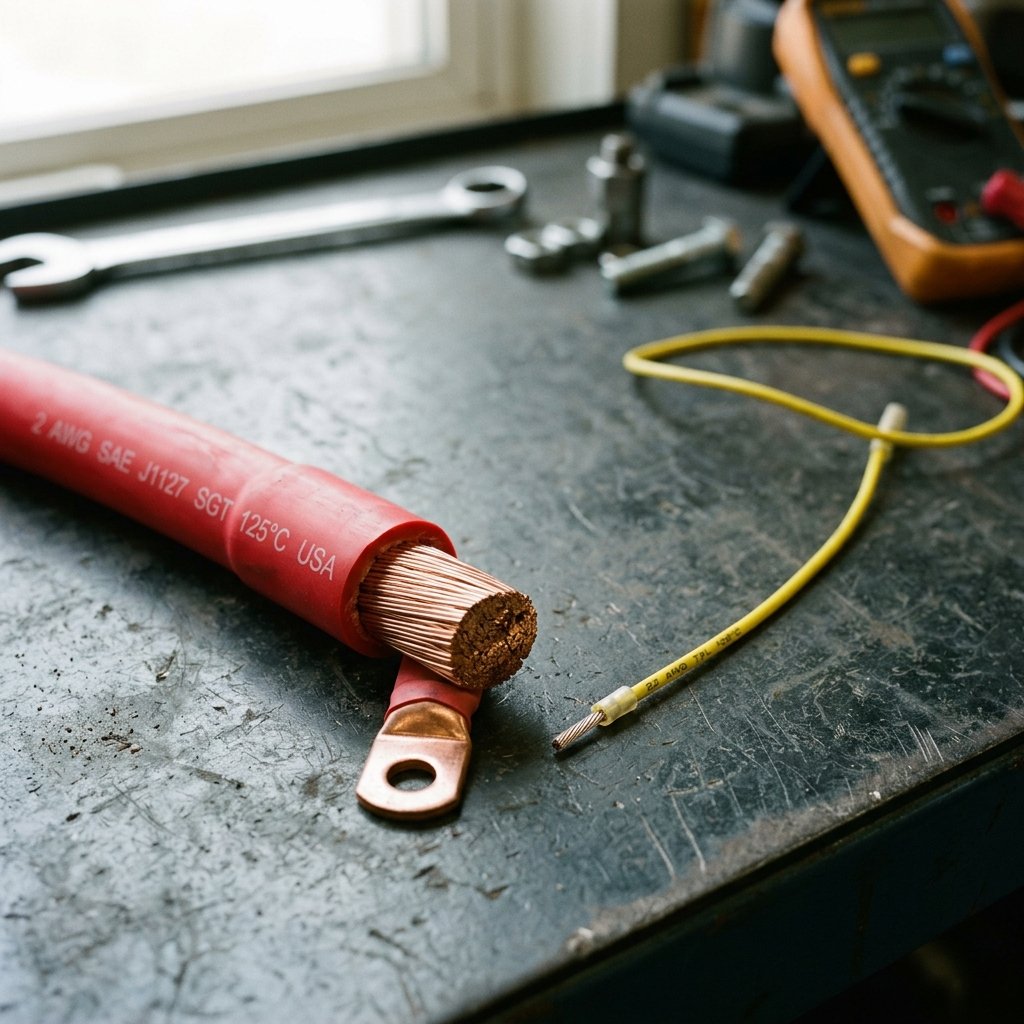
AWG stands for American Wire Gauge. The most confusing part for beginners is that the system is backward: the larger the number, the smaller the wire.
- 22 AWG to 18 AWG: Very thin wire. Only suitable for low-current data signals, sensors, or LED indicator lights (1 to 5 Amps).
- 16 AWG to 12 AWG: Medium wire. The standard for automotive lighting, radios, and small motors (10 to 20 Amps).
- 10 AWG to 8 AWG: Thick wire. Used for high-draw accessories like powerful off-road light bars, fuel pumps, and amplifiers (30 to 50 Amps).
- 4 AWG to 1/0 AWG: Massive battery cables. Used to carry the hundreds of amps required by the starter motor or a heavy winch.
How-To: Choose the Correct Gauge
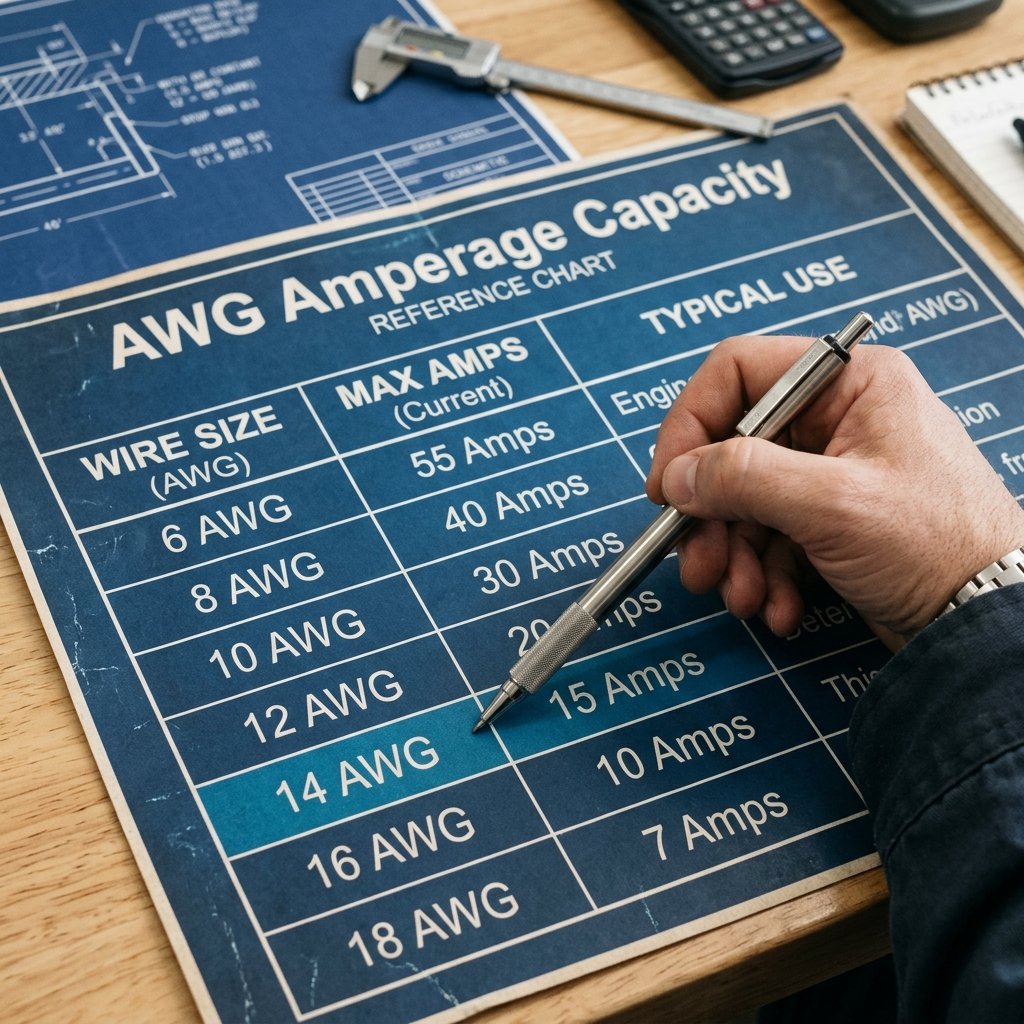
To pick the right wire, you must consult an AWG Amperage Capacity chart and consider two main factors: Amperage and Length.
- Determine the Amps: Calculate the maximum current draw of your device (e.g., a cooling fan pulling 15 Amps).
- Determine the Length: Measure the total round-trip distance of the wire. A 10-foot run from the battery to the fan, and a 10-foot ground wire back to the chassis, equals a 20-foot circuit.
- Check the Chart: Look at your reference chart. While a 14 AWG stranded wire might safely handle 15 Amps over a 5-foot distance, the resistance increases over 20 feet, causing a dangerous “voltage drop.” For a 20-foot run at 15 Amps, the chart will instruct you to “bump up” to a thicker 12 AWG wire to prevent overheating.
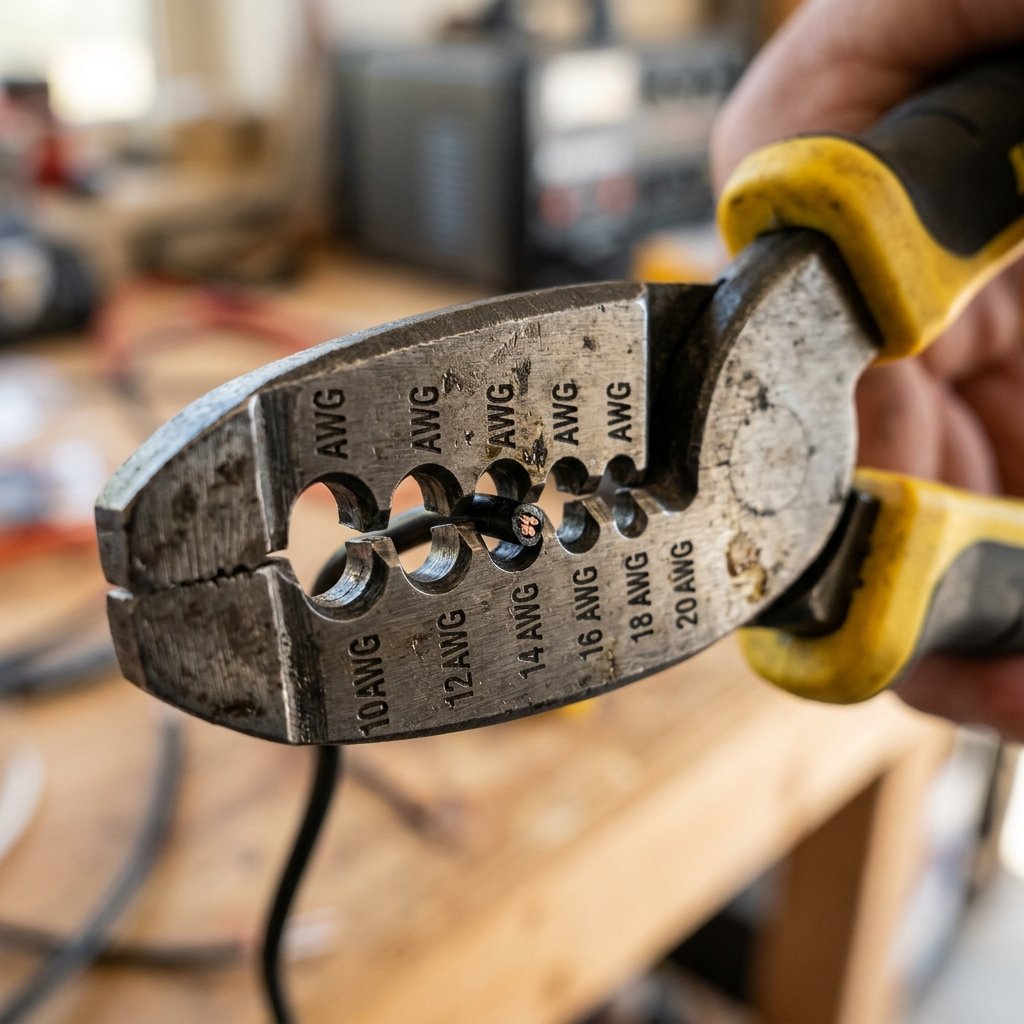
- Strip Carefully: Once you have the right wire, ensure you use the correct hole on your stripping tool. Using a 16 AWG hole to strip a 14 AWG wire will slice into the copper, ruining its capacity and highlighting the importance of proper stripping techniques.
Selecting the correct AWG size involves more than just matching the wire to the circuit’s current draw. Ambient temperature, bundle size, and insulation type all affect how much current a given wire gauge can safely carry, since wires bundled tightly together dissipate heat less efficiently than a single wire in open air. It’s also good practice to size wire with some margin above the calculated minimum, both to reduce voltage drop over longer runs and to leave headroom for future load increases, rather than selecting the absolute smallest gauge that technically meets the current spec.
For related reading, see our article on common causes of wire harness failure and how to prevent them. You can also learn more about our custom wire harness products. These practices are consistent with standards such as ISO 9001.
Frequently Asked Questions
Yes, absolutely. Using a 10 AWG wire for a 5 Amp circuit is perfectly safe; there is less resistance and less heat. The only downsides are increased cost, heavier weight, and difficulty fitting thick wires into small connectors.
The resistance in the wire will convert the electrical energy into heat. The wire will act like a toaster filament, melting the plastic insulation and potentially causing a fire before the device even turns on.
No. AWG only measures the physical diameter of the copper core. However, high-temperature insulation (like TXL or Teflon) allows the same gauge of copper to safely handle slightly more amperage because the plastic won’t melt as easily under stress.