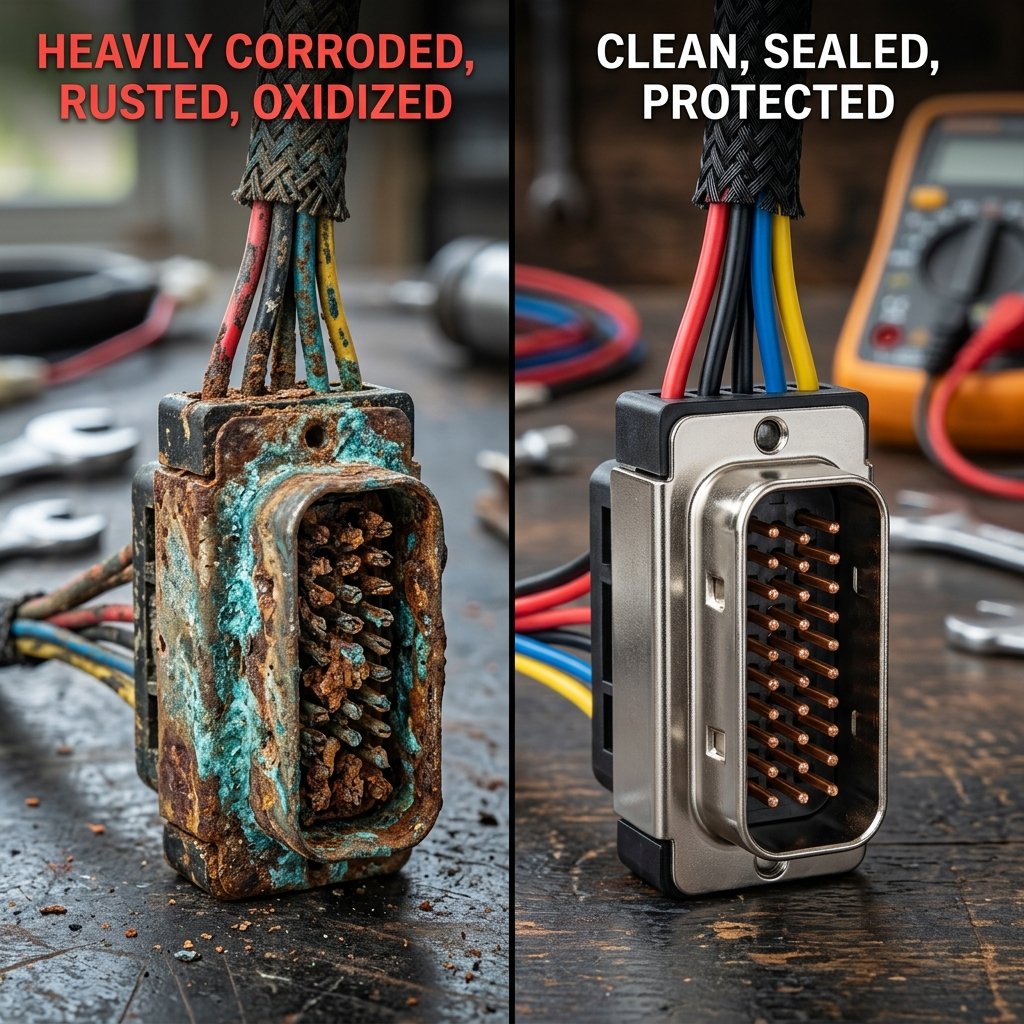
Overview
Navigation and instrumentation wiring carries low-level signal and bus traffic rather than power, so shielding and connector integrity matter more than conductor size. This assembly line is built around NMEA 2000 and general instrumentation bus cabling for deck and bridge equipment.
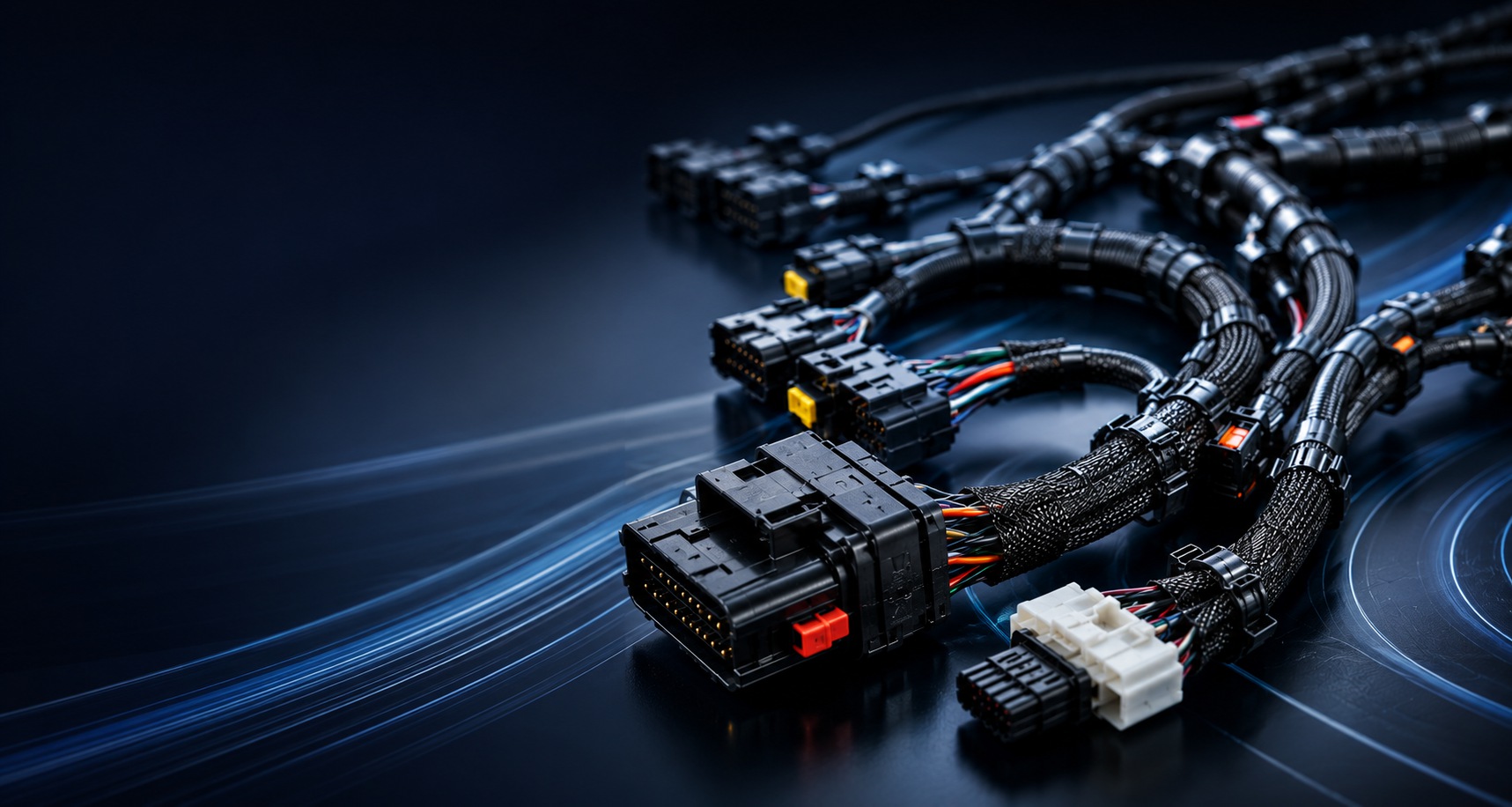
Design & Construction
Shielded Signal Pairs
Instrumentation circuits use foil-plus-braid shielded pairs to protect low-level signals from engine room and shipboard EMI, with drain-wire termination handled per the connector manufacturer’s grounding scheme.
Deck-Rated Connectors
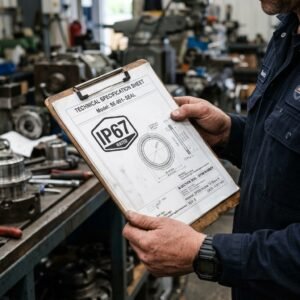
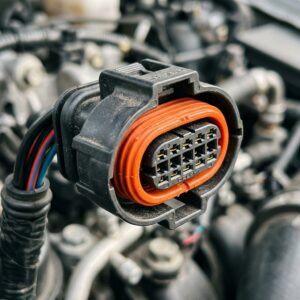
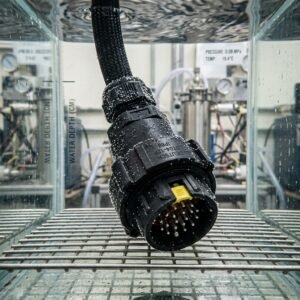
Deck-level connectors are sealed to IP67 with locking couplings suited to vibration and repeated handling, and cable jacketing uses low-smoke marine-grade compound appropriate for below-deck routing.
Manufacturing Process
Harnesses are built under our ISO 9001 quality system, with continuity, shield-integrity, and insulation-resistance testing performed on every unit before it ships.

Typical Applications
- NMEA 2000 navigation bus cabling
- Bridge and helm instrumentation wiring
- Radar and communication equipment interconnects
- GPS and chartplotter cabling
- Engine monitoring sensor harnesses
Common installations include NMEA 2000 navigation bus cabling, Bridge and helm instrumentation wiring, and Radar and communication equipment interconnects, where corrosion resistance and sealed, submersible-rated protection against saltwater exposure are the primary design drivers. The same base design can also be adapted for GPS and chartplotter cabling and Engine monitoring sensor harnesses with minor changes to connector type or cable length.
Technical Specifications
Standard configurations are available with the following technical specifications; custom configurations outside these ranges can be discussed with our engineering team. Wire Gauge: AWG 24 – 14. Conductor Count: 2 – 32 circuits, shielded pairs available. Insulation: Low-smoke marine-grade compound. Temp Range: -30°C to +90°C. IP Rating: IP67 (deck-level connectors). Shielding: Foil + braid for NMEA 2000/instrumentation buses. Standard: DNV GL type-approved construction available.
Quality & Certification
Manufactured under ISO 9001:2015 certification and built to IEC 60092 marine cable practice, with DNV GL type-approved constructions available for classed vessel installations.
Customization & Lead Time
Standard lead time for the Marine Navigation & Instrumentation Cable Assemblies is 5–6 weeks prototype, 3 weeks production. Connector type, cable length, and conductor configuration can be customized to match your exact application, including connector sealing rating, cable length, and shielding to match your vessel’s specific installation requirements. Contact our engineering team with your drawings or requirements for a project-specific quote.
Why XinHarness
This instrumentation-focused line complements our broader Marine Division capability in power and lighting harnesses, sharing the same DNV GL-approved construction standards. See the Marine industry page, or request a quote for your project. For related technical background, see our article on how to select the right connectors for waterproof applications.
Frequently Asked Questions
Yes, marine assemblies including the Marine Navigation & Instrumentation Cable Assemblies are built using corrosion-resistant materials and can be configured with IP67/IP68-rated waterproof connectors.
Our marine cable assemblies are manufactured under ISO 9001 quality management and can be built to relevant marine industry standards on request.
Yes, we regularly customize connector types, cable lengths, and routing configurations to match specific vessel layouts and equipment.