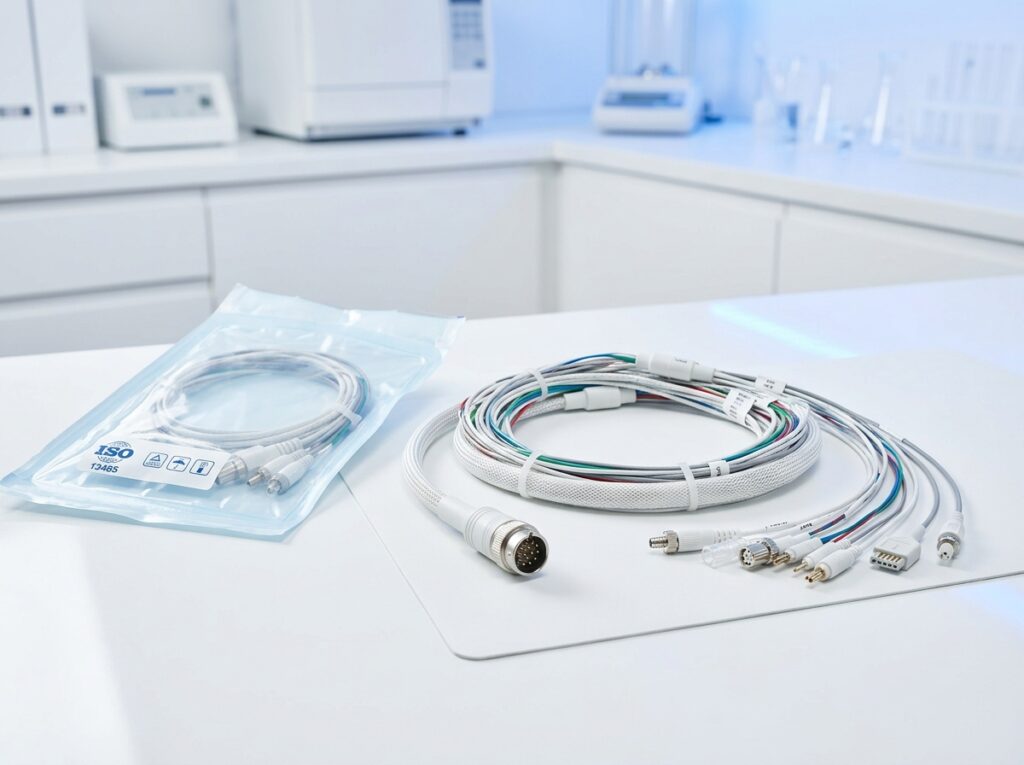
Overview
Anesthesia machines and ventilators combine gas-flow sensors, valve actuators, and patient monitoring in life-critical circuits, requiring cabling validated for continuous operation during surgery and ICU care.

Design & Construction
Fail-Safe Sensor & Valve Wiring
Redundant, low-resistance circuits connect flow sensors and solenoid valves with fail-safe routing that keeps gas delivery accurate throughout long procedures.
Alarm & Monitoring Signal Integrity
Shielded signal wiring keeps pressure and flow alarm circuits free of electrical noise, supporting reliable, immediate clinician alerts.
Manufacturing Process
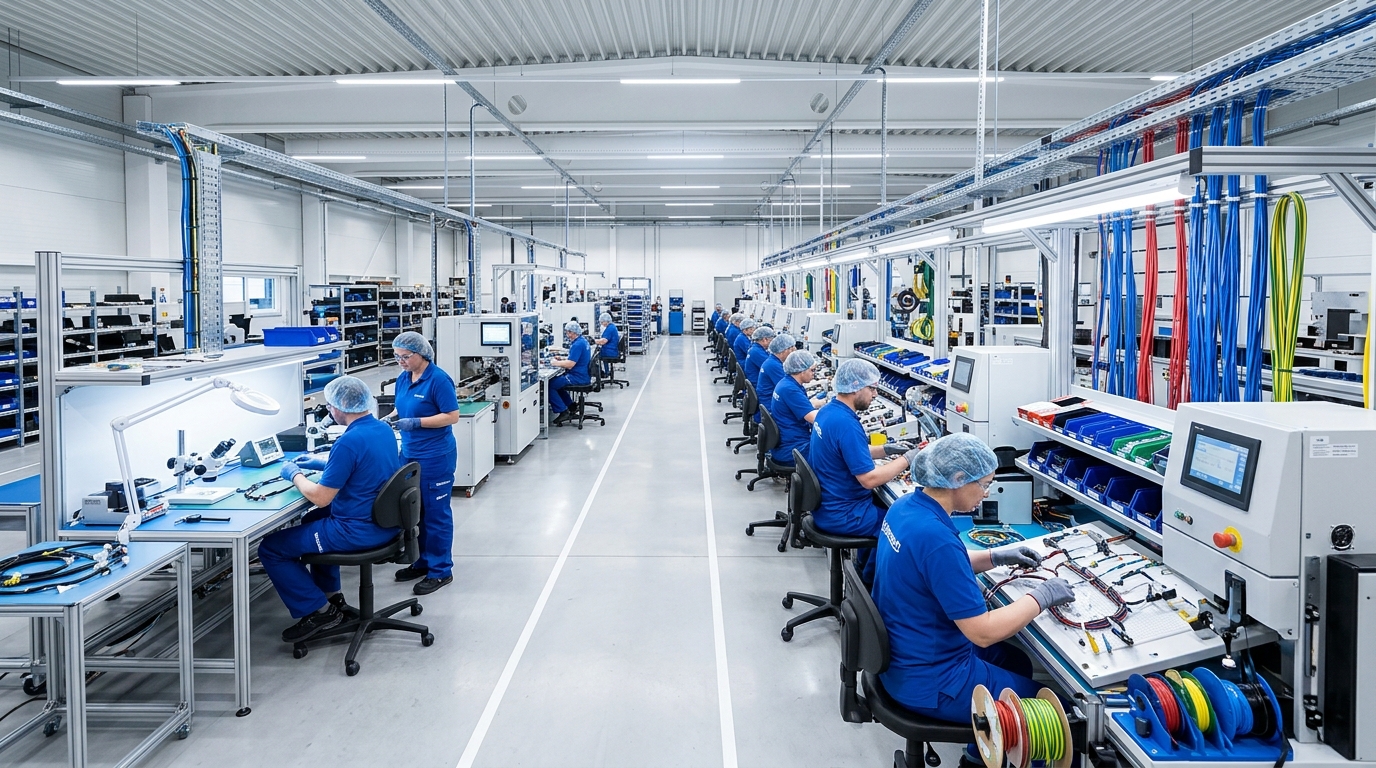
Assembled in an ISO 13485-certified cleanroom environment with 100% continuity and dielectric testing, supporting anesthesia and ventilator OEMs through design validation and volume production.
Typical Applications
- Ventilator flow sensor wiring
- Anesthesia gas valve actuator cabling
- Airway pressure alarm circuits
- Patient breathing circuit interconnects
- Ventilator control panel wiring
Common installations include Ventilator flow sensor wiring, Anesthesia gas valve actuator cabling, and Airway pressure alarm circuits, where biocompatibility, electrical safety, and continuous fail-safe operation are the primary design drivers. The same base design can also be adapted for Patient breathing circuit interconnects and Ventilator control panel wiring with minor changes to connector type or cable length.
Technical Specifications
Standard configurations are available with the following technical specifications; custom configurations outside these ranges can be discussed with our engineering team. Wire Gauge: AWG 28 – 18. Conductor Count: 4 – 28 circuits. Insulation: Biocompatible PVC / TPE. Temp Range: -20°C to +90°C. Signal Type: Shielded flow and pressure sensor lines. Connector Type: Keyed, patient-safe housings. Cleanroom Class: ISO Class 7 assembly.
Quality & Certification
Manufactured under ISO 13485 and ISO 9001 certification, with fail-safe circuit validation suited to life-critical respiratory device requirements.
Customization & Lead Time
Standard lead time for the Anesthesia & Respiratory Ventilator Cable Assemblies is 5–7 weeks prototype, 2–3 weeks production reorder. Connector type, cable length, and conductor configuration can be customized to match your exact application, including connector type, cable length, and sterilization compatibility to match your device’s specific design requirements. Contact our engineering team with your drawings or requirements for a project-specific quote.
Why XinHarness
Anesthesia and ventilator cabling draws on the same fail-safe circuit engineering used across our infusion and life-support device programs. See the Medical industry page, or request a quote for your project. For related technical background, see our article on the role of potting and conformal coating in wire harnesses.
Frequently Asked Questions
Medical assemblies including the Anesthesia & Respiratory Ventilator Cable Assemblies are manufactured under ISO 13485 quality management for medical device manufacturing.
Yes, biocompatible and autoclave-sterilizable materials are available depending on the application and device contact requirements.
Yes, connector type, cable length, shielding, and sterilization compatibility can all be tailored to your specific medical device requirements — share your design specifications for a custom quote.